

At Adopt an Inmate, the mail isn’t just part of our work — it is our work. Prison is one of the last places where letter-writing is still a lifeline. For the people we serve, a letter can be the highlight of the week, a link to the outside world, and sometimes the only reminder that they are not forgotten. That’s why every new mail restriction isn’t just a policy change — it’s another wall between people and those who love them.
That’s why we spend so much time tracking prison mail rules, helping families navigate them, and scrambling to keep up when those rules change. As someone who has seen frequent mail policy changes over the last ten. years, I can confidently say that the changes are never for the better. Over the decade we’ve been doing this work, we’ve seen bans on:
- Colored envelopes
- Blank stationery of any kind
- Address labels
- Calendars
- Stickers (this includes postage stamps)
- Post cards
- Letters written in any language other than English or Spanish
- Greeting cards — first musical or multi-layered cards (like pop-ups), then cards in colored envelopes, then any cards, period
- Photos
Long gone are the days when loved ones could send a colored drawing from a child or a scented letter. Many states have banned greeting cards or pictures unless they are mailed directly from an approved vendor — which means no handwritten notes on cards or on the backs of pictures. Every way someone in prison could receive something their loved one touched… banned. Returned to sender, and often at the expense of the prisoner, who never got to see or touch it.
The worst ban is on any physical mail at all. More and more states are moving to digital mail services, where mail is scanned and a picture of the letter is forwarded to the intended recipient’s tablet. Isn’t that warm and fuzzy?
Our latest round of Return to Sender mail comes from Oregon prisons. The reason? A new Oregon policy banning envelopes with “security features.” These are the envelopes with blue or gray printed patterns on the inside — the same kind you’ll find in most offices and homes.
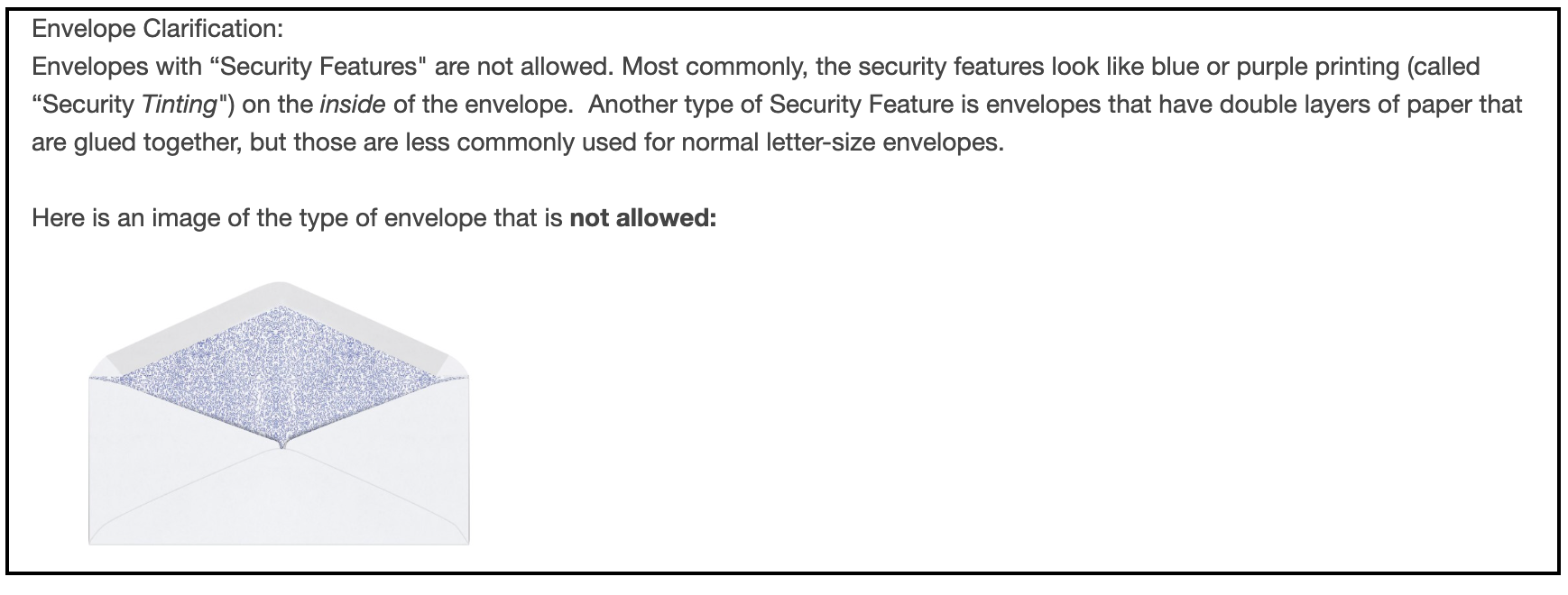
For us, this is a problem. We buy boxes of 500 self-sealing envelopes at a time to keep things moving smoothly. Have you ever tried to find self-sealing envelopes without that inside print? Nearly impossible. And to make matters worse, the ban applies even to envelopes purchased by prisoners themselves — including self-addressed stamped envelopes (SASEs) that they send to us so we can reply.
Self-addressed stamped envelopes (also known as SASEs) are gold to us. Postage is one of our biggest expenses, so when someone inside sends a prepaid envelope, it goes to the top of our reply pile so we can respond quickly. Now, under this policy, those envelopes — bought with their own limited funds through commissary — are being returned.
The result? More delays. More wasted postage. More roadblocks between people inside and the outside support they desperately need.
This is just one more example of how mail restrictions chip away at human connection in prison. The people who pay the price aren’t the ones who wrote the rules — they’re the families, friends, and advocates trying to keep relationships alive across walls and razor wire.
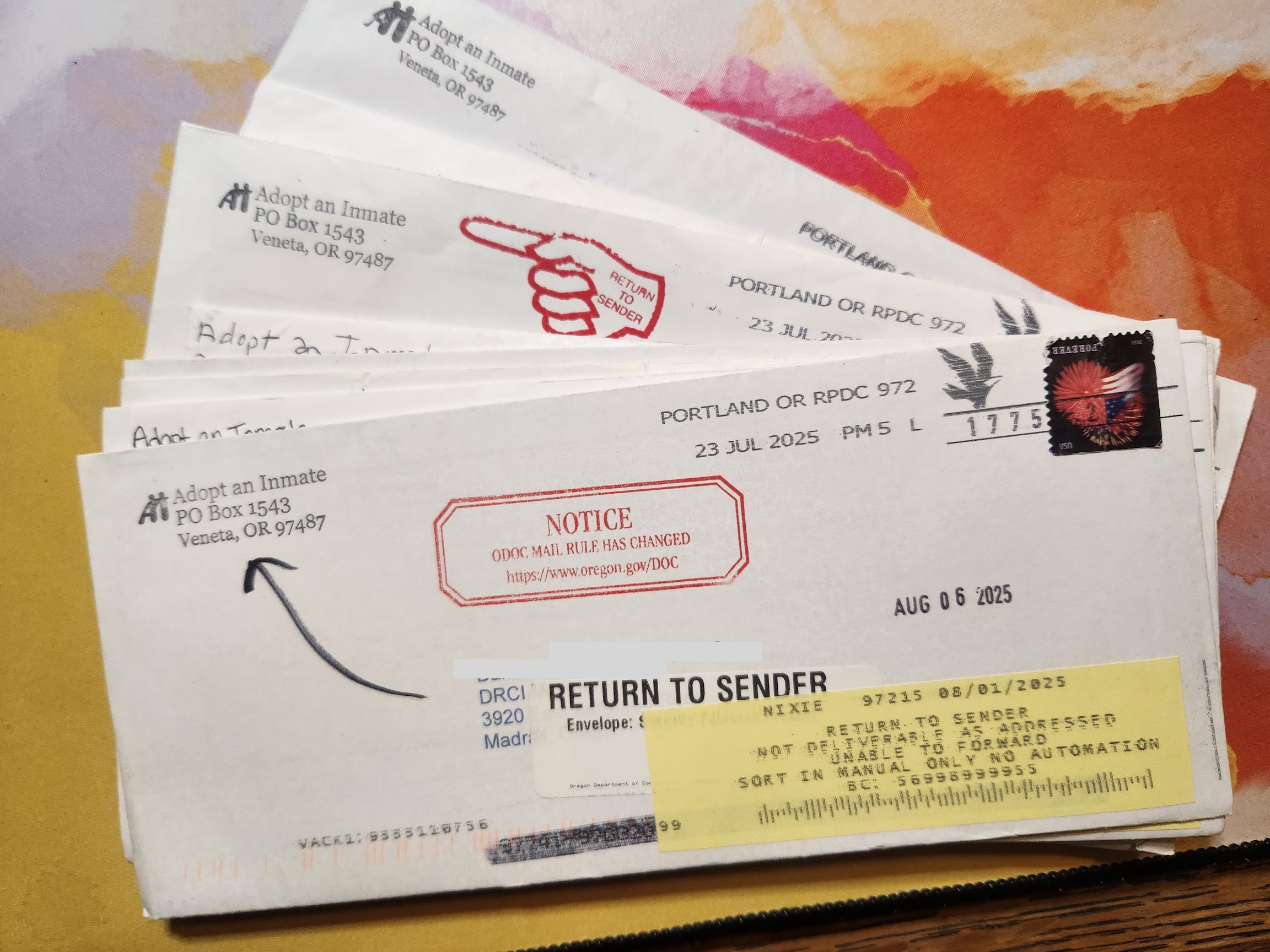
This is the stack of returned letters we’ve received under this new policy in the first two days of this week. Each envelope is a story interrupted, a conversation cut short. And for what?
Because if there’s one thing we’ve learned, it’s this: prison mail policies rarely make prisons safer, but they always make people lonelier.
Stay tuned this week for more stories about prison mail policies — and the truth about their effect on contraband.
Have a story about returned mail? Please share in the comments (scroll alllll the way down below), or use this form and help us track this practice across U.S. prisons.



0 Comments