by Melissa Bee | Jul 22, 2026 | Eric Burnham, From the Staff
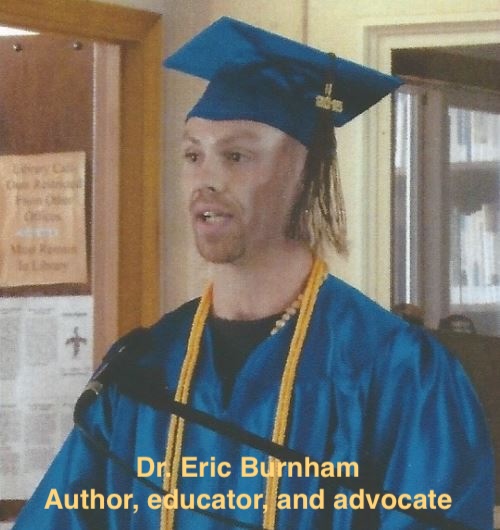
For many years, Eric Burnham has shared his writing, insight, and lived experience with the Adopt an Inmate community. He is also a close friend of our board member Martin Lockett; the two men were incarcerated together many years and have remained close since Martin’s release in 2021.
Like Martin, Eric has used his years inside not simply to change his own life, but to help others change theirs.
While serving a life sentence in the Oregon Department of Corrections, Eric pursued an extraordinary path of education, reflection, service, and personal transformation. He earned his PhD, developed expertise in addiction counseling, trauma, emotional intelligence, and human behavior, and has written numerous posts for our website over the years.
He is the author of three books designed to help people understand themselves, heal from trauma and addiction, and build healthier relationships.
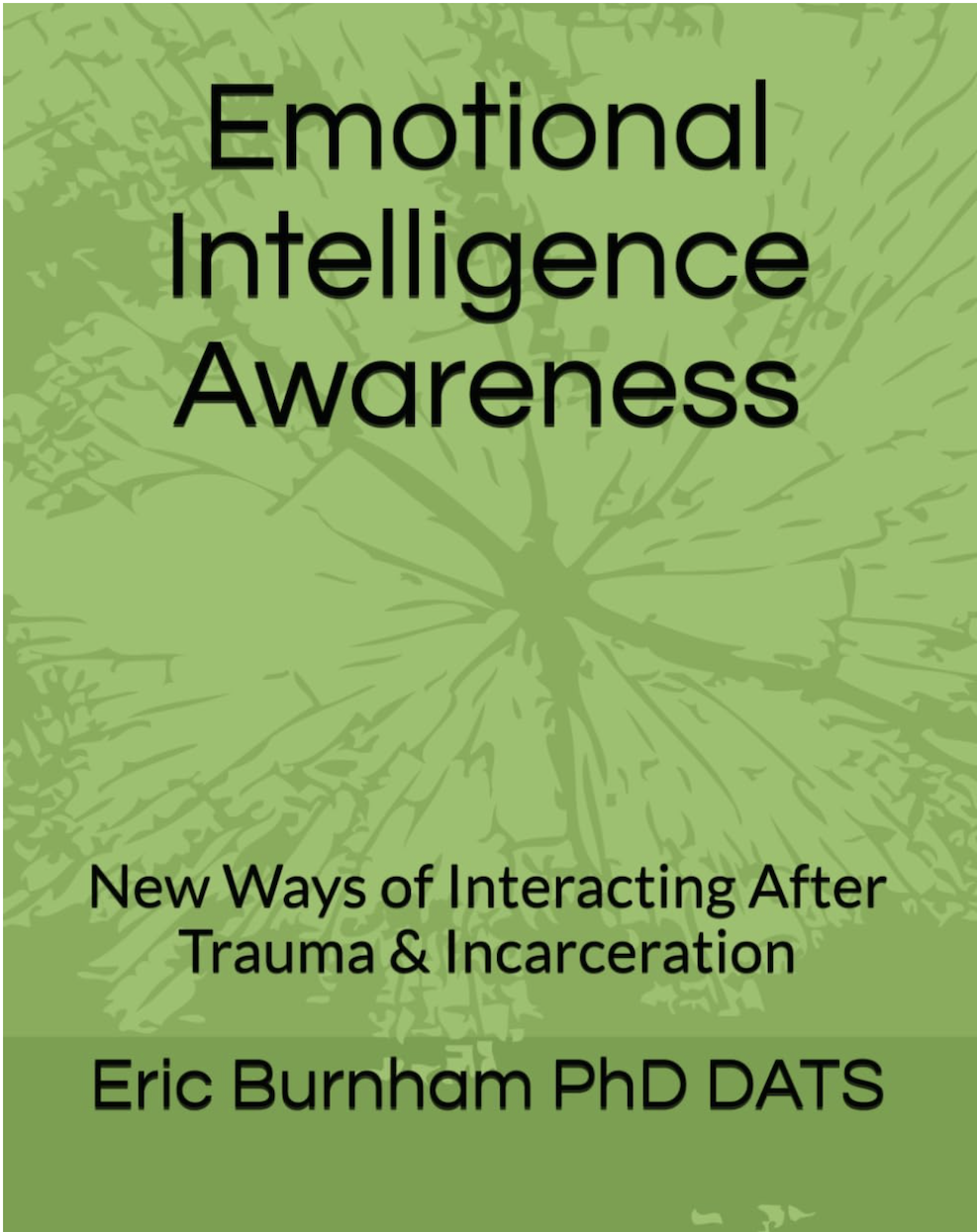
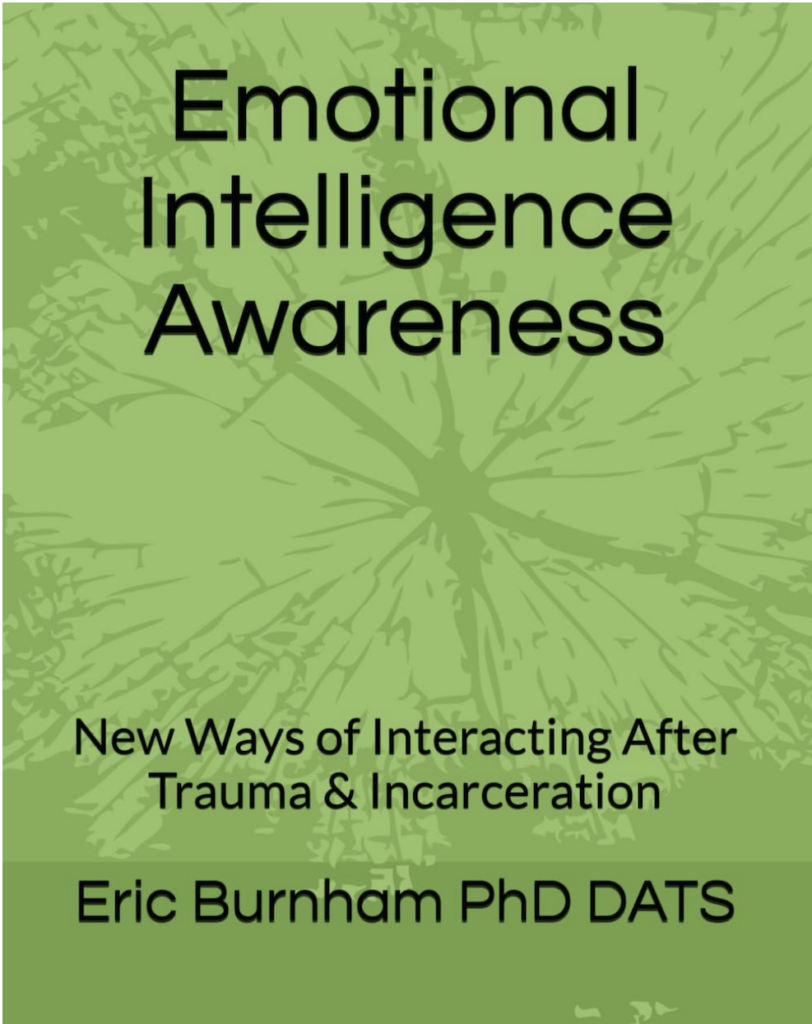 Emotional Intelligence Awareness: New Ways of Interacting After Trauma & Incarceration
Trauma and incarceration can profoundly affect the way a person interprets danger, manages emotions, communicates with others, and responds during conflict. Behaviors that once helped someone survive may later become barriers to connection, stability, and healthy relationships.
Eric helps readers begin recognizing how neurobiology, learned patterns, and automatic reactions influence their emotions and interactions.
The book offers a straightforward structure for exploring emotional regulation, self-awareness, communication, and relationship-building. It also includes references and resources for readers who wish to examine particular subjects more deeply.
Eric’s perspective is especially valuable because it was developed with the experiences of incarcerated and formerly incarcerated people in mind. Rather than approaching them only through theories created at a distance, he brings together academic study, counseling principles, and an intimate understanding of the environments and experiences that shape people’s responses.
The result is a resource that can help readers better understand not only what they do, but why they do it—and how they can begin responding differently.
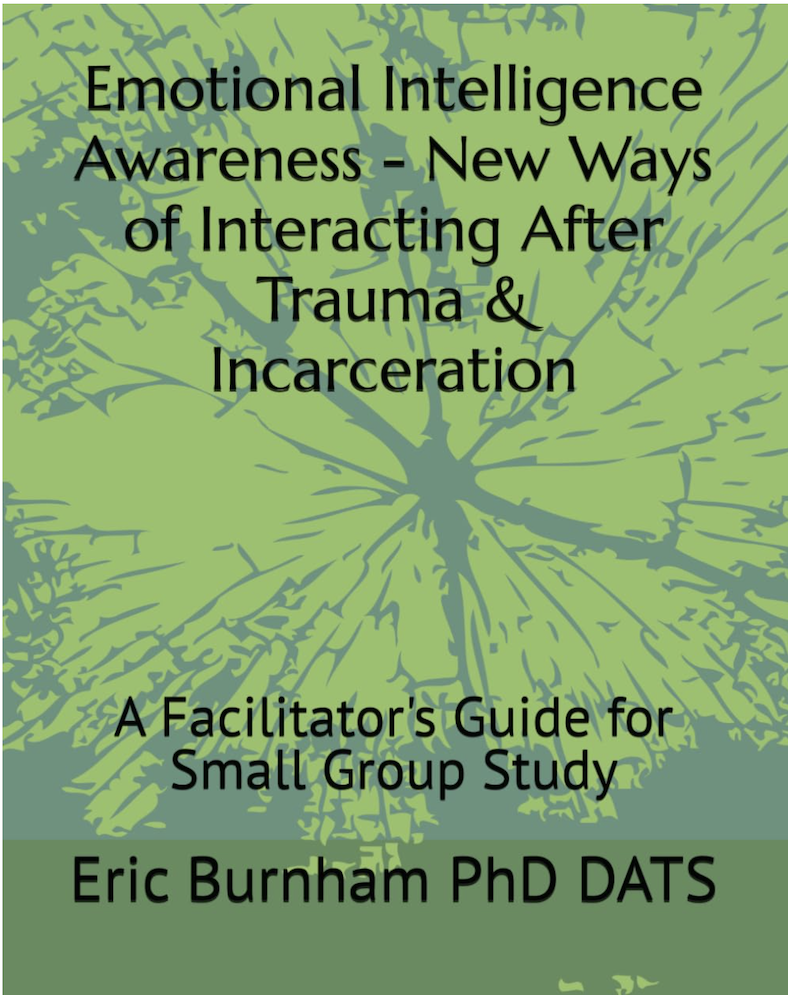 Emotional Intelligence Awareness – New Ways of Interacting After Trauma & Incarceration: A Facilitator’s Guide for Small Group Study
Eric’s follow-up book expands upon the original Emotional Intelligence Awareness by helping facilitators use its lessons in a small-group setting.
The guide includes notes, discussion support, and practical tools intended to help groups operate smoothly and create meaningful opportunities for growth.
Participants are invited to explore how trauma, neurobiology, learned behavior, and automatic emotional reactions affect their daily lives and relationships. With thoughtful facilitation, these conversations can help people practice greater self-awareness, improve emotional regulation, communicate more effectively, and develop healthier ways of navigating conflict.
This companion guide makes Eric’s work especially useful for peer-support programs, faith communities, correctional education programs, reentry organizations, counselors, and other groups working with people affected by trauma or incarceration.
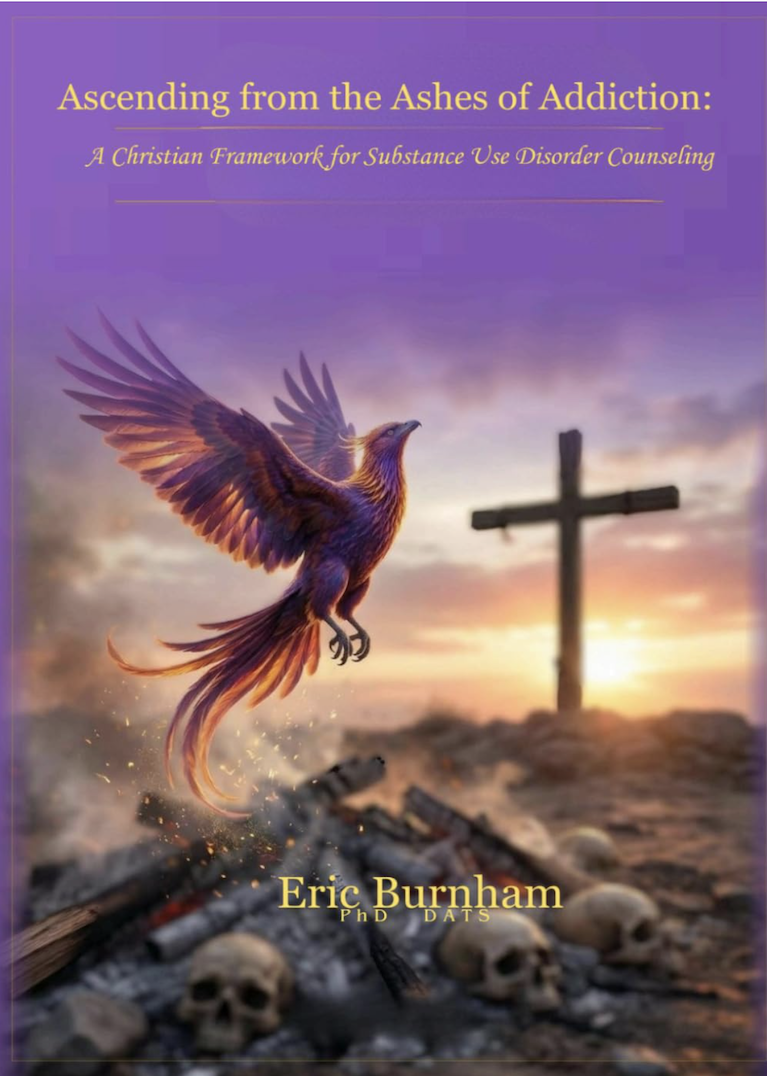
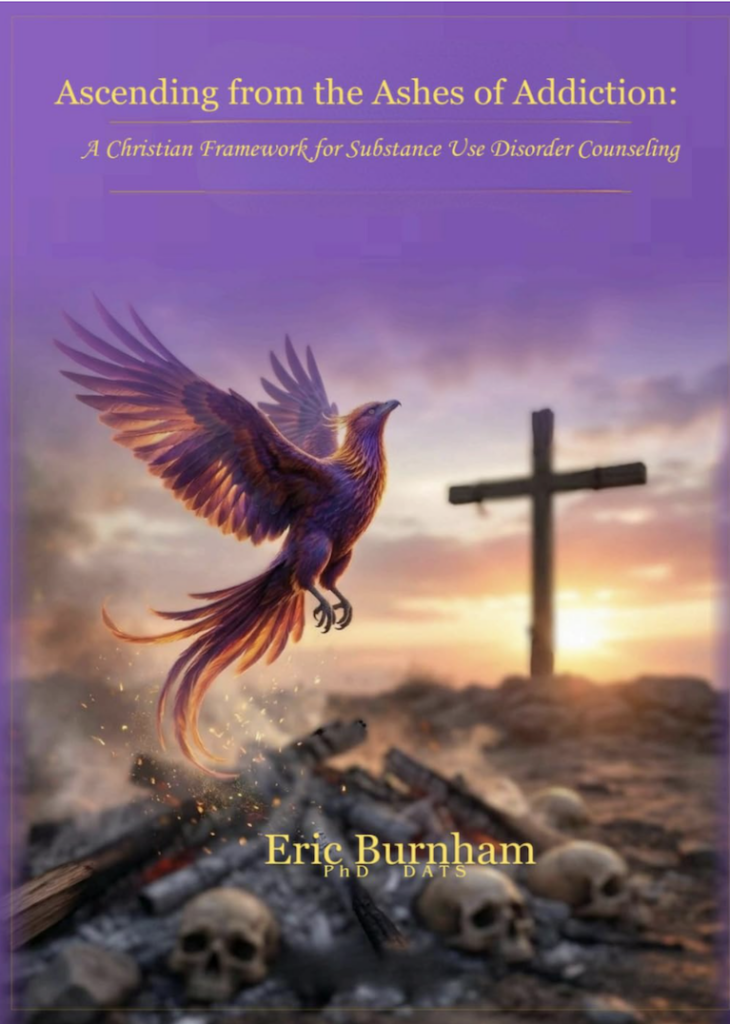 Ascending from the Ashes of Addiction: A Christian Framework for Substance Use DIsorder Counseling
What if addiction is not just a disorder… but a signal?
A signal of something deeper — a fractured identity, a loss of purpose, a separation from the very source of life itself.
In Ascending from the Ashes of Addiction, Eric Burnham presents a groundbreaking framework that integrates modern counseling psychology with timeless biblical truth.
Rather than treating addiction as an isolated behavioral problem, this book reveals it to be a biopsychosocial-spiritual crisis—one that requires healing at every level of the human person: body, mind, relationships, and spirit.
Through a compelling blend of clinical insight and theological depth, Dr. Burnham guides readers toward:
- A restored understanding of identity rooted in the image of God
- Freedom from shame, anxiety, and compulsive self-destructive cycles
- A holistic model of recovery grounded in both science and Scripture
- Lasting transformation through grace, truth, and spiritual formation
This is more than recovery counseling.
This is redemption taking flight.
Education, Accountability, and Transformation
People sometimes speak about rehabilitation as though it were an abstract ideal. Eric’s life and work demonstrate what it can look like in practice.
It looks like taking responsibility.
It looks like years of difficult self-examination.
It looks like pursuing an education under circumstances that make every step more challenging.
It looks like transforming personal experience into tools that may help someone else avoid harm, recover from addiction, understand their trauma, or rebuild a damaged relationship.
It looks like becoming a source of guidance and healing from a place society often assumes has nothing of value to offer.
Eric has a hearing scheduled for September, when the Oregon Board of Parole will consider whether he may someday continue this work outside prison walls. We know that personal transformation does not automatically result in release, even after decades of growth and accomplishment. Parole decisions involve many factors, and the broader political climate can influence how society responds to even the strongest examples of rehabilitation.
Still, we remain hopeful.
Eric’s education, service, writing, and commitment to helping others cannot return the years that have passed or erase the harm that brought him to prison. They do, however, show who he has worked to become.
Whatever happens at his hearing, these books are part of Eric’s contribution—and evidence that a person’s capacity to grow, teach, serve, and create meaning does not end when a prison sentence begins.
We are proud to share his work.

by Melissa Bee | Jul 13, 2026 | Books, From the Staff
Sometimes the best ideas come unexpectedly.
Recently, one of our longtime Ai friendships inspired a new way for adopters and adoptees to connect: shared reading.
by Inmate Contributor | Jul 7, 2026 | From the Inside, Poetry From Prison
In this poem, Joshua reflects on the places, people, foods, faith, contradictions, and losses that shaped him. His words move between warmth and hardship — from cottonwood drifting like summer snow and fried okra to anger, solitude, and memories of lives ended too soon.
I am from….
I am from an open oven to keep us warm,
From Marlboros and flyswatters.
I am from the projects, small and comfy, and smelling soggy.
I am from the cottonwood, flowing in the breeze like summer snow.
I am from BBQ’s and solitude.
From Ruth and Dan.
I am from anger and bitterness.
From you’re just like your dad and this hurts me more than it hurts you.
I am from Adonai, my God is ONE.
I am from Texas and mixed bloodlines.
I am from fried okra and peanut butter and jelly.
Descended from Bell Starr the girlfriend of Jessie James and related to the true sheriff of Nottingham.
From memories in my heart, before life fell apart, because the lives in them were ended before hey could start.
-Joshua Ray Shepard #874060 WA DOC
by Melissa Bee | Jun 14, 2026 | From the Staff, Your Sunday Read
 Pour yourself a cup of coffee (or a glass of lemonade if summer has already arrived where you are) and settle in.
If things have seemed a little quiet around here lately (they’re not), it’s because much of this week has been spent building things.
In my kitchen, that meant a crash course in cabinet assembly with my son Joey. We’ve become surprisingly proficient at deciphering instruction diagrams, adjusting drawer slides, and operating a borrowed nail gun (thank you, Cesar!). After months of demolition, planning, waiting, measuring, ordering, and more waiting, the kitchen is finally beginning to look less like a construction zone and more like a room again.
At Adopt an Inmate, we’ve been building too.
This week we received the completed handoff of our new matching application, built by students at UC Berkeley through Blueprint, a technology-for-social-good organization that develops software for nonprofits. We were fortunate to be selected for this project, and over the past year their team has worked alongside us to create a matching tool designed specifically for Adopt an Inmate. Until now, every match has been created through a labor-intensive manual process. The new tool allows adopters to complete an application, review a small number of potential matches, and help guide the matching process while our team continues to provide oversight and final approval.
The application is now complete and in our hands. We’re beginning testing and reviewing the administrative side of the system, and if all goes well, we hope to launch it soon.
In a way, both projects feel similar right now. The cabinets are assembled but not installed. The app is finished but not yet launched. In both cases, things are beginning to look less like piles of parts and more like something that can actually be used.
 Speaking of things coming together, Abby recently got her summer haircut and seems quite pleased with herself. Boo, meanwhile, has so far escaped the family tradition of every living being that steps in the house receiving paint on their nose when we’re painting. The tradition was started years ago by my stepfather, and although he’s no longer with us, it’s
 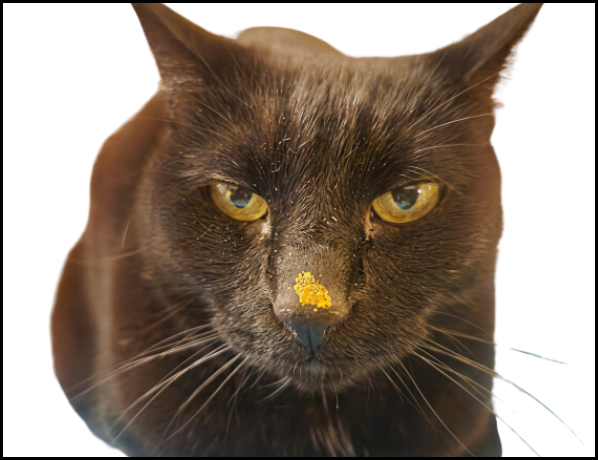 one of the small ways his energy still fills the house. Here’s evidence that Boo was an unwilling participant of said tradition – judge her expression for yourself. Hey, I didn’t make the rules.
Looking ahead, in the coming week we’ll be sharing a new series of stories and reflections centered around what it means to be justice-impacted. These stories won’t be about labels. They’ll be about people, relationships, families, and the ways our lives are shaped by systems we often don’t notice until they touch someone we love.
As always, thank you for being part of the Adopt an Inmate family. We appreciate every letter written, every donation made, every story shared, and every person who continues to walk alongside us.
We’ll have more to talk about next Sunday.
Until then,
Melissa
A question for readers:
Is there a person, tradition, or lesson from someone you’ve lost that still shows up in your daily life?
Quote of the Week:
“No dreams are beyond building.” ― Anthony T. Hincks
💌 Donate Stamps – SOS: Stamp out Silence!
✍️ Take the Quiz – How much do you know about U.S. prisons?
❤️ Give – Help us keep breathing together
🗣️ Add Your Voice – Submit your responses to our Good, Bad, Change poll
⏩ Forward This Email – Someone needs to see this
by Melissa Bee | Jun 8, 2026 | From the Staff, Your Sunday Read
Happy Sunday Monday, Friends 🐝,
Sometimes a Sunday Read becomes a Monday Read. Partly because WordPress happened. Partly because painting happened. Partly because cabinet delivery preparations happened. And partly because I continue to discover that I can only do one thing at a time, despite repeated attempts to prove otherwise.
My life is currently held together with painter’s tape and optimism.
The good news is that the delay came with progress: our new Volunteer Calendar & Events page is now live, event registration is up and running, and after a year without a kitchen, we’re making serious progress!
I’d call that a fair trade.
Here’s a peek at what we’ve been working on ⬇️.
Monthly Volunteer Sessions at Friends Church. We are so grateful to Eugene Friends Church for providing us with space for monthly volunteer gatherings.
New Volunteer Calendar & Event Registration Now Live. Spurred on by the above, we have created a public-facing Adopt an Inmate calendar, so you can see what we’re up to. Events marked with a 🐝 in the title are open for signups, using the button above the calendar.
Our Letters From Prison: In the Classroom initiative continues to grow, connecting students with the voices and experiences of people inside. We believe education, empathy, and human connection can change the conversation, and we’re excited about the partnerships already taking shape.
Bee Fest 2026. Most people see the finished work.
The letters and applications arrive & are processed.
The connections that are made.
The university partnerships.
The new programs.
The lives touched.
What they don’t always see are the volunteers behind the scenes making it happen. Every summer we bring those volunteers together – to plan, collaborate, solve problems, share ideas, and do a whole lot of work in support of the people we serve.
We’ve launched a campaign to help cover gathering expenses. If you’d like to help support the hive, you can do so here.
You can find the details of all of the above on our blog page.
🏠 Kitchen Corner
One year ago our kitchen was torn apart by water damage. Tomorrow the new cabinets finally arrive. Then we get to assemble them. Ourselves. 😱
We’ve spent the past year cooking with an egg cooker, washing dishes in the bathroom sink, and balancing colanders in the bathtub for larger pots and pans. And ordering takeout. Lots and lots of takeout.
The experience inspired Leah and me to create a “Prison Cooking” video series using only the tools available to people inside. I’m still trying to get my hands on a hot pot so we can do it authentically. Watch for those videos soon!
After a year of construction dust, detours, and workarounds, it finally feels like we’re turning a corner.
Thanks for buzzing by, and for all the ways you keep our hive humming. 🧡
With gratitude,
—Melissa 🐝
A question for readers:
What’s the longest home project you’ve ever lived through? Share with us in the comments below.
Quote of the Week:
“Great things are done by a series of small things brought together.” — Vincent van Gogh
💌 Donate Stamps – SOS: Stamp out Silence!
✍️ Take the Quiz – How much do you know about U.S. prisons?
❤️ Give – Help us keep breathing together
🗣️ Add Your Voice – Submit your responses to our Good, Bad, Change poll
⏩ Forward This Email – Someone needs to see this

by Melissa Bee | Jun 5, 2026 | From the Staff
We’re excited to share that Adopt an Inmate has a new home for our (local) monthly volunteer sessions.
Thanks to the generosity of our friends at the Eugene Friends Church, we’ll be gathering once each month in their conference room to process mail, work on projects, organize materials, and tackle the many behind-the-scenes tasks that keep the organization running.
Whether you’ve volunteered with us before or are simply curious about what we do, these sessions are a great way to get involved.
Many people are surprised to learn that Adopt an Inmate is powered entirely by volunteers. From matching participants and answering emails to processing mail and preparing educational materials, everything we do depends on people who are willing to donate a few hours of their time.
You don’t need special experience to help. We’ll provide guidance, explain the work, and find tasks that match your interests and comfort level.
We’ve also launched a public Adopt an Inmate calendar where you can view upcoming volunteer sessions, office hours, meetings, and special events. Events with the 🐝 are open to volunteers, click the “Reserve Your Spot” button on the calendar page to sign up.
*New volunteers, please complete our volunteer registration form (one time only) prior to signing up for events.
Whether you can help once, occasionally, or on a regular basis, we’d love to meet you.
Together, we’re building meaningful connections between people inside and outside prison walls – one letter at a time.
by Melissa Bee | Jun 3, 2026 | From the Staff
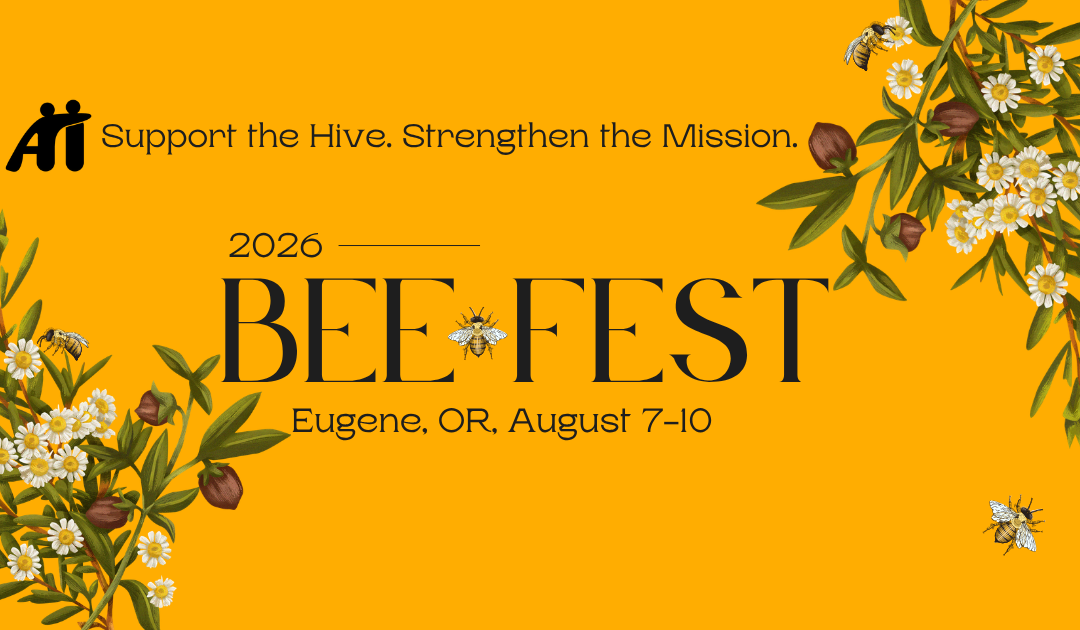
Every summer, we gather a small group of volunteers, board members, supporters, and friends for Bee Fest – our annual Adopt an Inmate volunteer work weekend.
This year’s Bee Fest will take place August 7–10 in Veneta, Oregon. and is especially meaningful as we expand Letters From Prison: In the Classroom, develop new mentorship opportunities, and prepare to launch our new self-serve matching app.
As always, we’re keeping it intentionally small. A handful of familiar faces will gather by the lake to work, plan, laugh, eat, and dream about what’s next for Adopt an Inmate.
Funds raised through our Bee Fest campaign help cover event expenses, meals, meeting space, volunteer support, and other costs associated with bringing people together to strengthen and sustain the mission.
Thanks to an early gift from one of our longtime supporters, we’ve already raised $250 toward our $2,000 Bee Fest goal.
If you’d like to support the hive, we’d be grateful for your help.
Whether you contribute financially, share the campaign, or simply help spread the word, you’re helping us continue building meaningful connections between people inside and outside prison walls.
by Melissa Bee | Jun 2, 2026 | From the Staff, Letters From Prison, Letters From Prison: In The Classroom
For more than a decade, Adopt an Inmate has focused on one simple but powerful idea: meaningful human connection changes lives.
Through various forms of correspondence, we have connected thousands of people on the outside with incarcerated individuals seeking friendship, encouragement, accountability, and support. That work remains at the heart of who we are.
Over the last several months, however, Rick and I have been asking an important question:
Where can Adopt an Inmate make the greatest impact?
The answer has become increasingly clear.
 Our work has grown naturally out of our long-running Letters From Prison blog series. From the beginning, we’ve believed that if people want to understand incarceration, they need to hear directly from those living it. Statistics, policies, and research are important, but they can never fully replace the insight that comes from a real person’s story told in their own words.
Over the years, we’ve seen how powerfully those stories can challenge assumptions and foster empathy. That belief now serves as the foundation of our growing Letters From Prison: In the Classroom initiative.
What we’ve learned through these collaborations is that they do far more than connect students with incarcerated people. They create opportunities for learning, critical thinking, professional development, and meaningful dialogue about justice, rehabilitation, and human dignity. They also give incarcerated participants the opportunity to share their experiences, expertise, and perspectives in ways that can inform and inspire future professionals.
As a result, we are beginning to intentionally center more of our work around education, mentorship, communication, and community engagement. This is not a departure from our mission. It is a natural evolution of it.
For the remainder of 2026, we plan to keep the program intentionally small, focusing on a limited number of pilot partnerships while we continue developing materials, workflows, expectations, and sustainable funding models. We want to grow thoughtfully and responsibly, ensuring that every partnership is meaningful for both students and incarcerated participants.
We’re also working to align other mentoring initiatives, including Pros & Cons, with this broader educational vision. As we continue developing the program, we hope to recruit volunteers from a variety of professional backgrounds who are willing to share their knowledge, experience, and encouragement with incarcerated individuals interested in similar career paths and areas of study.
To support this direction, we’ve launched a dedicated Letters From Prison: In the Classroom page on our website, along with an interest form for educators, students, and community partners who would like to learn more.
If you know a professor, teacher, department chair, student organization, researcher, or community group that may be interested in participating, we would be grateful if you would share the page with them.
This new chapter is exciting. It is also ambitious. But it feels deeply aligned with who we are, what we’ve learned, and where we believe our organization can make the greatest difference.
Thank you for being part of the journey.
— Rick & Melissa
Co-Founders, Adopt an Inmate
by Melissa Bee | Jun 1, 2026 | From the Staff
If you’ve noticed things have been a little quieter than usual around here, you’re not wrong.
Like many volunteer-run organizations, sometimes we have to step back from talking about the work in order to do the work. Over the past several months, we’ve been focused on program development, partnerships, volunteers, grant applications, and building new tools that will help us serve more people.
The good news? We’ve got a lot to share.
North Carolina Field Visit Funded
We’re excited to announce that Adopt an Inmate recently received grant funding to support a field visit to North Carolina later this year.
The trip will allow us to connect with organizations and individuals doing important work in the areas of incarceration, reentry, and community support. We’re especially looking forward to learning from others, sharing ideas, and building relationships that can strengthen our own programs.
If you’re in North Carolina, we’d love to connect while we’re there. We’re still finalizing the itinerary and meeting schedule, but we’ll share more details as those plans come together. One of the things we’re most excited about is the opportunity to meet people face-to-face – volunteers, supporters, partner organizations, and members of our community whom we’ve only known through letters, phone calls, emails, and social media.
We spend so much of our work connecting across distances. It’s a special thing when those connections can happen in person.
Letters From Prison: In the Classroom
One of the projects we’re most excited about is the continued development of Letters From Prison: In the Classroom, a program that connects students and incarcerated individuals through education, dialogue, and shared learning.
As part of that effort, students in an Occupational Therapy program are currently developing an OT Survival Handbook for Prisoners – a practical resource designed to help people navigate challenges related to health, routines, pain management, stress, and daily life while incarcerated.
The handbook is still in development, but we’re eager to share more as it progresses.
New Volunteer Workspace
We are incredibly grateful to The Friends Church in Eugene for generously providing meeting space for our volunteer work sessions through the end of the year.
Having a consistent location for volunteer gatherings will help us train new volunteers, process applications, organize projects, and continue building community around this work.
Community support like this makes a tremendous difference for a small, volunteer-powered organization.
Blueprint App Nearing Completion
Many of you have heard us talk about the Blueprint matching app we’ve been developing in partnership with students from UC Berkeley.
We’re happy to report that the project is nearing completion.
While we still have testing and final refinements ahead of us, we’re getting closer to launching a new system that will make the matching process more efficient, accessible, and user-friendly for future adopters.
We’re not ready to announce a launch date just yet – but we’re getting close.
Want more posts like this? Subscribe to our blog
Bee-Fest Is Coming
August will bring another opportunity for our community to gather, connect, and support the work of Adopt an Inmate.
More details about this year’s Bee-Fest (our annual volunteer gathering) will be coming soon, including ways to participate and support the event. Every dollar raised helps us continue connecting people in prison with volunteers who care.
What’s Coming This Week
We’re also excited to get back into a more regular rhythm of blogging and storytelling.
This week we’ll be sharing several reflections, stories, and conversations inspired by the work we do every day, including some thoughts about language, justice, and the assumptions hidden inside the words we use.
We’re looking forward to the conversation.
As always, thank you for being part of this community. Whether you’ve volunteered, donated, shared a post, written a letter, or simply followed along, you help make this work possible.
We’re glad to be back.
💬 Your turn:
Have a story, insight, or reflection of your own? Scroll down and leave a comment – we’d love to hear from you.
P.S. Our Linktree is one easy place to find everything we’re sharing, watching, posting, and building.
✍️ Take the Quiz – How much do you know about U.S. prisons?
🗣️ Add Your Voice – Submit your responses to our Good, Bad, Change poll
🤲 Get Involved – Help behind the scenes
💌 Donate Stamps – SOS: Stamp out Silence!
❤ Give – Help us build a world where no one is forgotten
⏩ Share this post– Someone needs to see this

by Ray Corona | Dec 14, 2025 | From the Inside, Inmate Ingenuity, Ray Corona
Living life day to day as an incarcerated individual has a very unique set of challenges. There are innumerable necessities from the modern world that a lot of us take for granted. There are obvious freedoms an inmate no longer has, such as our choices in personal clothing, but others are a little harder to imagine. As the amazingly adaptable creatures we are, nothing brings out the old adage “Where there’s a will, there’s a way” like restricting us to a very small set of items in which to live with for years, if not decades.
I have interviewed several men in my state facility (some of which have been incarcerated since before the turn of the century) to discover some of the simplest and some of the most creative ingenuity that has helped make our lives a little easier. While exploring inmate ingenuity, there is one item that came up more than any other: trash bags.
The flexibility of a sheet of mildly opaque plastic* is pretty much endless.
Screen Mounts: Access to tablets in most state prisons around the country has been a massive blessing and boon, especially for personal rehabilitation. The ability to watch a selection of films and movies on demand has also generated a level of communal enjoyment. With each inmate having access to their own screen, space in the day room can get cramped fairly quickly. This problem is solved by turning the bars themselves into a screen wall.
By stretching out two small trash bags, tying one end to the bars above and two loops on the bottom to slip around the sides of the device, a tablet can comfortably hang and lean against the bars from any preferred height for two inmates to enjoy with minimal distractions.
Laundry Lines: Whether an inmate prefers to do their own laundry (which I will touch on how in a later post), they make a mess out of sync with their facility’s laundry protocols, or those protocols fail entirely, they’re gonna be drying something eventually. As expressed in the first entry, stretching out a trash bag creates a surprisingly sturdy rope that can be tied together, looped, hooked, and strung up basically anywhere. One of the first times I saw this done was to hang wet clothing and linen all around a cell, regardless of the space available.
Curtains: Within our personal space, we are allowed minimal privacy, even within individual “wet” cells that feature a suite of complete plumbing. This can be partially alleviated with make shift, low trash bag curtains, which enables staff to still guarantee security. These could also be hung over windows to minimize the intensity of natural light, also with the added effect of not creating security concerns.
Insulation: Most prison facilities are built straight from cement with basic ventilation and acoustics, prioritizing functionality over any aesthetic, though a lot of state facilities still lack any air conditioning.
Our rooms feature small vents in each cell which have varying degrees of success at keeping us comfortable. This can be adjusted for personal preference blocking some or all of the vent with trash bags.
Heating ovens: For my state, higher security facilities are not allowed access to microwaves, but some do have faucets that supply near boiling water. Keeping a packaged snack or meal in it’s container, they can fill a small trash bag with hot water and let any sealed food heat up while submerged.
In the next post, I’ll go over what some inmates do in compromise for one of the most valuable tools of the modern age; Adhesives!
- Size: The small ones are about two feet long for our cells, and there are industrial sized ones for the trash bin in the day rooms.
Image by Yamu_Jay on Pixabay.

 Emotional Intelligence Awareness: New Ways of Interacting After Trauma & Incarceration
 Ascending from the Ashes of Addiction: A Christian Framework for Substance Use DIsorder Counseling