Catch up with the week’s stories about justice, resistance, policy, protest, and the power of difference. These weekly recaps are emailed to followers on Sundays. If you’d like it in email form (just once a week, no spam ever), you can subscribe here. Otherwise, check into the blog any time.
Civics 101: The Law Passed, So Why Is Nothing Changing? Passing a law doesn’t mean it takes effect, or helps everyone. We break down what really happens after legislation passes, and why many so-called reforms still leave people behind.
In the News: Anti-ICE Protests in L.A.
From Los Angeles: Anti-ICE protests, immigration raids, and powerful voices calling out injustice. Featuring excerpts from Democracy Now and journalist Jean Guerrero.
Fact Check Friday: They’re Just Doing Their Jobs
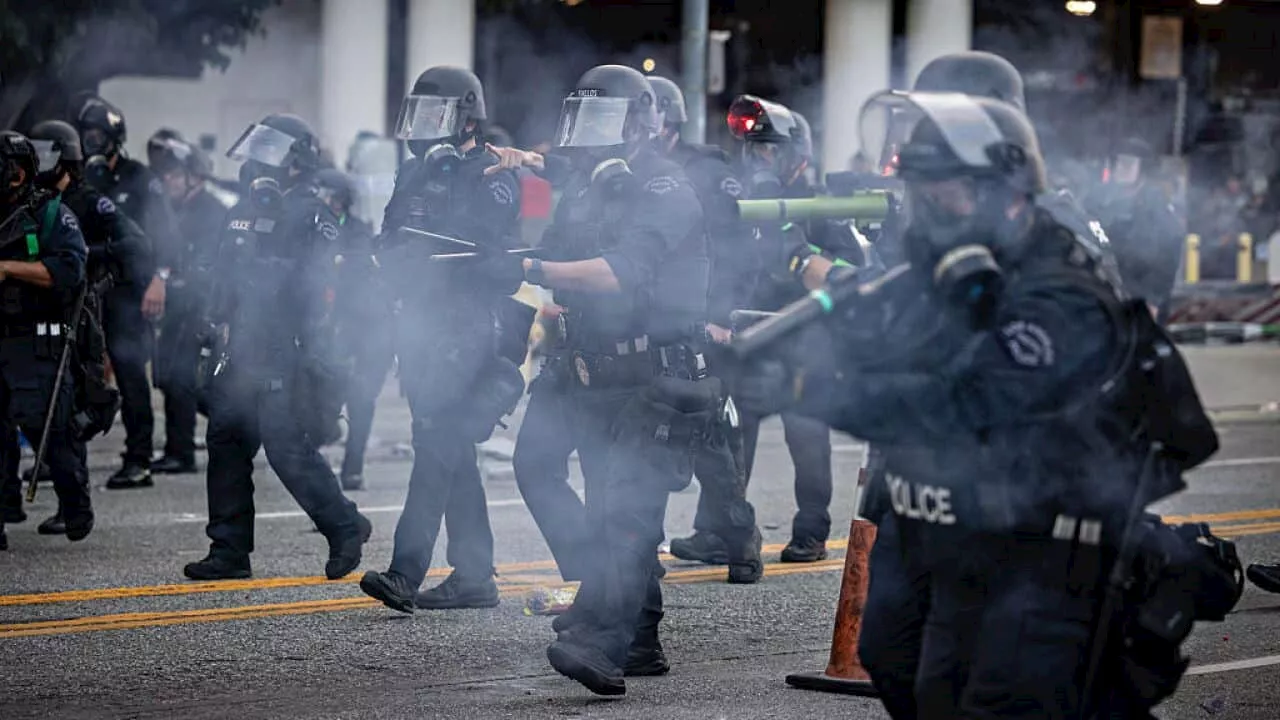
Unmarked agents. Rubber bullets. No warrants. We’re fact-checking recent raids and immigration crackdowns and reminding you what your rights still are.
Bee Sides: When All the Other Is Gone
Diversity protects forests. And communities. This one’s about photos, the integrity of differences, and what happens when we erase them. Spoiler: It’s not strength.
Also: Fly High, Sly 🙌 🙌 🙌
In solidarity, The Adopt an Inmate Team 🐝 Truth. Connection. Resistance.
Quote of the Week:
I’m of a fearsome mind to throw my arms around every living librarian who crosses my path, on behalf of the souls they never knew they saved.
~ Barbara Kingsolver
Visit our Linktree to find everything we’re sharing, watching, posting, and building.
✍️Take the Quiz – How much do you know about U.S. prisons? 🗣️Add Your Voice – Submit your responses to our Good, Bad, Change poll 🤲Get Involved– Help behind the scenes 💌Donate Stamps – SOS: Stamp out Silence! ❤Give – Help us build a world where no one is forgotten Forward This Email – Someone needs to see this
Welcome to Bee Sides short reflections on justice, hope, and the human spirit
This series is a corner of our blog where I gather stories, books, and unexpected moments that linger long after the first glance.
Most will tie back to incarceration, justice, and the quiet fight for dignity. But sometimes? It’ll simply be whatever refuses to let go. Because that’s what Bee Sides are for.
Let me know what you’re reading, watching, or wondering about. Maybe it’ll make the next issue.
🌿 This one’s about what happens to a forest – and a people – when differences are smothered.
When I was in high school in Tulsa, Oklahoma in 1980, there was one Asian guy in our entire school. Surprisingly, in a midwest, bible-belt city that was home to the 1921 Tulsa Race Massacre, a place with deep scars from white supremacy and cultural erasure, he was popular, and people were genuinely drawn to what made him unique.
I’ve been thinking about him a lot lately, and about what happens when the ‘other’ is erased. Not just from schools, but from churches, city councils, neighborhoods, books, plays and TV shows, investment portfolios and corporate boards, and history itself.
Part of our original mission statement (written by Rick from prison) was, “to help those sentenced emerge from prison whole, knowing they are part of a larger family that loves and cares for them.”
So let’s talk about wholeness. What does it even mean?
I know what it doesn’t mean. The way Rick wrote that … “part of” something larger. Can you feel that? Whole isn’t just one thing.
Sameness is not safety. It’s sterility.
We see it in agriculture. Healthy soil teems with diversity … microbes, fungi, worms, nutrients in perfect balance. Remove that variety by planting a single crop over and over, and you’re left with dust and erosion.
On the subject of monocultures, Michael Pollan writes:
This is something nature never does, always and for good reasons practicing diversity instead. This is perhaps the greatest efficiency of a farm treated as a biological system: health.
Pollan also notes that monocultures are supremely vulnerable to pests, requiring tons and tons of pesticides. We’ve thus created a cycle of the opposite of health. For the goal of too much same.
We see it in scripture. Paul’s letter to the Corinthians says: ‘The eye cannot say to the hand, “I don’t need you!” And the head cannot say to the feet, “I don’t need you!” On the contrary, those parts of the body that seem to be weaker are indispensable.’
We see it in investments. Every financial advisor will tell you: Security requires variety.
For reasons that are net yet understood, attempts by food scientists to remove or isolate a single nutrient from a whole food, with the intent to boost it’s benefit, often backfires.
Integrity is not purity, but the state of being undivided. We need it all.
And yet … here we are again. Watching history repeat itself. Books banned. Cultures erased. Languages silenced. Communities driven out. We already saw native tribes forced to abandon their traditions and language, toward the goal of assimilation, in their own lands. During WWII, we saw entire American families of Japanese descent removed from society and locked up based on their ancestry alone. Today, efforts to roll back diversity in public life, to fear and flatten difference, and ultimately erase it, are again front and center.
The great and wise Wendell Berry wrote:
There is an uncanny resemblance between our behavior toward each other and our behavior toward the earth. The Unsettling of America (1977).
The line that connects the bombing of civilian populations to the mountain removed by strip mining … to the tortured prisoner, seems to run pretty straight. We’re living, it seems, in the culmination of a long warfare – warfare against human beings, other creatures and the Earth itself.” Commencement address at Lindsey Wilson College (14 May 2005)
Prison is designed to convince you that you don’t matter, that the world is better off without you. Some institutions have a policy against people being in possession of any photos of themselves, whether alone or with others. They’ll claim this is for ‘security’ reasons, but we know that the first step of an abuser is to isolate.
For Rick’s first Christmas behind bars, I contacted a bunch of his friends and asked for photos of them with him, and had them made into a photo album – one of the few items besides letters that are sometimes allowed in through the mail. He told me it was the best gift he could have gotten.
“It reminded me that I’m part of something.”
There it is. Wholeness. We all belong to each other.
Speaking of belonging … I can’t end this Bee Sides without acknowledging the passing of Sly Stone, who wrote the timeless anthem Everyday People, making the musical point that harmony is made up of all our different notes. If you’re a fan, check out Questlove’s documentary, Sly Lives!
Fly high, Sly. 🙌 🙌 🙌
Sometimes I’m right and I can be wrong My own beliefs are in my song The butcher, the banker, the drummer and then Makes no difference what group I’m in
I am everyday people, yeah, yeah
There is a blue one who can’t accept The green one for living with A fat one tryin’ to be a skinny one Different strokes for different folks And so on and so on and scooby-dooby-dooby We got to live together
I am no better and neither are you We’re all the same, whatever we do You love me, you hate me You know me and then You can’t figure out the bag I’m in
I am everyday people
There is a long hair That doesn’t like the short hair For being such a rich one That will not help the poor one Different strokes for different folks And so on and so on, scooby-dooby-dooby We got to live together
There is a yellow one that won’t Accept the black one That won’t accept the red one That won’t accept the white one Different strokes for different folks And so on and so on and Scooby-dooby-dooby
I am everyday people
🗣️ What makes you feel whole? Have you ever felt erased, or deeply seen? What do you notice vanishing from your community, your classroom, your faith space, your feed?
Scroll down to share your thoughts in the comments, or share a story, a memory, or a moment, big or small, that reminded you we belong to each other.
🐝Get Involved– Help behind the scenes ✍️Take the Quiz – How much do you know about U.S. prisons? ❤Give – Fuel the mission
CLAIM: “These officers are just enforcing the law. They’re rounding up violent criminals who don’t belong here.”
🔎 FACT CHECK:
🛑 FALSE. What’s happening on our streets isn’t law enforcement, it’s state-sanctioned terror.
🚨 What We’re Seeing:
Heavily armed, masked agents:
No identification
No warrants
No probable cause
No Miranda rights
Shooting rubber bullets and chemical agents at peaceful protesters and journalists
In America:
You have a RIGHT to protest.
You have a RIGHT to know who is detaining you.
Agents need a WARRANT or PROBABLE CAUSE.
Masked paramilitary forces dragging people into unmarked vehicles is ILLEGAL.
What we’re witnessing in cities like Los Angeles and Nashville isn’t “immigration enforcement” - it’s extrajudicial abduction. It's kidnapping and human trafficking.
🧨 Being undocumented is not a crime.
It’s a civil offense, not grounds for violent raids.
Yet workers - cooks, janitors, dishwashers, farmhands - are being hunted like fugitives, while real threats walk free in positions of power.
💬 Quote of the Week:
I’ve never in my life feared an immigrant or a trans person. I’ve feared the men in my church, the white men in office, and now the armed men hiding behind masks, badges, weapons, and lies.
[...] and i hope they remember the Nuremberg trials, because this fever is going to break, and you will be held accountable for your crimes. Monte Mader
🗣️ We Need to Say It Plain:
This is not about safety. It’s not about law and order. It’s about control and power, and using fear, and cruelty to get it. That's called fascism.
📣 Your Rights (Even Now):
✅ You do not have to open the door to ICE without a signed judicial warrant. ✅ You have the right to remain silent. ✅ You have the right to record in public. ✅ You have the right to protest. ✅ You have the right to legal representation.
Know them. Use them. Defend them.
❤️ Call to Action
🧵 Share this post. 📬 CALL AND WRITE your lawmakers. 🎤 Speak out. 💰 Support local immigrant aid organizations.
Because when they come for them, they’re coming for us all.
This is part of our Policy vs. People series, where we unpack how prison policies affect real people, and what you’re not hearing in the headlines.
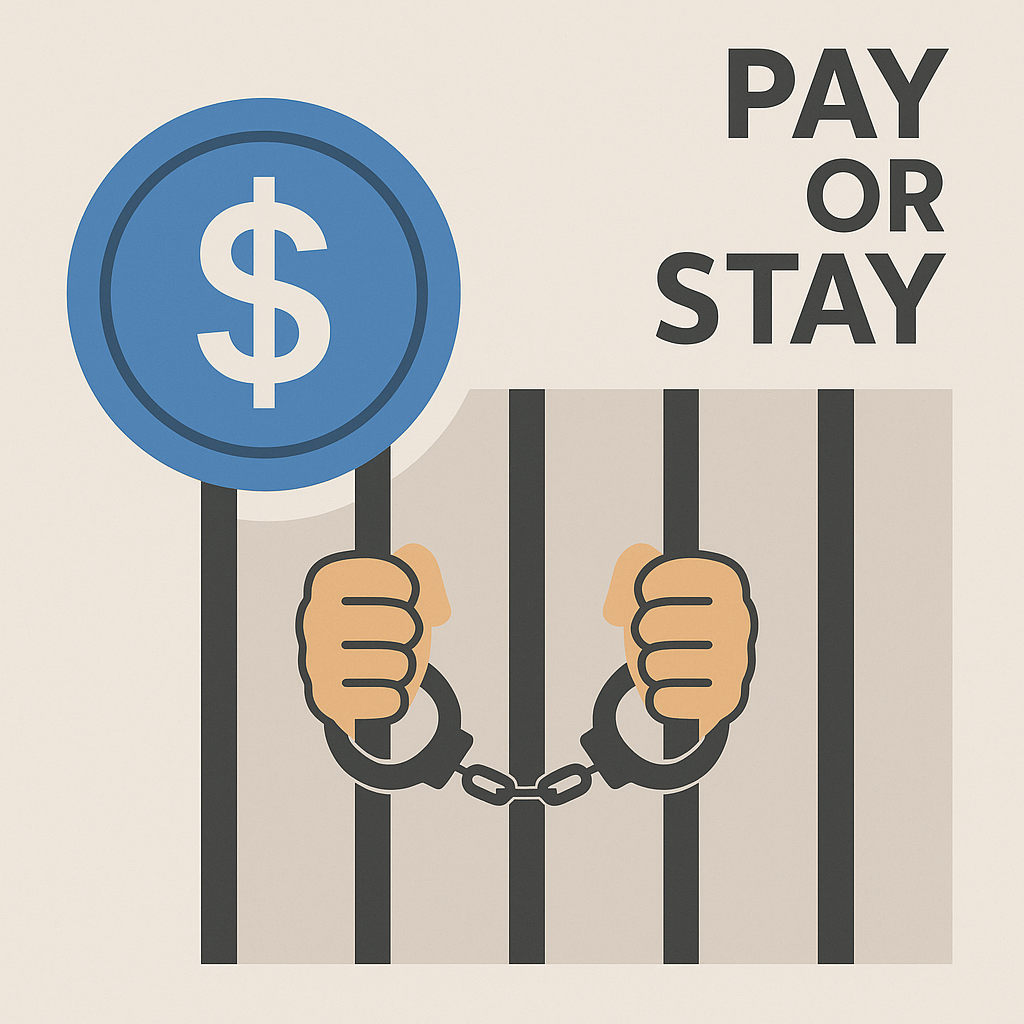
Policy: It’s called “pay or stay.” Miss a payment, go to jail.
Reality: This practice punishes people not for crimes, but for being poor.
Whether it’s a parking ticket, court fee, or old fine, people across the U.S. are still being incarcerated simply because they can’t afford to pay.
📌 Some courts call it a “civil bench warrant.” Others call it “failure to appear.” But for many, it’s just a modern-day debtor’s prison.
Wait — Isn’t Debtor’s Prison Illegal?
Technically, yes. The U.S. Supreme Court ruled in Bearden v. Georgia (1983) that it’s unconstitutional to jail someone just because they can’t afford to pay a fine. But in practice? It still happens.
Why It Happens Cities and counties increasingly rely on fines and fees to fund their operations, from traffic tickets to probation fees to room-and-board charges for jail time itself. When people can’t pay, courts issue arrest warrants. That means jail time not for a new offense, but for unpaid debt.
Who It Hurts
Working-class people living paycheck to paycheck
People already dealing with housing insecurity
Parents who miss child support payments due to job loss
Formerly incarcerated individuals trying to rebuild
What It Costs Jailing someone for nonpayment costs taxpayers more than the amount owed. And it creates a cycle of poverty: lost jobs, missed childcare, suspended licenses, and more.
What’s Being Done Several states have outlawed the practice, and lawsuits are challenging it elsewhere. But in many areas, it’s still happening, quietly, cruelly, and disproportionately to Black, Brown, and low-income people.
Policy vs. People 📜 The Policy: Use jail to collect fines. 👥 The People: Get trapped in a poverty-to-prison pipeline.
✍️ Take the Quiz How much do you really know about mass incarceration?
🗣️ Tell Your Story Have you or someone you know earned time off that was never honored? We want to hear how these policies are playing out in real life.
❤️ Give Support our work to expose injustice and fight for fair representation.
This is part of our Civics 101 series — breaking down the structures behind the headlines.
What happens after a bill becomes law, and why most people still wait.
You did it. The bill passed. The president signed it. You throw some confetti and wait for the change to kick in.
But here’s the part they left out of Schoolhouse Rock:
Just because a law passes doesn’t mean it’s enforced, or that it helps the people who need it most.
Let’s break down what really happens after a bill becomes law, especially in the criminal legal system.
1. Implementation Isn’t Instant
Passing a law is just step one. Now agencies have to write the rules to carry it out.
That means departments like the DOJ (or state equivalents) have to interpret the law.
They create new policies, update procedures, and train staff.
That process takes time. Sometimes months or even years.
Worse, if a department doesn’t want to implement the law? They can drag their feet, “interpret” it narrowly, or underfund enforcement.
2. Most Reforms Aren’t Retroactive
This is the heartbreak of justice reform.
Most new laws don’t apply to people already convicted under the old law.
Lawmakers often write reforms to avoid “letting people out.”
Retroactive application requires separate legislation — and political courage.
So the very people who fought hardest for reform… get nothing.
📌 Example: California changed its Three Strikes law in 2012. But it took another separate campaign (Prop 36) to allow people already sentenced to apply for release.
3. Courts Can Still Gut It
Any new law can be challenged in court — and many are.
Judges can strike down all or part of it.
Opponents often sue to block reforms, especially those reducing prison time or expanding rights.
Even if the law survives, court decisions can weaken its impact.
4. The Law Exists, But So Do Barriers
Prosecutors may not use new resentencing tools.
Prison officials may “lose” applications or stall reviews.
People inside often don’t even know they’re eligible.
Without advocates and watchdogs, new laws can sit on the books collecting dust.
Why It Matters
People say “just change the law” like that’s the end of the story.
But the people most harmed by bad laws are often excluded from the reforms that follow. And when a new law takes effect, it still needs funding, enforcement, outreach, and oversight.
🗣️ Have a civic question you want us to cover? Want to break down a specific law or policy?
Comment below, or share your idea with us here. See all Civics 101 posts here.
⏩ Forward This Post – Someone in your life needs to understand this.
At first glance, our website font might look like a throwback, but it’s much more than a design choice.
At our core, we celebrate the enduring spirit of communication within the prison system. In an era dominated by digital interactions, prison remains a stronghold for the art of letter-writing, both handwritten and typewritten. This tradition is not just a means of keeping in touch; it is a lifeline for many inmates.
Typewriters hold a special place in this environment. They are a rare and valuable asset, often out of reach for prisoners who earn a few cents per hour, if they get paid at all. All electronics available for purchase in prisons are clear so that no contraband can be hidden inside. Where available, a typewriter like this will cost someone in prison about $250. It’s how people inside file grievances, fight wrongful convictions, write poetry, or send love. And it’s how many have kept their spirits alive in a system that dehumanizes and isolates. Those who do manage to obtain one often become pivotal figures within their communities, much like the first telephone owners, and serve as hubs of information, assisting others inside with legal documentation, correspondence, and maintaining connections with the outside world.
Our use of the typewriter font pays homage to these resilient communicators. It symbolizes the importance of every letter written and every word typed within the confines of prison walls. It is a nod to the struggle and the perseverance of those who continue to reach out and connect, despite the barriers they face.
Many are forced to eat food that’s spoiled, nutritionally hollow, or barely edible.
🚨 What We’re Seeing:
Heavily armed, masked agents:
No identification
No warrants
No probable cause
No Miranda rights
Shooting rubber bullets and chemical agents at peaceful protesters and journalists
In America:
You have a RIGHT to protest.
You have a RIGHT to know who is detaining you.
Agents need a WARRANT or PROBABLE CAUSE.
Masked paramilitary forces dragging people into unmarked vehicles is ILLEGAL.
What we’re witnessing in cities like Los Angeles and Nashville isn’t “immigration enforcement” - it’s extrajudicial abduction. It's kidnapping and human trafficking.
🧨 Being undocumented is not a crime.
It’s a civil offense, not grounds for violent raids.
Yet workers - cooks, janitors, dishwashers, farmhands - are being hunted like fugitives, while real threats walk free in positions of power.
💬 Quote of the Week:
I’ve never in my life feared an immigrant or a trans person. I’ve feared the men in my church, the white men in office, and now the armed men hiding behind masks, badges, weapons, and lies.
[...] and i hope they remember the Nuremberg trials, because this fever is going to break, and you will be held accountable for your crimes. Monte Mader
🗣️ We Need to Say It Plain:
This is not about safety. It’s not about law and order. It’s about control and power, and using fear, and cruelty to get it. That's called fascism.
📣 Your Rights (Even Now):
✅ You do not have to open the door to ICE without a signed judicial warrant. ✅ You have the right to remain silent. ✅ You have the right to record in public. ✅ You have the right to protest. ✅ You have the right to legal representation.
Know them. Use them. Defend them.
❤️ Call to Action
🧵 Share this post. 📬 CALL AND WRITE your lawmakers. 🎤 Speak out. 💰 Support local immigrant aid organizations.
Because when they come for them, they’re coming for us all.
You’re bringing hope and human connection to people who need it most. Whether you’re already in contact, or are still waiting for your match, we’re grateful you’re here.
Each month, we’ll send a short note like this one, just a gentle nudge to check in with your adoptee, along with a few ideas of what you might write, send, or say. We know life gets busy, and sometimes the hardest part is knowing where to start. We’re here to help you keep that connection strong.
It’s the start of a new month and a good time to drop a quick note, card, or poem in the mail. For folks inside, time stretches differently. Hearing from someone on the outside can change the whole rhythm of their week.
June brings Father’s Day, graduation season, and longer days – any of which might stir up hard feelings. If you’re not sure what to write, a simple “thinking of you” goes further than you think.
✍️ Need inspiration?
What’s one thing that brought you joy this week?
Have you tried something new recently – food, show, hobby?
If you could teleport anywhere this summer, where would you go?
📌 Friendly Reminder:
Make sure you’re adhering to mail policies for your adoptee’s institution – let us know if you’re unsure.
📙 Book Pick (optional):
The Sun Does Shine by Anthony Ray Hinton
A powerful reminder of hope, connection, and the long reach of injustice, and how love, humor, and letters sustained him through nearly 30 years on death row.
📚 Extra This Month:
Is your adoptee a veteran? Check out our veteran series from Memorial Week on the blog.
Let’s make someone’s June a little brighter.
Go hug your adoptee.
With appreciation,
🐝 Melissa Bee
Adopt an Inmate
✍️ PS:We’d love to hear how your connection is going – good, bad, or in between. Use this form to share a little about your experience. You can stay anonymous if you prefer.
This is part of our Policy vs. People series, where we unpack how prison policies affect real people, and what you’re not hearing in the headlines.
Policy says: If you follow the rules, take classes, and work hard, you’ll earn time off your sentence.
Reality: Many never see the time they earned, and some never knew it was taken away until it was too late.
What Are “Good Time” Credits?
Many state prison systems offer earned time or good conduct credits meant to reward people for:
Completing education programs
Holding prison jobs
Staying out of trouble
In theory, it encourages rehabilitation. In practice? It’s a bait-and-switch.
The People Impacted
We’ve heard from countless incarcerated people who:
Finish a GED or reentry class only to learn it doesn’t qualify anymore.
Lose time credits because a program was reclassified after they completed it.
Follow all the rules for years, only to be told the policy changed, and their credits don’t count.
Never received clear notice in the first place.
One man wrote:
“I earned my time. I have the certificates. But they told me the rule changed last year, and no one said anything. Now I’m still sitting here.”
🔍 What’s Really Going On?
This isn’t just clerical error. It’s systemic. Some corrections departments quietly reclassify programs, others fail to track credits at all. And many don’t have a transparent way to appeal.
The result? People serve more time than they should, at taxpayers’ expense, while states brag about “reform.”
✍️ Take the Quiz How much do you really know about mass incarceration?
🗣️ Tell Your Story Have you or someone you know earned time off that was never honored? We want to hear how these policies are playing out in real life.
❤️ Give Support our work to expose injustice and fight for fair representation.



 Bee Sides: When All the Other Is Gone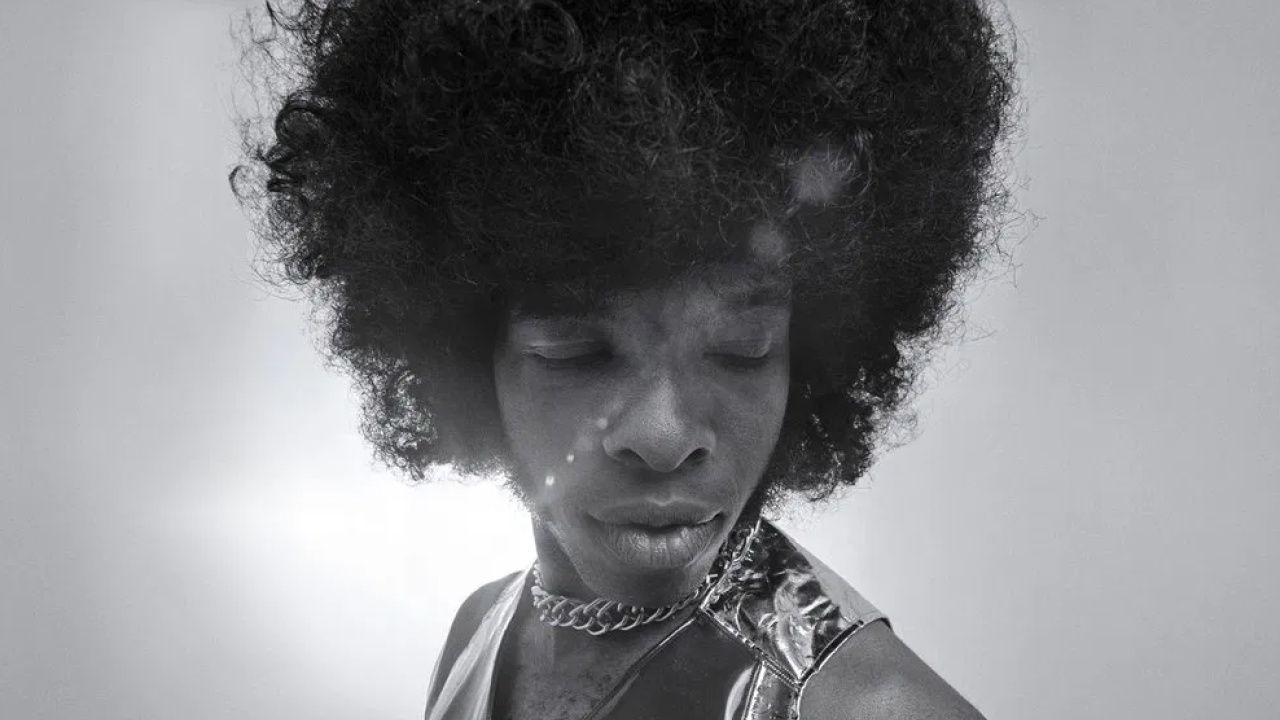



 Typewriters hold a special place in this environment. They are a rare and valuable asset, often out of reach for prisoners who earn a few cents per hour, if they get paid at all. All electronics available for purchase in prisons are clear so that no contraband can be hidden inside. Where available, a typewriter like this will cost someone in prison about $250. It’s how people inside file grievances, fight wrongful convictions, write poetry, or send love. And it’s how many have kept their spirits alive in a system that dehumanizes and isolates. Those who do manage to obtain one often become pivotal figures within their communities, much like the first telephone owners, and serve as hubs of information, assisting others inside with legal documentation, correspondence, and maintaining connections with the outside world.