When All the Other Is Gone
Welcome to Bee Sides
short reflections on justice, hope, and the human spirit
This series is a corner of our blog where I gather stories, books, and unexpected moments that linger long after the first glance.
Most will tie back to incarceration, justice, and the quiet fight for dignity. But sometimes? It’ll simply be whatever refuses to let go. Because that’s what Bee Sides are for.
Let me know what you’re reading, watching, or wondering about. Maybe it’ll make the next issue.
🌿 This one’s about what happens to a forest – and a people – when differences are smothered.
When I was in high school in Tulsa, Oklahoma in 1980, there was one Asian guy in our entire school. Surprisingly, in a midwest, bible-belt city that was home to the 1921 Tulsa Race Massacre, a place with deep scars from white supremacy and cultural erasure, he was popular, and people were genuinely drawn to what made him unique.
I’ve been thinking about him a lot lately, and about what happens when the ‘other’ is erased. Not just from schools, but from churches, city councils, neighborhoods, books, plays and TV shows, investment portfolios and corporate boards, and history itself.
Part of our original mission statement (written by Rick from prison) was, “to help those sentenced emerge from prison whole, knowing they are part of a larger family that loves and cares for them.”
So let’s talk about wholeness. What does it even mean?
I know what it doesn’t mean. The way Rick wrote that … “part of” something larger. Can you feel that? Whole isn’t just one thing.
Sameness is not safety. It’s sterility.
We see it in agriculture. Healthy soil teems with diversity … microbes, fungi, worms, nutrients in perfect balance. Remove that variety by planting a single crop over and over, and you’re left with dust and erosion.
On the subject of monocultures, Michael Pollan writes:
This is something nature never does, always and for good reasons practicing diversity instead. This is perhaps the greatest efficiency of a farm treated as a biological system: health.
Pollan also notes that monocultures are supremely vulnerable to pests, requiring tons and tons of pesticides. We’ve thus created a cycle of the opposite of health. For the goal of too much same.
We see it in scripture. Paul’s letter to the Corinthians says: ‘The eye cannot say to the hand, “I don’t need you!” And the head cannot say to the feet, “I don’t need you!” On the contrary, those parts of the body that seem to be weaker are indispensable.’
We see it in investments. Every financial advisor will tell you: Security requires variety.
For reasons that are net yet understood, attempts by food scientists to remove or isolate a single nutrient from a whole food, with the intent to boost it’s benefit, often backfires.
Integrity is not purity, but the state of being undivided. We need it all.
And yet … here we are again. Watching history repeat itself. Books banned. Cultures erased. Languages silenced. Communities driven out. We already saw native tribes forced to abandon their traditions and language, toward the goal of assimilation, in their own lands. During WWII, we saw entire American families of Japanese descent removed from society and locked up based on their ancestry alone. Today, efforts to roll back diversity in public life, to fear and flatten difference, and ultimately erase it, are again front and center.
The great and wise Wendell Berry wrote:
There is an uncanny resemblance between our behavior toward each other and our behavior toward the earth. The Unsettling of America (1977).
The line that connects the bombing of civilian populations to the mountain removed by strip mining … to the tortured prisoner, seems to run pretty straight. We’re living, it seems, in the culmination of a long warfare – warfare against human beings, other creatures and the Earth itself.”
Commencement address at Lindsey Wilson College (14 May 2005)
Prison is designed to convince you that you don’t matter, that the world is better off without you. Some institutions have a policy against people being in possession of any photos of themselves, whether alone or with others. They’ll claim this is for ‘security’ reasons, but we know that the first step of an abuser is to isolate.
For Rick’s first Christmas behind bars, I contacted a bunch of his friends and asked for photos of them with him, and had them made into a photo album – one of the few items besides letters that are sometimes allowed in through the mail. He told me it was the best gift he could have gotten.
“It reminded me that I’m part of something.”
There it is. Wholeness. We all belong to each other.
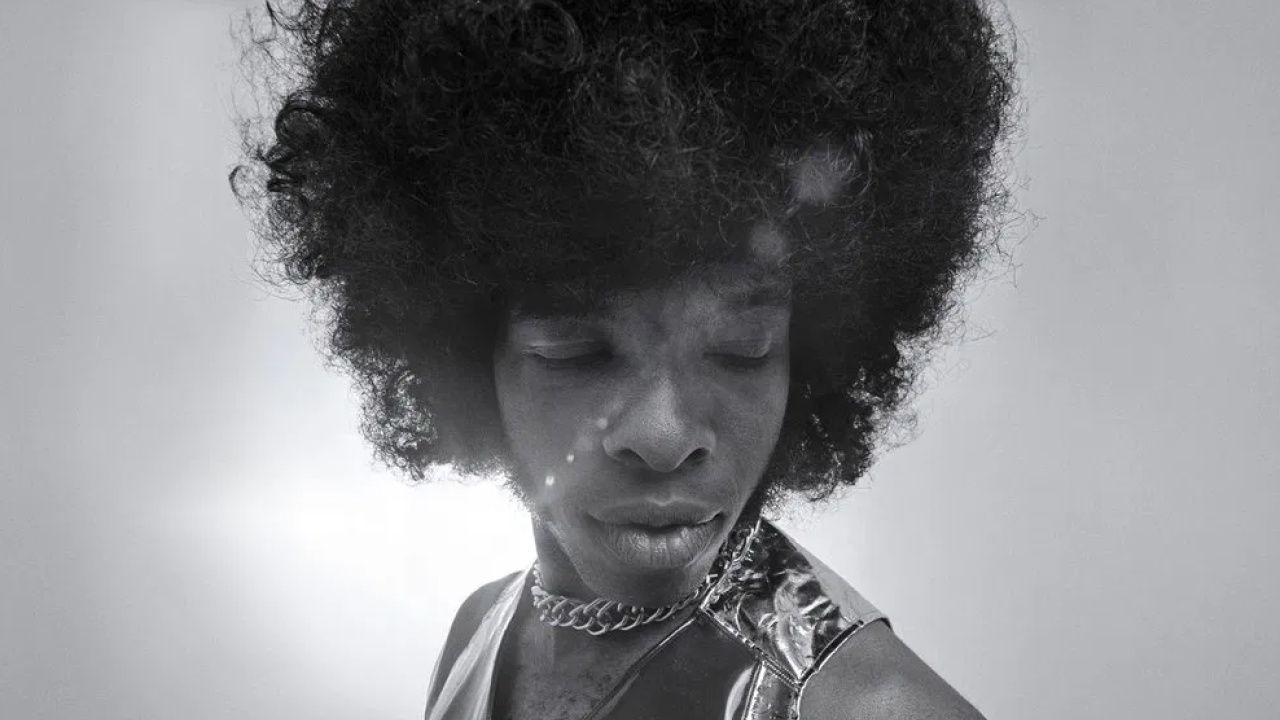 Speaking of belonging … I can’t end this Bee Sides without acknowledging the passing of Sly Stone, who wrote the timeless anthem Everyday People, making the musical point that harmony is made up of all our different notes. If you’re a fan, check out Questlove’s documentary, Sly Lives!
Fly high, Sly. 🙌 🙌 🙌
Sometimes I’m right and I can be wrong
My own beliefs are in my song
The butcher, the banker, the drummer and then
Makes no difference what group I’m in
I am everyday people, yeah, yeah
There is a blue one who can’t accept
The green one for living with
A fat one tryin’ to be a skinny one
Different strokes for different folks
And so on and so on and scooby-dooby-dooby
We got to live together
I am no better and neither are you
We’re all the same, whatever we do
You love me, you hate me
You know me and then
You can’t figure out the bag I’m in
I am everyday people
There is a long hair
That doesn’t like the short hair
For being such a rich one
That will not help the poor one
Different strokes for different folks
And so on and so on, scooby-dooby-dooby
We got to live together
There is a yellow one that won’t
Accept the black one
That won’t accept the red one
That won’t accept the white one
Different strokes for different folks
And so on and so on and
Scooby-dooby-dooby
I am everyday people
🗣️ What makes you feel whole?
Have you ever felt erased, or deeply seen? What do you notice vanishing from your community, your classroom, your faith space, your feed?
Scroll down to share your thoughts in the comments, or share a story, a memory, or a moment, big or small, that reminded you we belong to each other.
🐝 Get Involved – Help behind the scenes
✍️ Take the Quiz – How much do you know about U.S. prisons?
❤ Give – Fuel the mission



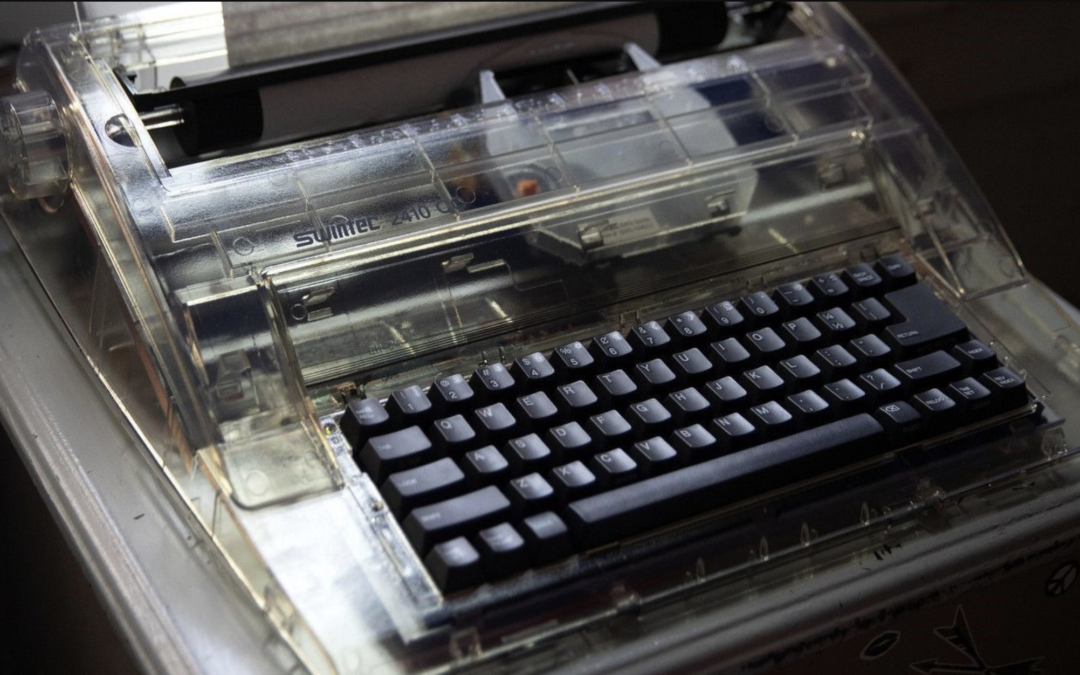
 Typewriters hold a special place in this environment. They are a rare and valuable asset, often out of reach for prisoners who earn a few cents per hour, if they get paid at all. All electronics available for purchase in prisons are clear so that no contraband can be hidden inside. Where available, a typewriter like this will cost someone in prison about $250. It’s how people inside file grievances, fight wrongful convictions, write poetry, or send love. And it’s how many have kept their spirits alive in a system that dehumanizes and isolates. Those who do manage to obtain one often become pivotal figures within their communities, much like the first telephone owners, and serve as hubs of information, assisting others inside with legal documentation, correspondence, and maintaining connections with the outside world.