


Welcome to Bee Sides
short reflections on justice, hope, and the human spirit
This series is a corner of our blog where I gather books, stories, and unexpected moments that linger long after the first glance.
Most will tie back to incarceration, justice, and the quiet fight for dignity. But sometimes? It’ll simply be whatever refuses to let go — the echoes that stay with me. Because that’s what Bee Sides are for.
Let me know what you’re reading, watching, or wondering about. Maybe it’ll make the next issue.
This one’s about what we know, what we think we know, and what we learn when we step outside our bubble.
There’s nothing like leaving home to realize how deeply we’re shaped by it.
What happened.
Recently, both my son and my mother — each on their own paths — left their comfort zones and visited a different part of the world.
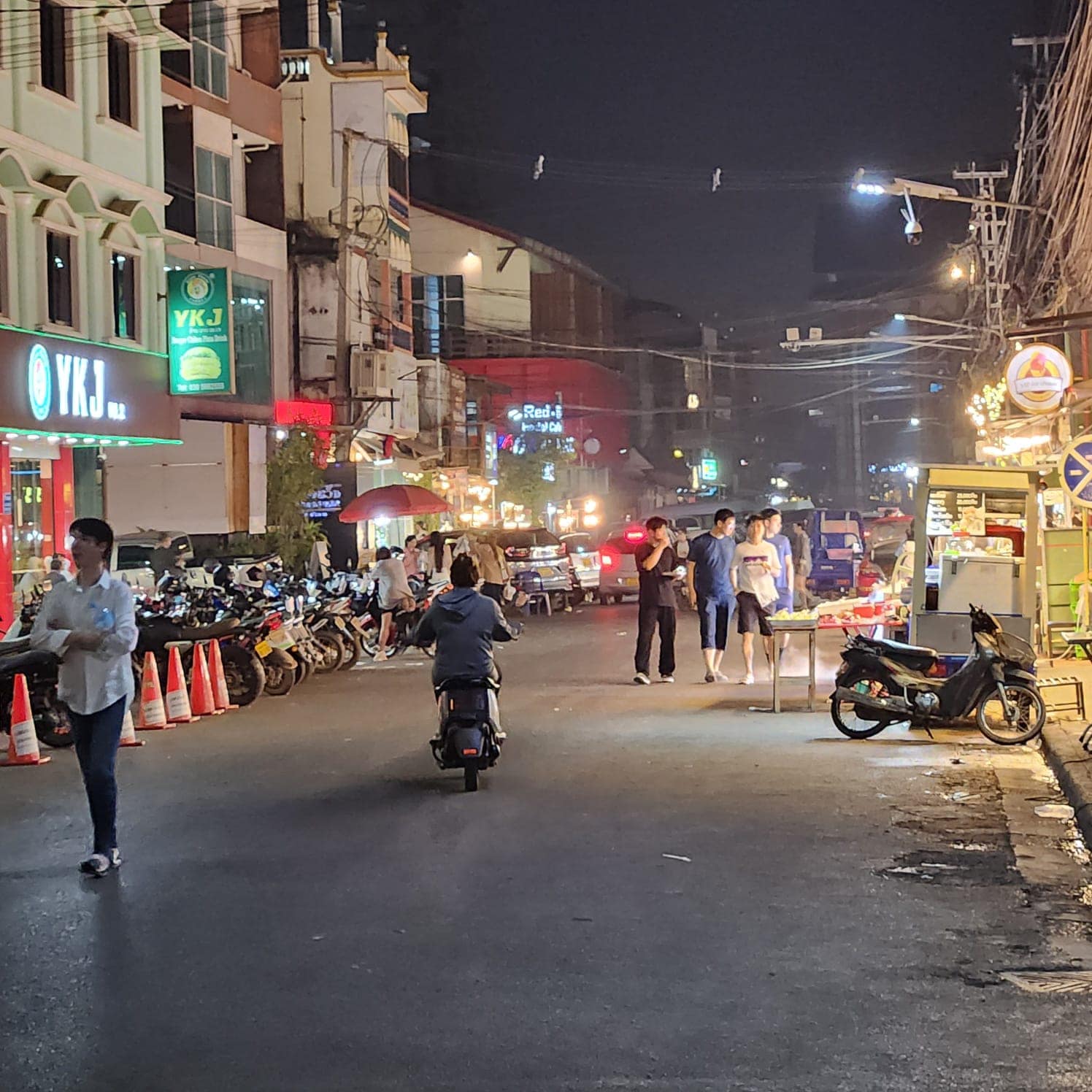 My son traveled to Laos and Japan. He told me he felt safer walking down a dark alley in either place than in most U.S. cities.
Asian culture holds a quiet respect for personal space and flow. In Tokyo, the bars are open all night, each one with its own quirky groove and pulse. Yet, amid the nightlife bustle, an underlying calm remains.
When entering an establishment, it’s polite to say “sumimasen” (すみません), a gentle “excuse me” or “I’m sorry,” acknowledging that you’re entering someone else’s rhythm. A way of saying: I see you. I don’t want to disrupt what you’ve created here. I’ll enter gently. If a person has had too much to drink and ends up on the sidewalk, there’s no judgment. A passerby quietly leaves a bottle of water and moves on.
Travel doesn’t have to be international to shake loose our assumptions. Sometimes a new zip code is enough.
While my son was overseas, my mother was on her own sort of pilgrimage. A Texas native, she headed to Mesquite to visit family she’d never met. Her experience was completely different, but just as revealing. There, politeness means avoiding direct disagreement — especially around politics or religion. But it’s also perfectly normal to be asked how much money you make, whether you own a home, or if you’re set for retirement.
Not to pry — to care. So you don’t feel alone.
What stuck.
Among the suitcases and souvenirs they brought home, it was their stories that stayed with me most.
What it brought back.
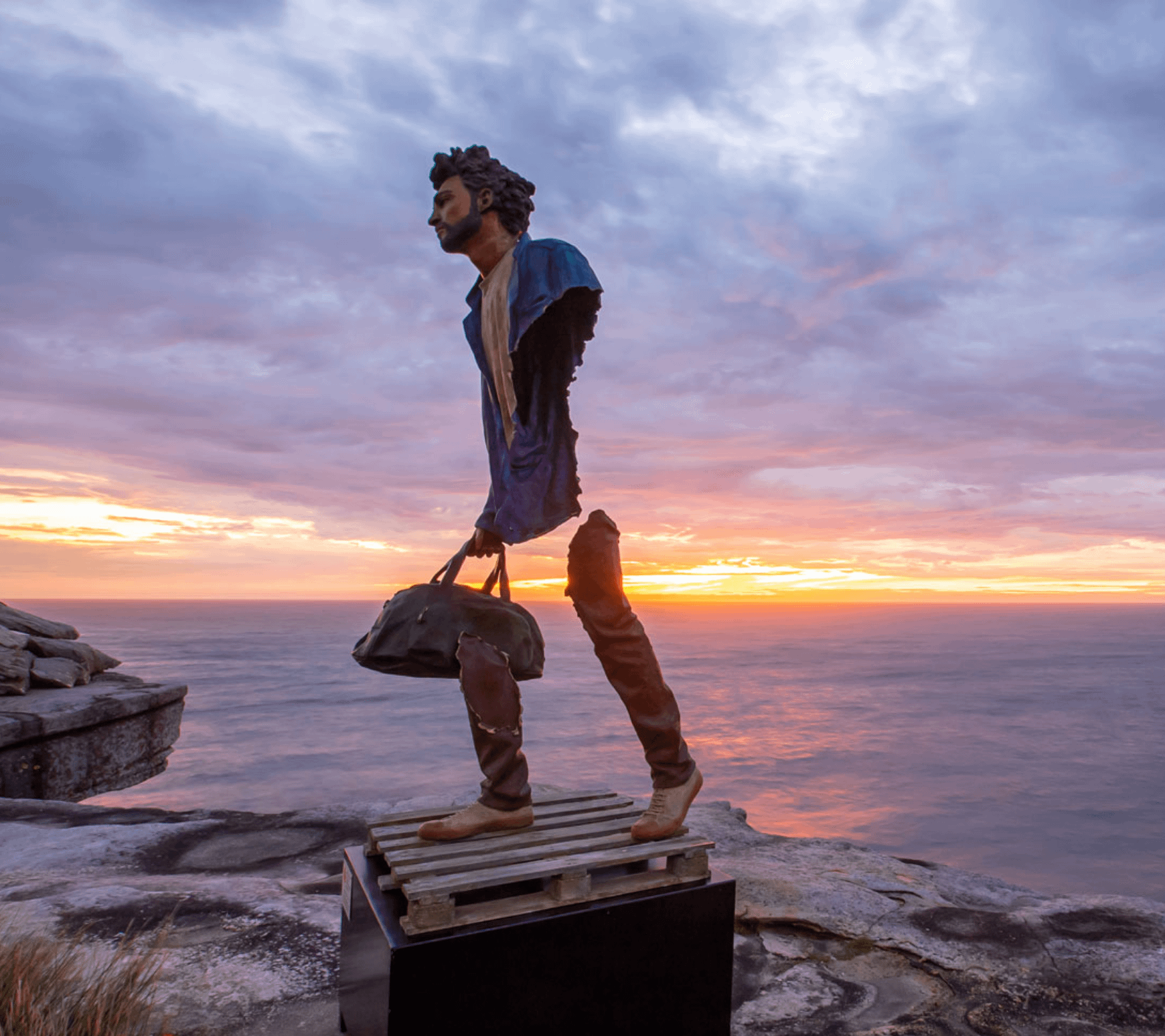
Sculptures by the Sea
I remembered an article I read years ago. Although the source is long-forgotten, the images remain vivid: bronze sculptures of travelers, missing entire parts of themselves. A man with no chest. A woman without parts of her legs. All going somewhere. Carrying luggage. Artist Bruno Catalano’s work doesn’t only show what’s missing. He makes you feel what’s been left behind, in order to begin again.
Catalano was born in Morocco to a Sicilian family, and grew up in France. This is someone who knows what it is to experience different cultures.
“In 2004, a flaw in one of his characters — a depiction of Cyrano — prompted him to dig and hollow out the chest. A new path of work ensued.”
That’s what travel does. It rearranges you. Those hollowed out spaces fill in with new appreciations.
Customs we didn’t grow up with.
Respect that sounds like apology.
Concern that looks like bluntness.
Safety where we least expected it.
Now you’re moving through the world with eyes that see more than just what’s in front of you. Knowing in your bones there are entire worlds out there, right now, living differently – more gently, more communally, sometimes more justly.
Take a moment to watch this short video of Catalano’s sculptures. You’ll see what I mean. The absence is the message.
Your Turn:
Where have you traveled that shifted your perspective or challenged your assumptions? Whether it was across the globe or just across town, I’d love to hear about it. Scroll down and share your story in the comments below. Let’s go down the rabbit hole together — about travel, culture, memory, and what we leave behind.
“Perhaps travel cannot prevent bigotry, but by demonstrating that all peoples cry, laugh, eat, worry, and die, it can introduce the idea that if we try and understand each other, we may even become friends.”
— Maya Angelou


Fantastic read.