by Melissa Bee | Aug 29, 2017 | From the Inside, News
Received via Corrlinks (the email system for BOP [Federal] inmates) today from our friend Mickey:
Gosh, It’s so great to be out of the Hole after 35 days!
It feels super weird to me after being locked in a 12′ x 8′ cell for over a month with the window covered.
Honestly, I can’t believe in 2017 that they are still allowed to do that to people. It has to stop! It’s ridiculous!
I just wanted to say Hi ; – ) and see how you are doing? I heard it’s rough out there in the Free World???
I haven’t heard from many of you in a while but i pray that you are well and hope to hear from you soon.
I am almost down to 100 days until I go to halfway house in Philly December 6th, 2017. These last few months are creeping along but thanks for supporting me with your; letters, pics, prayers, love. I’m very grateful, Thank You : – )
Remember that the BOP changed their policy and now they want you to send letters on white paper in white envelopes with no stickers, not even return address labels. You can still print out letters on your computer. Some people have gone to using a stamp for the return address or typing or hand writing it. I am so sorry for the change.
Well, have a great week, my friends. Be well and take care of yourself.
This is a little ironic, considering BOP uses to and from labels (stickers) on the envelopes that the prisoners use. But there you go – if we do it, it’s now considered contraband and the mail is rejected. Any excuse to limit outside contact for prisoners. Disgusting.
by Melissa Bee | Aug 2, 2017 | News
By Gabrielle Banks
Updated 7:00 pm, Wednesday, August 2, 2017
Relief may be in sight for hundreds of heat-sensitive inmates at the Pack Unit northwest of Houston.
State officials on Thursday are set to roll out their plan for providing cool living quarters for medically vulnerable inmates at the geriatric facility after a federal judge found the swampy indoor conditions amounted to “cruel and unusual punishment.”
While U.S. District Judge Keith Ellison has not ordered the state to install air conditioning, his emergency injunction on July 19 called for cooled beds for 475 inmates who take medication or have diabetes, high blood pressure and other conditions that make it hard for their bodies to fight the heat.
The ruling marked a turning point in the federal civil rights lawsuit, which has drawn national attention to the rights of people who lack the authority to adjust the thermostat and the freedom to leave the premises.
Witnesses testified that inmates and guards alike had fainted from indoor temperatures that sometimes surpass 100 degrees. One inmate testified about heat-induced vomiting and another recalled a headache that felt like an ice pick to the brain.
Ellison ruled that officials at the Texas Department of Criminal Justice obstructed remedies and showed “deliberate indifference” to inmate suffering. He gave them until Aug. 8 to implement the plan, a draft of which is expected to be submitted to the court Thursday.
About 80 percent of Texas prison inmates are assigned to living units without air conditioning, even during heat waves, according to Jason Clark, a spokesman for TDCJ.
Since 1977, county jails across Texas have required that indoor temperature be kept between 65 and 85 degrees. All but seven of the 122 federal facilities run by the Bureau of Prisons offer air conditioning, an official said. Even the federal detention center at Guantanamo Bay, which drew attention for the treatment of high-profile international prisoners, has cooling units.
TDCJ has not yet responded to a request by the Houston Chronicle for the total number of heat-sensitive inmates in state custody. However, prisoners’ rights advocates estimate that thousands of people are under official “heat protection” designation at Texas facilities that lack air conditioning.
Jennifer Erschabek, executive director of Texas Inmate Families Association, said she hopes state officials will consider the fate of its most vulnerable charges when implementing changes at the Pack Unit.
“I can easily say there are thousands of people in the system who are on heart medication, diabetes medication, or have HIV, Hepatitis C or psychotropic medications that make them heat sensitive in these dire conditions,” said Erschabek, whose group conducts an informal heat survey each year among inmates families.
“People need to be housed in a place where it’s not a life and death situation for them in the summer,” she said.
Erschabek said her organization has had small victories in addressing inmate grievances related to heat waves. Her group reached out to wardens at six TDCJ units where guards were reportedly unresponsive to inmates afflicted by extreme heat or failed to provide sufficient water, ice or cold showers. In every instance, she said, the wardens and regional directors took action.
Melissa Brown, who runs a group called Adopt an Inmate, said she hopes TDCJ will extend heat protection fixes at the Pack Unit to all inmates.
“The whole ‘heat-restricted’ thing is absurd because inside the cells it can be over 120 degrees, with 90 percent humidity,” she said. “There is no inmate that isn’t medically compromised in those conditions.”
Brown said prison transfer units, such as Holliday, Gurney, Garza East and Garza West, have metal roofs and no windows, so on hot days the floor fans just blow hot air around. She has heard reports of inmates smashing windows at another unit to get air flow during the hot months.
The 2014 lawsuit filed in Houston was brought by six inmates at the Pack Unit after summer heat waves in 2011 and 2012 caused multiple inmates across the state to die from heat stroke. Since 1998, 23 inmates have died of hyperthermia, or heat stroke, in Texas prisons.
Ellison noted in his recent ruling that heat deaths — in the free world or otherwise — are commonly under reported, since other medical problems contribute.
The Pack lawsuit is among 10 lawsuits filed in Ellison’s court by attorneys from Edwards Law in Austin and the Texas Civil Rights Project. Eight families of inmates who died of heatstroke have brought wrongful death suits and another inmate who survived a heat stroke has also sued TDCJ.
In the Pack case, Ellison ruled that the inmates were likely to win at trial because the conditions they’ve endured violate the Eighth Amendment’s prohibition against cruel and unusual punishment.
In addition to the remedies for heat-sensitive inmates, Ellison ordered the prison to improve access to respite areas, develop a heat-wave policy and other measures.
State officials have said they plan to appeal the ruling to the Fifth U.S. Circuit Court of Appeals. In the meantime, they must comply with the judge’s injunction. Ellison’s order remains in effect for 90 days, carrying through the hottest months.
Local prison rights advocates say the prison heat problem should be treated as a humanitarian concern.
“It’s a human rights issue because these people do not have an option to go somewhere or do anything to enable them to cool off,” Erschabek said. “They wet the concrete to lay down on cool concrete and put a fan on themselves but it’s just biding time until the weather cools down. It’s just horrendous.”
Following the spate of heat deaths in 2011 and 2012, the Human Rights Clinic at University of Texas Law School spent two years interviewing TDCJ inmates about the heat.
Professor Ariel Dulitsky, a human rights lawyer who runs the clinic, said researchers concluded the state’s treatment amounts to cruelty and torture, in violation of a United Nations Convention.
“All these people are under the absolute control of Texas, of the state, and everything that happens to them is viewed through the actions or omissions of the state,” he said. “At the end of the day, many of these situations amount to torture.”
He said it is a matter his students brought to the attention of the Inter-American Commission on Human Rights in October 2014, but TDCJ officials declined an invitation to respond to the law students’ allegations.
Dulitsky said the students concluded that Texas had violated international law.
“Due to the amount of suffering inflicted on many inmates, Texas is implicated in torturing inmates,” he said. “If Texas does not remedy the situation it will implicate the U.S., not just Texas.”

by Michael Henderson | Jun 15, 2017 | Inmate Contributors
My brother lives in an old farm house in Ohio with this great front yard of plush green grass that in the heart of the season is carpeted with the most beautiful and brightest yellow dandelions you’ve ever seen. I remember when my son was about 5 and he commented, “Wow!” as his eyes lit up so brightly they could only be matched by the beautiful carpet of nature that lay before him, inviting the run he couldn’t wait to get started on.
It’s been said that if you come out of the penal system a better person than when you went in, it’s in spite of the system, not because of the system. One thing that I’ve been able to have a perspective of gratitude for through this whole experience is the awareness I gained through the deprivation of basically everything beautiful. This awareness has not come without effort though, and I have found practices like meditation and limiting myself of the few distractions that are afforded prisoners such as television sports, television movies, television series, etc., etc., etc.
But one thing that snuck in through the periphery of my self-imposed safety line, was a commercial about a weed killing product that targets only certain vegetation in a given area. The computer generated depiction shows this fellow barbecuing on his plush, green back yard and he gets annoyed at one, yes one lone dandelion that supposedly could potentially ruin his entire experience. Cut to the spreader throwing the killer chemical all over the yard and this one lone beautiful creation, no matter where you think the creation originated, catches the bulk of this toxin, withering it to oblivion so the man can get on with his barbeque in perfection.
This is particularly sad and disturbing because this method of fooling the human psyche works. It’s not that we shouldn’t strive to be better people, but being misled to believe that we can ever achieve perfection even close to the beauty and intricacy of something as delicate as a dandelion while we are poisoning the air with chemically treated charcoal, our bodies with preservative based ingredients, and drug filled meat that has altered the course of development of the human body, and, the very ground that all life is dependent on to every extent for survival.
My hope for mankind is not diminished over my life or even through the horrific experience of the Amerikan system of injustice, but may have actually increased the need to see through the ruse knowing that perfection is not something we will ever be able to create as we double our efforts at destroying the perfection that’s been blooming right before our eyes long before the merchant quest for power, comfort, and separateness.

by Inmate Contributor | Jun 14, 2017 | Michael Fisher, Poetry From Prison
Stand Still. Each day we must strive
to combat the currents we dive
beneath, breathing through entropy
in which our souls atrophy.
Tides of compromise, competing
desires through all ills repeating,
please born of the iron bounds
of loving debts as hounds
harrying us all form the cloud.
It clings and pulls, a viewless shroud
in power like gravity
culling me, my soul a cavity
empty of hope and vigor –
by forces I’m set into rigor.
Stand still. Amid the chaos
my isle of peace sloughs the dross;
entropy and gravity fail
as powers fit to assail
my soul. The clamor of voices
pleading, demanding, choices
endless, confusing … subside.
No more the forces collide
as inchoate calamity;
they live with equanimity,
seamless in series with calls
for my aid, courteous as thralls.
Stand still? To aid them I strive.
As calm in the eye, I’ll survive.

by Eric Burnham | Jun 13, 2017 | book review, Inmate Contributors
We’re excited to offer the second in Eric Burnham’s five-part series based on “The Four Agreements,” by bestselling author Don Miguel Ruiz. In the book, Ruiz reveals the source of self-limiting beliefs that rob us of joy and create needless suffering. Based on ancient Toltec wisdom, The Four Agreements offer a powerful code of conduct that can rapidly transform our lives to a new experience of freedom, true happiness, and love.
Be Impeccable With Your Word
As I said before, the Four Agreements are a set of fundamentals in the form of a contract made with oneself. The purpose of the agreements is to grow into a more authentic and congruent person. When someone is genuine in his or her approach to life, and outward behaviors align with and flow from internalized values, that person will be more confident, self-assured, and capable of success, experiencing a significant reduction in anxiety and stress.
The first agreement that should be made with yourself is to be impeccable with your word. “Impeccable” means “flawless or incapable of sin,” and “sin” means “to transgress divine law” or “to miss the mark.” This, obviously, requires a little explanation, so let’s unfold it.
Words are gifts, and words matter. When words are formed into weapons and used to intentionally deceive or harm others, the divine principles of honesty and integrity are violated. These principles are intended to preserve the social attributes that distinguish humans from animals — human beings have a choice to uphold that distinction or to tear it down; while animals do not have that choice. The animal kingdom knows nothing of morality or immorality, only survival; whereas in the kingdom of humankind, survival of the species depends upon both individual and collective morality. Therefore, it’s not much of a leap to conclude the uniquely human ability to freely form and direct words must be counterbalanced against the responsibility to behave in ways that build others up, rather than tear them down. When words are used to deceive, harm, or inflate oneself at the expense of others, they miss the mark for which they were designed. Words were never intended to be tools of destruction.
To be impeccable with your word means choosing honesty, even when it hurts. It means avoiding gossip, even when its taste is pleasing to the tongue. It means readily admitting faults and taking immediate responsibility for mistakes and failures. It means being kind when you don’t have to be. It means respecting those who may not deserve it. It means speaking ill of none. It means knowing when to speak and when to remain quiet. It means keeping your promises and doing what you’ve said you’ll do — and not doing what you’ve said you won’t. It means being humble enough to apologize when you’re wrong. And it means speaking up for those who cannot speak for themselves.
However, being impeccable with your word does not mean being perfect, and it does not mean always being right. It means you have a dedication to the pursuit of the truth, wherever it leads, and it requires courage, perseverance, and humility. A person who measures his words, avoiding hyperbolic embellishment, confronting narcissistic self-interest, and resting in the authority of objectivity, is a soaring eagle howled at by chasing dogs — both out of reach and incomprehensible. Be impeccable with your word.

by Inmate Contributor | Jun 8, 2017 | Inmate Contributors
Do murderers cry? No one has ever asked me. I became one twenty years ago through denial. Sixteen might seem too young to have demons, but it isn’t, and when I turned my back on them, they pounced on me.
I hadn’t cried for years before I became a murderer, but I did two days afterward. I was held under fluorescent light and enduring vigil designed to defeat suicide, a curly-haired stick of catatonic quiet surrounded by strangers and questions. Then two deacons I knew visited me. My shock was shattered by their familiar faces — I curled up and cried for hours, powerless to provide them with answers to a loss we all shared, but in which I alone was evil.
Other visitors followed, both family and friends, but I had nothing left for them; no tears or words for all of those I loved and had wounded. I sat as wood while the worlds and hearts I had shaken crashed down around me. I comprehend little and remembered even less. My aunt, a psychiatric nurse, told my father years later that I remember so little because remembering the details of my crime could make me catatonic for good. I trusted her word then, and I trust it now.
After all those awful days and hours, I got better, but I never fully healed. Blessed with loving family and odd friends, I could smile and laugh again. Yet in the midst of a good day, memories would overtake me, and all of the good in the world flattened out like a pop-up card that snaps shut when the reader grows tired of it. Then a wasteland engulfs me, where I brooded on what I was and nothing mattered but the past.
In the six or so years after my crime, those periods of brooding grew so frequent and intense that I feared they would consume me. Before they could, I found relief in a strange place — movies. One, to be exact, The Last Samurai. Filled with people as rigid as I am but far superior in character, the story was a haven as I began watching it. Its message of redemption through service told me that there was still hope for me. At its climax, when the samurai were annihilated, I wept as I had not since I first faced those deacons six years earlier. Yet when my grief passed, I felt as if a deep-seated wound had been scoured clean, though not soothed.
For nearly a decade, I watched The Last Samurai every year, and each time it gutted me. But when the pain eased, I once again felt cleansed. With time, I realized that The Last Samurai gave me a release valve, a way to grieve through a fictitious event the truest and most horrid deed I have ever known or committed. It kept me from drowning in grief when nothing else could.
I wonder sometimes about other murderers who grieve. Not all of us do. For those who do, when they talk about their crime with restraint, I imagine what their valve might be. None of them have ever told me. Maybe that’s because I’ve never asked.
by Eric Burnham | Jun 7, 2017 | book review, Inmate Contributors
We’re excited to offer the first of Eric Burnham’s five-part series based on “The Four Agreements,” by bestselling author Don Miguel Ruiz. In the book, Ruiz reveals the source of self-limiting beliefs that rob us of joy and create needless suffering. Based on ancient Toltec wisdom, The Four Agreements offer a powerful code of conduct that can rapidly transform our lives to a new experience of freedom, true happiness, and love.
Emotional discomfort is, well, uncomfortable, but unfortunately, it’s inevitable in this beautiful and broken world. However, much of our emotional discomfort is needlessly self-induced. Nobody enjoys the anxiety and restlessness that comes with being artificial and incongruent. Granted, some people’s words and actions are artificial and incongruent on purpose; these people use deception and manipulation to meet their needs — and they often feel a certain satisfaction in the turmoil and tension they leave in their wake. Yet, most of us are not so diabolical. The majority of people — even those of us who are incarcerated — want to be authentic and congruent, but it’s not always as easy as it sounds.
Let’s define some terms. What does it mean to be artificial? The word “artificial” means “a cheap or inauthentic substitute.” It’s a fancy, four-syllable word for “fake.” So, to be artificial means to be fake, to hide the real you away and put on a mask.
There are many reasons why people conceal themselves or their intentions. Some simply lack the courage to be authentic; while others don’t know how to be real. Still others have been incongruent for so long that they are ashamed of themselves, so they use masks to insulate themselves from the pain. Over time, conveying an artificial self creates a cognitive structure vulnerable to incongruence. That is, artificial behaviors establish mental and emotional patterns that lead to an automatic response of incongruency.
Congruency refers to two things being the same in shape, form, or length. When a person is incongruent, his or her actions do not line up with his or her beliefs, values, or worldview. And when behaviors constantly fail to align with personal beliefs and values, dissonance will inevitably result — that is, incongruency tears a person apart, leaving him or her with a profoundly negative self-concept. If a person believes an action is wrong but continues to do it anyway, or if a person believes an action is right but fails to act, shame will ensue. The incongruent person experiences incredible self-doubt, debilitating self-hatred, and eventually long-term emotional dysfunction. Human beings were designed to be expressive, genuine, and free, but incongruence staunches the flow of the unique self, limits emotional expression, and chokes the spirit, which leads to anxiety, restlessness, and even depression.
However, it doesn’t have to be this way. Four simple agreements made with oneself can change everything. Yet, once made, these agreements must be adhered to in order to be effective — it requires commitment. Of course, everyone stumbles from time-to-time, especially early on, but a committed person does not wallow in defeat. A committed person gets back up, brushes the dust off, and begins again, stronger each time. A committed person perseveres.
These four simple agreements have the power to transform a person’s life.
- Be Impeccable With Your Word
- Don’t Take Anything Personally
- Don’t Make Assumptions
- Always Do Your Best
These four little agreements are simple, but they are not easy. Let’s take a deeper look at each one. To be continued…
by Michael Henderson | Jun 6, 2017 | Inmate Contributors
Pinellas County Florida’s Sheriff Bob Gualtieri’s complicity in creating a racial divide leading to constant strife, stress and physical fights among the prisoners at the county jail facility under his charge actually costs the taxpayers untold thousands of dollars.
Being one of those prisoners and having a firsthand account, I can tell you that if divide-and-conquer is the goal, the exorbitant costs thrown at this draconian method of imprisoning humans and leaving no hope for a second chance and the possibility of a productive life is completely unnecessary. Not to mention the fact that it is counter to any stated goal of making the community a safer place to live. When you create an environment that is in most cases worse than the one the person was plucked from, it only makes sense that the one that still exists on the streets is going to perpetuate itself. Long Live the King.
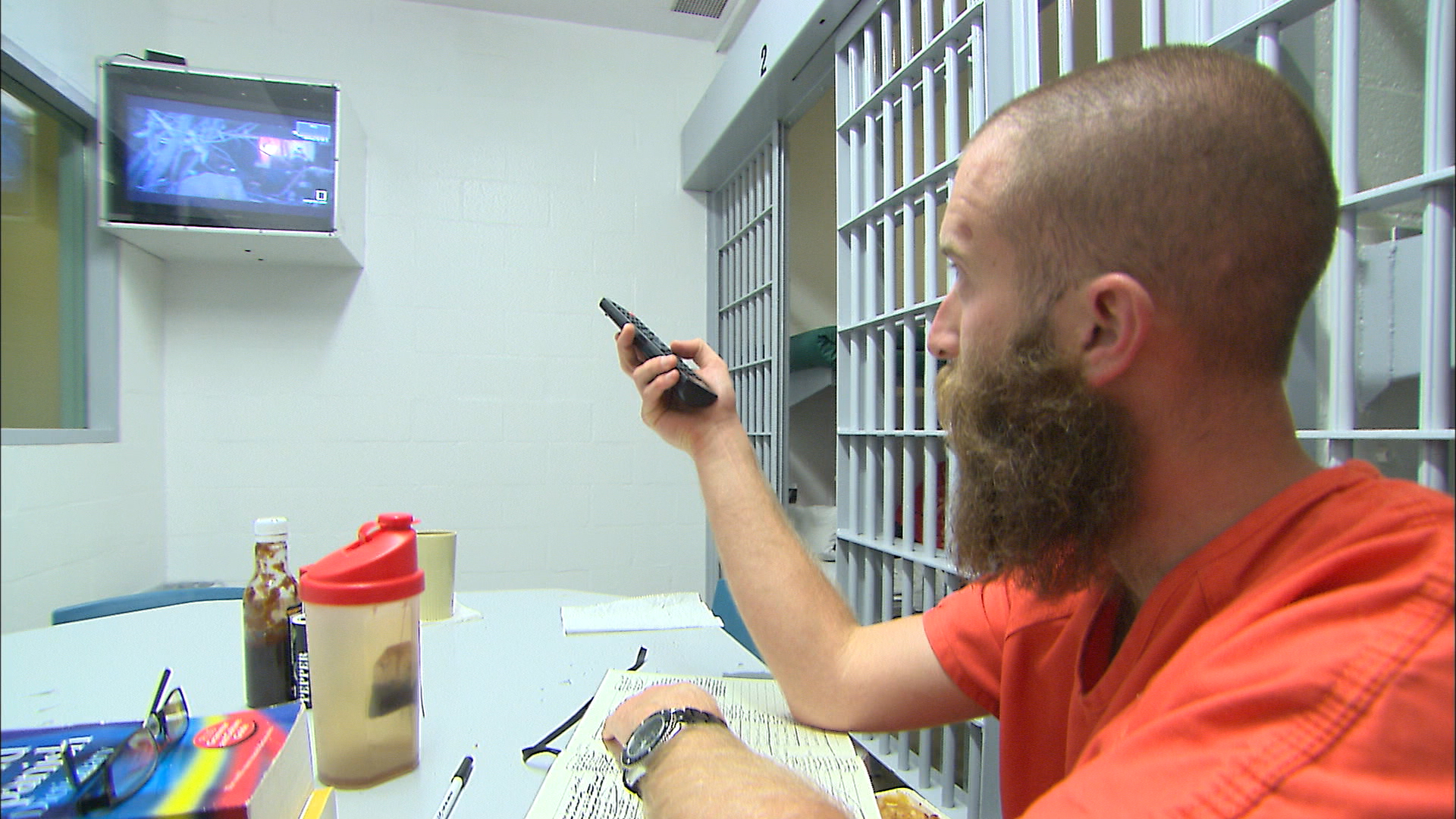
Let me cut to the chase. Jail is not a place where people are coddled. But some bureaucratic genius there at the Pinellas County Sheriff’s Office came up with the bright idea of allocating thousands of dollars for brand new 50” flat-screen TVs with remote controls. The jail pods cage inmates 24 hours a day in crowded conditions – in some cases with 6 and 7 men including the one sleeping on a plastic “boat” bunk on the floor, in a space the size of a bathroom. The most disconcerting part of that is the toilet is right in the middle of the space. But I digress.
The tensions run as high as the testosterone with the stress level being fed by practically non-existent legal help since the public defender’s sham is in complete collapse, but the fiscal hypocrisies abound. The conditions are a further detriment in an environment that already has such a negative draw on life and humanity.
Another bureaucratically genius decision was to award a huge contract to a parasitic organization known as Trinity Services Group. Think about the implications of the play on words with a name that includes trinity in its title. This is one of the largest food service companies that feed not only from the taxpayer trough, but also from the broken families whose would-be breadwinners are imprisoned. Trinity runs the “company store,” a.k.a. commissary, charging outrageously high prices for staple items like ramen noodles at 75¢ per package, a product that retails for less than one third that cost outside the gates. The genius in that decision lies in the fact that even though the dietary intake of the prisoners is so atrocious that stray animals at the S.P.C.A. have a better nutritional plan, the officers are enticed by the fact that they get free, yes free, meals while at work. Why else work in such a degraded environment? Well, $21 per hour starting wage is not a bad perk either. Ah, but yet again I digress.
How does all this feed racial tensions and encourage criminal behavior while perpetuating anger, violence and hatred? Let’s start with the beautiful new televisions, complete with cable TV. There is a ‘survival of the fittest’ mentality in here and not because of the racially disproportionate numbers of prisoners but because idle time is the devil’s workshop. The particular pod I’m housed in has 13 whites, 5 Hispanics and 8 African Americans. Whites have an approximate average age of 50, Hispanics 30, and African Americans 38. The problem stems from who controls what. Since the officers do their checks only once every half hour (by forced issue I might add after such a high number of incidences of things like unanswered inmate medical emergencies), the bullying and juvenile acts of a small number of prisoners prevail when they control of the remote. If you don’t like it you can fight because no amount of diplomacy seems to impact this mentality and any attempts to address the issue with staff as a mediator gets you labeled a “snitch.”
The attempted solution we proposed was that control of the remote would be designated according to the existing rotating cleaning duties assigned to each inmate. But because this remedy didn’t work for a couple of people who have an incessant need for control, or maybe an inability to see things from their limited perspectives, that it has become a battlefield again.
The bullies’ excuses for holding the beautiful new 50″ flat screen television hostage come in endless torrents, but as anyone who has ever been in jail or prison knows, divide-and-conquer is the mentality that keeps separation at the forefront of inhumanity. Unfortunately, the racial divide is the most efficient method to tear at the fabric of the under-educated, unprotected and underrepresented villains of amerikan society. The most devastating component of this attack on humanity is that it works.
So I’ll leave you with this question. Is it more cost efficient to tack 50″ flat screen TVs to the walls of jails and pump already stimulation-starved minds with 75 channels of cage-fighting, NFL, and Real Housewives of…outer space, than it would be to implement some real, cohesive, educational programs designed to halt the madness of mass recidivism, racism, hatred and juvenile antics that lead to the kill-or-be-killed-for-control-of-the-television mentality?
I guess we would have to ask Pinellas County Florida’s Sheriff Bob Gualtieri, since the taxpayers don’t seem to have any say as long as the fight isn’t brought to their living rooms. Yet!
by Melissa Bee | May 16, 2017 | From the Staff
We recently discovered an issue with our email that was preventing delivery of some messages.
If you have attempted to contact us in the past six weeks or so, and have not gotten a reply, please let us know as we have no way of knowing what has been missed. Please accept our apologies for any unanswered messages.
The technical issue is resolved – and you can get in touch with us in any of the following ways:

Contact form

(971) 236-7897
(971)-ADOPT-97

Adopt an Inmate
PO Box 1543
Veneta, OR 97487

by Michael Henderson | Apr 23, 2017 | Inmate Contributors
Shake down
Go ahead and take it from me
Shake down
In the middle of the night
Shake down
I’m sleeping here can’t you see
Shake down it’s not alriiiiiight…
With me
Although this sounds like a parody from weird Al Yankovic of a famous Tom Petty song, it really is, by definition, criminal behavior perpetuated by prison and jail guards worldwide.
I’ve used the comparison of seeing your child, while playing with another, strike their playmate — and then as punishment, you spank or strike the offending tyke. I think that most rational people would view this as a negative feeding a negative. You cannot draw something positive from a negative. The message to your little one is not that it’s okay to hit in certain situations, it is more apt to be black and white. It’s okay for someone bigger to hit someone smaller.
It applies not just to small humans because — even though our thinking process matures as we grow — there are basic universal laws which cannot be adjusted according to the whims of humankind. That being said, there is only one logical outcome of producing an environment that is not only negative in context, but petty in execution.
Let me define the term shakedown for those who aren’t familiar. It is a search of property for contraband. Now, picture if you can a structure more impervious than an ancient castle, combined with Fort Knox and The White House. The — we’ll call them residents — do not have physical contact with anybody except those who conduct the shakedowns. It ain’t rocket science to figure out how contraband gets into jails and prisons. But that’s not the focus of this essay. The law enforcement mentality places an assumption of guilt on the inmates, and a superiority complex on the administration. It appears that the main objective is to punish those who are in their custody and control. At every turn, most officials do whatever they can to dehumanize the prisoners. Shakedowns are a primary vehicle for that, and are routinely performed by 20 or more officers charging into the dorm in the wee hours of the morning, turning the area into a stadium of bright lights, screaming at the top of their lungs to agitate the prisoners, just in case they were able to fall asleep on the slab of metal called a bunk.
You would think that with all this effort the haul would be everything from weapons of mass destruction to sophisticated communications devices. I’m not saying that it never happens that a cell phone or a plastic bag with homemade wine is found, but it is the exception. The big score this last siege produced was some fingernail clippers that had apparently found their way into my legal work upon transferring from prison to county jail for some hearings. Had it not been for the incompetence of the officers performing the intake, the nail clippers that inadvertently ended up at the bottom of a very full file would have not made it to the dorm in the first place.
It goes to a whole new level of petty when generally all that is harvested from these maneuvers of dehumanization is some extra sheets and a plastic bag being used to keep a t-shirt clean so when you appear in court you can present yourself as somewhat human. But the level of psychological warfare is evidenced by the seizure of items as benign as a rubber band holding some notes in an address book, or a paper clip keeping things organized – which is most difficult considering all the confusing rules for adhering to legal procedures in the first place.
But there’s more. If you happen to be fortunate enough to be able to purchase a bowl and lid from commissary and it is found with food in it, they will dump the food and have sometimes been known to break the bowl itself. God forbid you save some bread from your tray for the peanut butter and jelly you purchased from commissary. It’s another tactic to dehumanize and punish. This is in a county jail where most are pre-trial detainees who have not even been convicted of a crime.
I have personally seen guards slinging property and legal documents everywhere and squirting toothpaste onto it as it lies in the sink/toilet, smashing purchased food, leaving what semblance of order you may have had in shambles. A pile of trash. The purpose of this of course is to remind you who has all the power. Who cares if it perpetuates and reinforces the negative energy that brings people to prison? This is the oxymoron of the department of corrections. The staff, being undereducated, falls prey to the big brother mentality while continuing less than ethical or professional behavior by retaliation through shake downs. Prisoners have very little, and there is comfort in having a few personal effects around them. It helps to maintain some sanity. Until bang! Everybody up, we need to see if you have any of the contraband that our fellow officers are smuggling in! If it weren’t so annoying, it would be laughable. So every night, you go to sleep wondering if this will be your night. Until you make up your mind to detach from it. That’s a measure of success.
I read that in the 1930s, law enforcement were running amok and instead of arresting those involved in criminal activity, they would just shake them down, taking whatever they wanted, and many across the country were arrested and imprisoned. This resulted in prisoners employing the same behavior with each other on the inside. You don’t shine the light on these shakedowns and risk being called a snitch. I believe not only is there a duty to shine the light but also point the proverbial finger. These doubly negative actions will not change until we change them. That begins with personal accountability and understanding the importance of change.
Prisons may have come a long way since the 1930s but God knows there is much room for improvement. Conducting searches with some semblance of care to find contraband supplied by those who are considered the ‘good guys’ is a start to treating humans humanely – one shake down at a time.