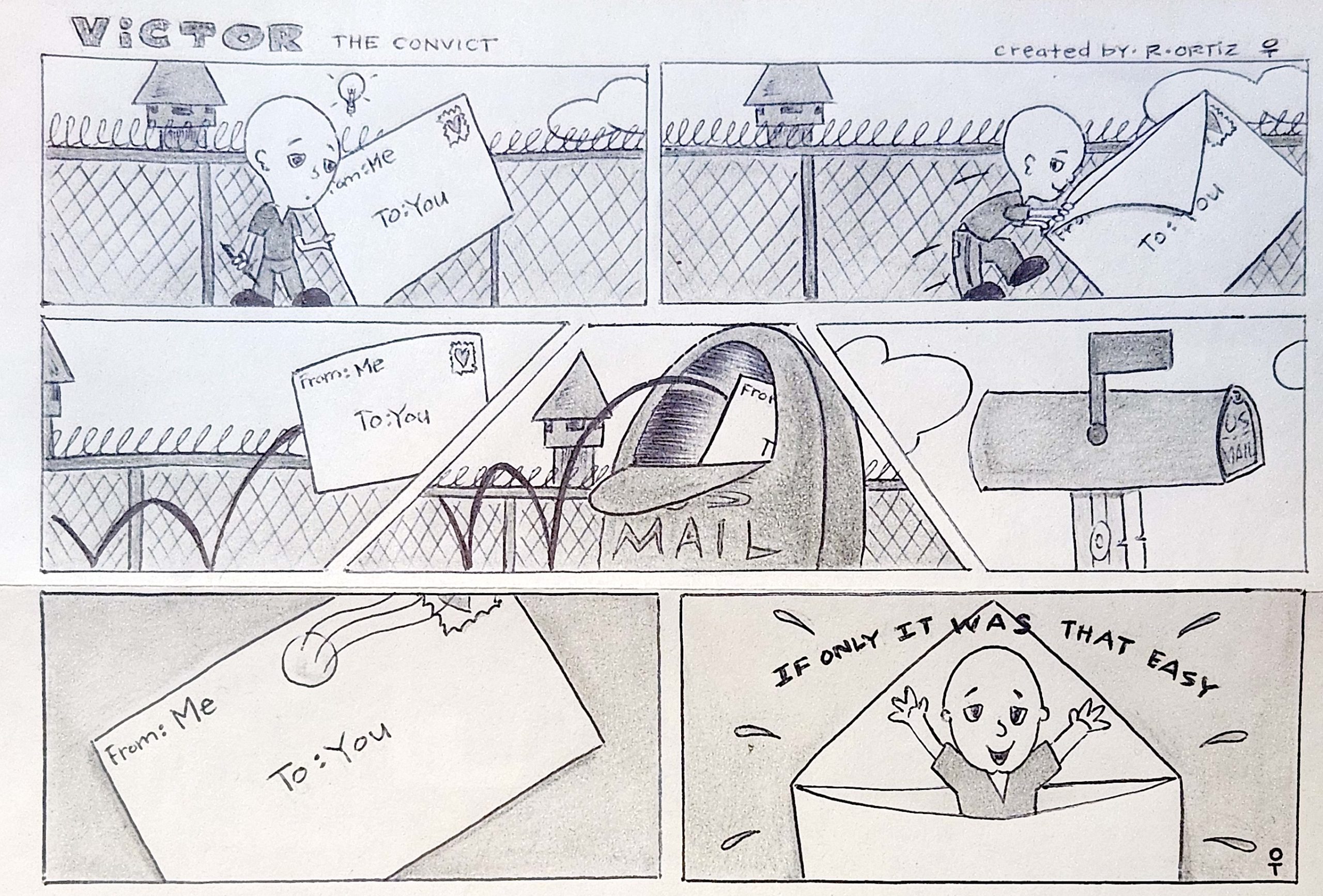
In this witty prison comic, artist R. Ortiz captures the wishful thinking behind every letter sent from inside. While in real life, mail from prison can take days, or even weeks, to arrive, Victor imagines simply hopping into an envelope and landing in the hands of a loved one. A playful reminder of the power of connection and the hurdles people in prison face just to send a hello.
Welcome to Bee Sides short reflections on justice, hope, and the human spirit
This series is a corner of our blog where I gather books, stories, and unexpected moments that linger long after the first glance.
Most will tie back to incarceration, justice, and the quiet fight for dignity. But sometimes? It’ll simply be whatever refuses to let go. The echoes that stay with me. Because that’s what Bee Sides are for.
Let me know what you’re reading, watching, or wondering about. Maybe it’ll make the next issue.
This one’s about conductors, volunteers, and that spider in her hair.
This week, Leah and I did something rare and wonderful – that wasn’t about Adopt an Inmate (gasp!).
We went to the Eugene Symphony’s annual Symphony in the Park at the Cuthbert Amphitheater.
We brought our camp chairs, snacks, and bug spray … Just kidding. The outdoor venue does have lawn seating, but we’re old and wise enough to opt for the real seats. The lawn was buzzing with young folks and kids dancing under the trees, while the regular seats were filled with people closer to our age bracket (and beyond).
The opener was a marimba band called Jenaguru, and they were phenomenal.
After they finished, stagehands shuffled instruments and stands into place. The symphony musicians wandered onstage in T-shirts. This was less black-tie and more backyard block party. Casually magical.
After Leah and I looked over the program, we tried to spy the newly appointed music director, pictured in the program.
Enter: Alex Prior, selected after a months-long, worldwide search. And wow… I get it. He had barely reached the podium before we were hooked.
Charming. Young. Warm. Enthusiastic. Joyful. Slightly goofy in the best way. He cracked dad jokes (before they played the theme from E.T., he said something about Spielberg and John Williams playing golf: “One shoots, the other scores”), he introduced each piece with such reverence, telling us to listen for the moon reflecting on the stream, and birds fluttering across the sky … and I heard them, just like he said.
At one point, he asked to see all the kids in the audience. Tiny hands rose up like spring blossoms. We could feel how delighted he was.
Because of his enthusiasm and palpable love for the music, I paid attention to everything. I’d been to the symphony before, but I never left so full of questions.
I watched him, part spellcaster, part shepherd, and started wondering about what a conductor actually does. (What happens if they stop conducting mid-piece? Do the strings just wander off?) I noticed the seating arrangement, and the maestro’s greeting of the first chair violinist when he first walked on stage – it seemed purposeful, what was that about? I noticed the interplay between sections, and thought about the metaphor of an orchestra.
This what it looks like when people work in concert.
Fortunately for me, my friend Sarah (yes, that Sarah), an experienced musician and lover of all things art, would be able to answer my questions. So I called her.
She explained the seating arrangement, and about Prior’s greeting of the first chair violinist, also known as the concertmaster, and that if the conductor got distracted or vanished, all the musicians would look to him or her (her, in this case) for direction.
“We’d have to listen very closely to each other. Anticipate each other’s breaths and exhale together. It requires democracy. You have to listen back, quote each other, and be in conversation”
Much like Wynton Marsalis’ idea of jazz as democratic discourse.
That’s how volunteers work. How families survive grief. How you hold space for someone in prison. You breathe together. And you play together.
Some of us are brass. Some of us are bassoons. A few of us are definitely cymbal crash energy. And it works.
🎻 Oh, and about that spider.
I had noticed a lovely older couple sitting a few rows in front of us. He had his arm around her and gave her a gentle squeeze now and then. She had this beautiful silver hair, styled just so.
Halfway through The Moldau, something caught my eye. Her hair was … moving. It was a spider.
He was thriving. Traipsing. Scaling. Rappelling. I watched in horror-delight as this little dude was rehearsing Spider-Man: The Musical, swinging from strand to strand like a Cirque du Soleil acrobat.
I was *frozen. Do I say something? The audience was rapt, listening for all the things. What if I scared her and she shrieked? What if she was the type to absolutely lose it over a spider? I said nothing. Eventually, he descended to her shoulder… and then (I hope?) to the chair and grass beyond.
I went to Sarah about the musical questions, but for this, I turn to you:
🕷️ What would you have done?
If you were the person sitting behind her, do you try to help? Or keep the peace? And if you were the one with a spider crawling around in your hair… Would you want someone to tell you?
Let us know. Seriously. This is your audience participation moment.
🗣️ I’ll be watching the comment section (scroll allll the way down below this post).
I was frozen in more ways than one.
Want to Go Down a Few Rabbit Holes?
I’m not handing you every link. Some of these rabbit holes you’ll have to dig for yourself. Consider it part of the symphony: listen closely, follow the notes, and see where they takes you.
🎥 Watch:
Maestro (2023) – about Leonard Bernstein
The Glenn Gould performance with Bernstein – the one where the conductor disavowed the soloist’s tempo… and still led the show
Bernstein conducting from the piano – yes, that’s a thing
🎻 Listen:
The Moldau by Bedřich Smetana – the piece with the glinting moonlight
Victor Wooten – legendary bassist, whose camp teaches music through the lens of nature and community
Wynton Marsalis on jazz as democracy – beautiful NPR segments on listening, quoting, and improvising in dialogue
We’re told immigration enforcement is about following the law.
But if you’re using tax records to track people down, then it was never about them not paying taxes.
If you’re arresting people at their jobs, then it was never about them not working.
If you’re detaining them at court dates, green card check-ins, or asylum interviews, then it was never about them “doing it the right way.”
If you’re rounding up men, women and children who haven’t committed any crimes, then it was never about violent offenders.
If you’re denying due process, then it was never about the Constitution.
If agents are given quotas, and rewarded per arrest or deportation, then it was never about justice.
If some are only in the job long enough to get student loan forgiveness, then it was never about dedication to the rule of law.
And if all of this is happening in the name of a man convicted of 34 felonies, then let’s stop pretending this was ever about law and order.
ICE isn’t targeting people who “broke the rules.” They’re targeting people who followed them. People who showed up, paid taxes, did things by the book.
If the system punishes people for complying, then compliance was never the goal.
Reminder:
Undocumented immigrants do pay taxes – over $23 billion a year.
ICE agents are reportedly quitting in droves, citing burnout and moral injury.
Some are paid per arrest, working under quotas set by the Trump administration.
In many cases, the agents are not federal law enforcement, but county correctional officers deputized to carry out raids in exchange for debt forgiveness or other incentives.
💌 Share this post with someone who says “they should’ve done it legally”
✍️Take the Quiz– How much do you really know about our justice system?
🐝Support our work – Help us fight misinformation and uplift truth
You may have noticed it’s been a little quieter than usual on the blog. That’s because sometimes the work sings so loud behind the scenes, there’s no time left to write about it. That’s always true before, during, and after our annual Bee Fest.
We’re still here!
Still opening letters, processing applications, and making connections across the wire.
Now that the whirlwind has settled, we’re working on getting back into a regular posting rhythm, starting with this little note to say: thank you for sticking around.
💌 Coming up this week:
The next chapter in the Kurtis & Joe series. If you need to catch up, start here.
A special post about something Leah and I did last Sunday that’s a perfect metaphor for what’s possible when we move in harmony.
If you’ve ever fallen out of your routine and then had to find your way back, you know how hard it can be to restart.
🫶 We’d love to hear: Scroll alllll the way down to the comments and let us know:
How do you get back in the groove after a busy stretch or a hard pause? What pulls you back to your purpose?
📬 Subscribe to our Blog & Newsletter ✍️Take the Quiz – How much do you know about U.S. prisons? 💌 Donate Stamps – Help us send more love inside ❤Give – Fuel the mission
We’re doing a quick roll call to help us stay organized and updated. if you’re a current or past Adopt an Inmate volunteer, you should have received an email with a link to a short Volunteer Check-In Form.
🔎 Didn’t see the email? Search your inbox (or spam folder) for:
Subject: Quick Check-In: Still With Us?
Sender: volunteer@adoptaninmate.org
💛 New to all this? We just published a Volunteer FAQ with answers to the most common questions, including what types of roles we have, how to get started, and what the bee theme is all about.
Have a question we didn’t answer? Let us know, we’re always improving.
Find a cool breeze and let the world slow down for a minute. Here’s your Sunday read.
What Still Matters, and Who’s Still Here
Hi friends,
This week, we’re leaning intoconsistency and community.
We published a new Volunteer FAQand a sent a quick check-in form to all our helpers, because our hive only works when we can find each other.Read about that here.
It’s a quietly powerful reflection about what inspired Rick to want to start Adopt an Inmate. Sadly, the kinds of stories Rick witnessed inside are still happening every day.
That’s why we’re asking for your voice.
As part of our Drop a Dime on Injustice campaign, we’re collecting real stories from those directly impacted by incarceration. You can respond to three simple prompts in our Good, Bad, Change form, or go deeper and share your experience in your own words through our Share Your Story form.
🎈Birthday Alert: Kurtis!
Monday, July 28, (tomorrow!) is Kurtis’s birthday!
Kurtis is one of the most thoughtful and generous souls we’ve ever met behind the walls. If you’ve read the ongoing Kurtis & Joe series, you know. If you haven’t, start here. Let’s send a little of that love back his way.
You can reply to this email with your message, or use our Contact Form and we’ll make sure he gets it.
Want to honor him in a meaningful way? This is the perfect time to purchase his book, Poems From Within, for yourself, or to send to someone inside who would be uplifted by his words.
We need your input. Your insights. Your heartbreak. Your ideas.
It all still matters.
Thanks for being part of this work. YOU matter.
In solidarity, The Adopt an Inmate Team 🐝 Truth. Connection. Resistance.
Quote of the Week:
What matters in this life is more than winning for ourselves. What really matters is helping others win too. Even if it means slowing down and changing our course now and then.
Fred Rogers
Visit our Linktree to find everything we’re sharing, watching, posting, and building.
✍️Take the Quiz – How much do you know about U.S. prisons? 🗣️Add Your Voice – Submit your responses to our Good, Bad, Change poll 🤲Get Involved– Help behind the scenes 💌Donate Stamps – SOS: Stamp out Silence! ❤Give – Help us build a world where no one is forgotten Forward This Email – Someone needs to see this
We first shared this letter from Rick in 2017, titled What Really Matters, when he was still inside. The good news: he came home about two years later. The bad news: the stories that broke his heart then still flood in today.
That’s why we launched our campaign, Drop a Dime on Injustice. We need your voices, not just to raise awareness, but to demand better. If you’ve experienced the prison system yourself (or someone you love has), we invite you to share your story. Your voice matters, and it could be the one that opens someone’s eyes.
You can submit two ways (we welcome both):
1. Good, Bad, Change
Three simple but powerful prompts:
The Good: What’s one positive thing you’ve seen or experienced in prison?
The Bad: What’s one negative thing you’ve seen or experienced in prison?
The Change: If you could change one thing about prison, what would it be?
This format is quick, accessible, and great for lifting up many voices at once.
Adopt an Inmate
*Good Bad Change*
PO Box 1543
Veneta, OR 97487
2. Full Story
For those who want to share more deeply, this format lets you write your full story in your own words. It can be long or short, focused or wide-ranging, whatever you need it to be.
We’re especially interested in the larger picture. What were the barriers that made it harder to thrive: poverty, lack of access to housing, education, mental health care, or support systems. What systems failed you before the legal system ever got involved?
You can also respond to these general prompts:
What do you wish the public knew about incarceration?
What has surprised you most about the prison system?
Your voice is your power. We know there’s a heavy stigma around incarceration, and real fear of retaliation for speaking up. If you want your story to remain anonymous, just let us know in your submission. We will always respect your privacy.
From the Hive: A Tiny Bee Fest, a Tiny Surprise, and Some Poems You Need to Read
Hi Friends,
I’m sending this a little later than usual, writing from the final full day of Bee Fest, our annual summer volunteer retreat. This one’s the tiniest yet (well, aside from the very first few, when it was just Leah and me). This year it’s just Leah, Liz, and me, with a special appearance or two by our volunteer Scott, Eugene local mail-processing ninja, who drops in to share lunch and take out the trash (thank you Scott!). But hey, what we lack in numbers, we make up for in meaning.
This week was all about preparing, hosting, and soaking in the energy of doing the work together. A few highlights:
We kicked things off with side-by-side pedicures, which I’ve now declared our official Bee Fest initiation ritual.
Someday we’ll be able to afford to have these things catered, but until then, cooking for these working events is my love language. (And my secret strategy is to serve everything just late enough that by the time it hits the table, they’re so hungry it tastes like a Michelin-starred meal. Hunger is the best seasoning.)
Our sassy Director of Wellness and Spontaneous Joy (Liz) declared a mandatory leg stretch and herded us out the door for a much-needed evening walk to the 5th Street Public Market in Eugene, and then (as if she hadn’t already earned sainthood) bought us ice cream.
I had to dash home mid-retreat to grab my iMac because the borrowed fossil laptop I was using was like typing underwater with mittens. And yes… I forgot the power cord. So, back I went. 🤦🏼♀️
And the best surprise of all: Liz is expecting baby #3! Last year she came with her 3-month-old little bundle of sweetness. This year, she’s carrying the next little bee.
One moment I want to share especially:
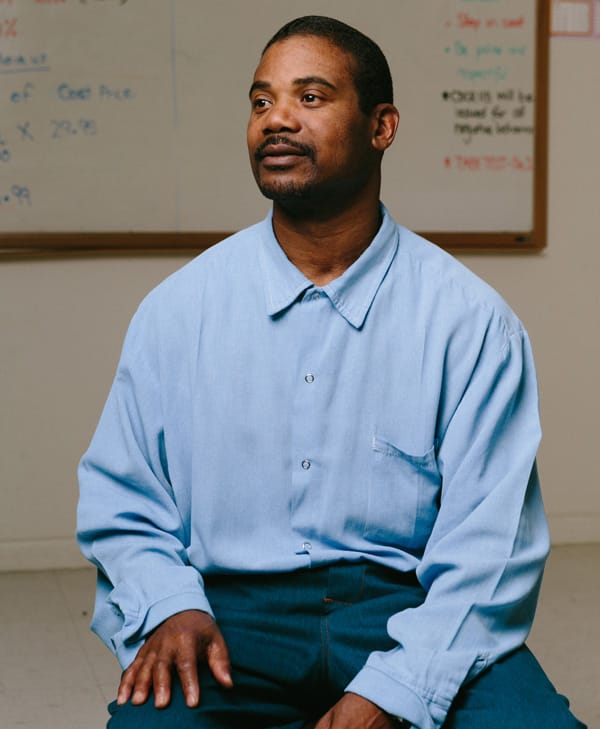
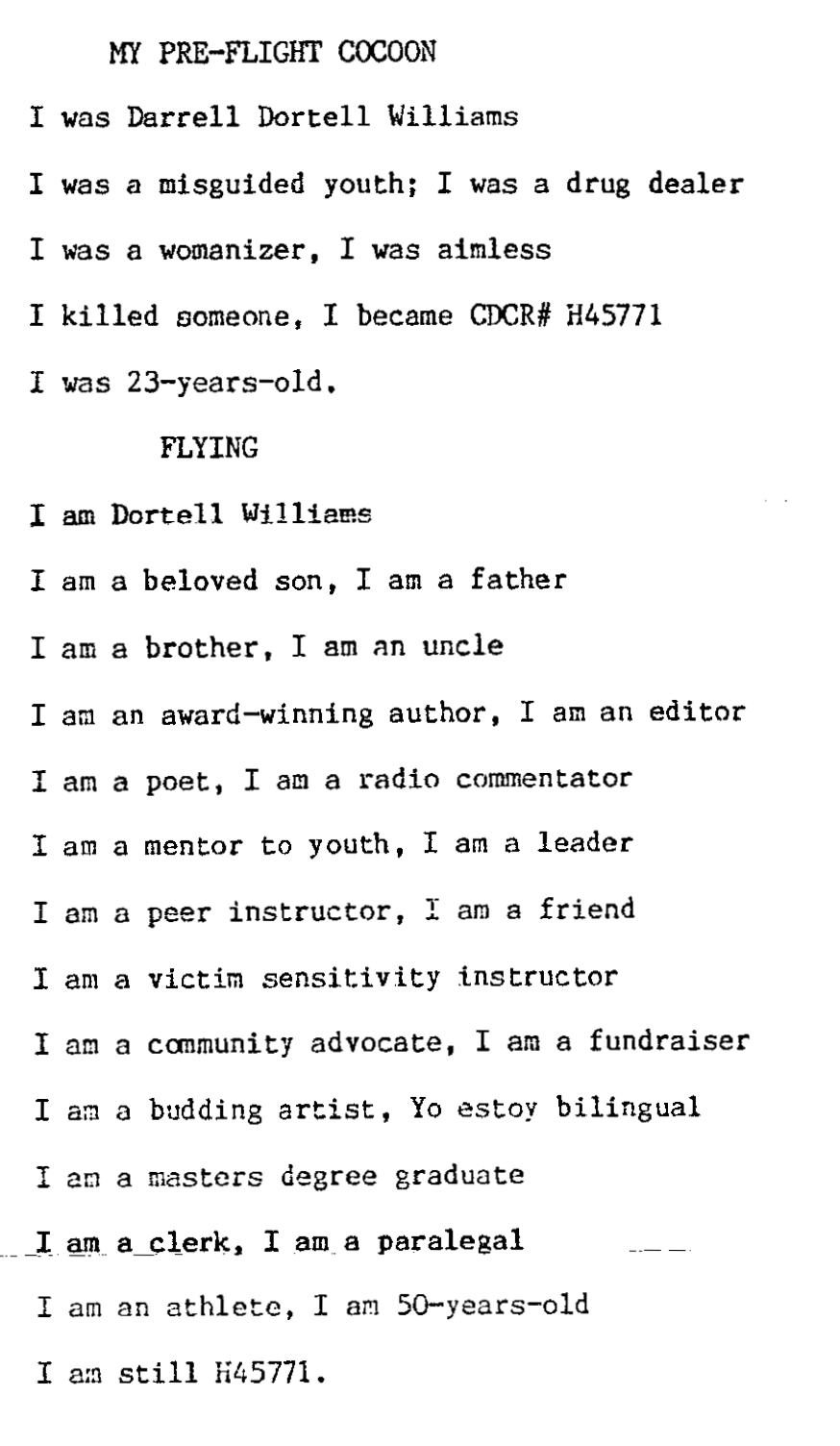
While processing mail together, Leah opened a piece of writing from Dortell Williams, an incarcerated writer in California that stopped us cold. His transformation is a reminder of what’s possible, and why this work matters.
We also want to pause and honor the life of Andrea Gibson, who passed away last week, which has had me in my feels. If you’ve followed us for a while, you’re familiar with Kurtis & Joe. Kurtis (in Illinois) is also a published poet (you can find his book Poems From Within, along with a dozen or so sudoku books on Amazon). I had sent a couple of her books to him since he started writing us, and had to break the news when we spoke just before Bee Fest.
“The kindest thing I ever did
was to decide to never think this thought: As soon as the cancer goes away, I’ll start my life.
This is my life.”
I’ve done that a LOT in my life.
“As soon as my brother gets out.”
“As soon as my husband gets out.” (Spoiler: That chapter closed differently than I’d hoped.)
“As soon as this organization gets funded…”
It’s a trap that keeps us in waiting rooms.
Thanks for the reminder, Andrea.
Then there’s this line: “Dying is the opposite of leaving.”
This is your Bee Sides invitation to go down the rabbit hole. Search Andrea Gibson. Because I’m not linking everything.
Look up that line up there in bold ^^. You’ll find a video of Andrea, reading a poem outside under a tree.
Find it. Watch it. Cry. Repeat.
To wrap up this Bee Fest Edition, just a reminder that studies consistently show volunteering can reduce stress, improve mood, and even lower blood pressure, all while building community and purpose.
If you need a little motivation or a reason to start your own Bee Fest someday – go ahead and Google something like “power of volunteering for health.” You’ll find studies, personal stories, and lots of inspiration.
Thank you for being here. Back in the Roffice Tuesday, after the buzz settles.
With gratitude,
Melissa & the Adopt an Inmate team
Quote of the Week:
Without volunteers, we’d be a nation without a soul – Rosalyn Carter
During our 2025 Volunteer Bee Fest weekend, Leah opened a piece of writing from Dortell Williams, an incarcerated writer in California. His words, his transformation is a reminder of what’s possible, and why this work matters.
Your Sunday Read July 13, 2025 | from Adopt an Inmate
Notes From the Roffice We didn’t publish any new blog posts this week, but not because there’s nothing to say. The short version: we’re still dealing with multiple leaks that had gone undetected until it turned into a major fiasco, and while the mitigation phase is almost done, the rebuild is yet to begin. It’s been a steady process, loud and messy, but progress is happening, and the workers are so knowledgeable, making the process as painless as possible.
There’s a saying that two moves equal one house fire in terms of how much stuff you lose. Water damage is maybe somewhere in between, but it has a similar effect: it forces you to ask what’s worth replacing. We’re looking at each item and asking: Does this deserve my time, my space, my energy? And in many cases, the answer is no. There’s some peace in that. Lightening the load is painful, but satisfying. And you don’t have to have a fire or a leak to do it.
Bee Fest Is Coming
Every summer, we host a small in-person gathering for our closest volunteers — what we fondly call our Bee Fest. This year’s will be our smallest yet, and intentionally so: just the three of us (Leah, Liz, and myself), with a possible visit from a new volunteer who’ll be helping with the blog.
These are working weekends, full of focused time for tasks that keep our mission moving. But they’re also a rare and cherished chance to sit down together, share meals, laugh, and remember why we do this work.
Life has been full for all of us with big projects, new beginnings, and the emotional weight of the news cycle. Like many of you, we’ve been feeling the heaviness of the world, and we’re grateful for this pocket of time to reconnect and recenter. We’re so lucky to have each other, and this time to say thank you, face to face.
We cover Bee Fest expenses out of pocket, so even a small donation goes a long way. Your support helps with our weekend rental, meals, and materials that make this weekend such a critical part of our year.Every gift helps us get more done, together.
Letters From Prison: Kurtis & Joe (Part 4 Coming Soon) We’ve already shared a few early posts from Kurtis. Soon, we’ll begin sharing letters from Joe too. I recently asked Joe to share more of his story, especially the time between losing his wife and the events that landed him in prison.
Joe’s response has been worth waiting for. I already knew he was kind and decent. What I didn’t know was how remarkably brave he is. You’re going to love this. That’s all I’ll say for now.
Protect Each Other. Report Injustice.
As immigration raids and detentions ramp up across the country, we’re sharing resources this week that help communities: know your rights, document violations, and protect your neighbors.
Mobilize USA: Events, Petitions, and Volunteer Opportunities
ICE Immigration Alerts:(Google Play):allows you to report raids or potentially illegal immigration searches. You can register for alerts in your area to find out when you should be concerned, or go to the location to stage a peaceful protest.
MigraCam: (Apple) Designed to help people living in border communities notify their family members and friends of their encounters with law enforcement and immigration officials. MigraCam records incidents and streams them live to a list of pre-determined emergency contacts with a customized message.
ILRC Red Cards: Print and carry cards to assert your rights during encounters.
Make a Preparedness Plan: Instructions on what to do with your preparedness plan, and instructions to download signal, and make a group with your emergency contact (i.e. the people who have your preparedness packet)
As Always Thank you for reading, sharing, and showing up. If you’ve been with us a long time, you know this work is personal, messy, beautiful, and vital. And we can’t do it without each other.
🐝 With gratitude, Melissa + the Adopt an Inmate team
Quote of the Week:
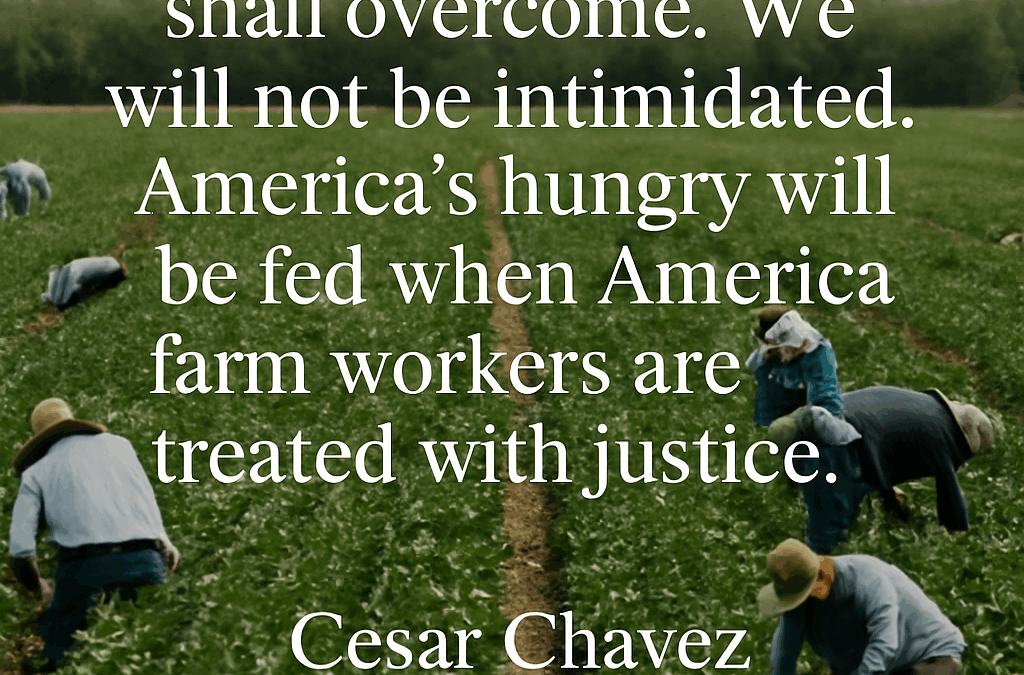
“Preservation of one’s own culture does not require contempt or disrespect for other cultures.” – César Chávez
OurLinktree is live! One easy place to find everything we’re sharing, watching, posting, and building.
✍️Take the Quiz – How much do you know about U.S. prisons?
🗣️Add Your Voice – Submit your responses to our Good, Bad, Change poll





 Want to honor him in a meaningful way? This is the perfect time to purchase his book,
  In solidarity,
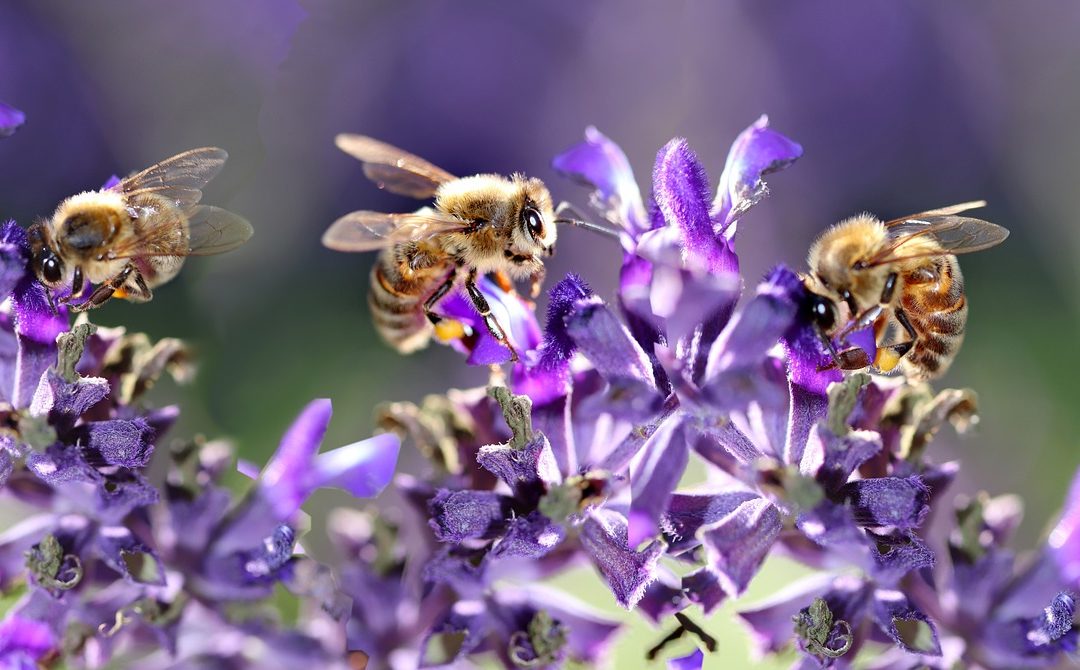


 Image by Beverly Buckley on Pixabay