Shawn Ali Bahrami: Free at Last!
We couldn’t be happier for our friend Shawn Ali, just released after 22 years in prison.



We couldn’t be happier for our friend Shawn Ali, just released after 22 years in prison.

Give us some Tax Deductible love!
Everything we do comes out of our own pockets, and we could use a little help!
We’re working hard to respond to a huge backlog of requests from inmates seeking mentorship.
Our angel volunteers are lined up to help – but to make this happen we need to cover the cost of
stamps and printing to fund our final volunteer work sessions of 2017.
The Florida Department of Corrections (FDC) is in the process of implementing a new service for our inmate population. Through JPay Inc., a Florida–based company, the Department will make available a variety of multimedia services to inmates through both an interactive kiosk, available in each general population housing unit, and secure tablets. These services are geared toward enhancing family connections, expanding educational opportunities, and incentivizing positive inmate behavior at no cost to the Florida taxpayer.
FDC will implement kiosk services in all major correctional institutions, annexes, work camps, re–entry centers, and Department–operated Community Release Centers throughout the state. Implementation of kiosks began in August 2017, with a projected completion date in the Spring of 2018. Upon completion of the kiosk implementation, secure tablets will be made available for purchase. (projected Spring 2018). Educational content, including JPay’s Learning Management System (LMS) Lantern LMS and Khan Academy Lite videos will be available.
Additional services include:
| Kiosk Services | Tablet Options |
|---|---|
| Secure Email, including pictures | Educational Content (including JPay’s Learning Management System (LMS) Lantern LMS and Khan Academy Lite videos) |
| Video Visitation | Movies (available for rental) |
| Electronic Greeting Cards | eBooks and Audio Books |
| Video Grams | Games |
| Link to Employ Florida Marketplace job search | Video Grams |
| News | |
| Music (MP3/MP4) |
Video visitation will be offered at the cost of $2.95 per 15-minute session, making it a very affordable option for inmates who want more access to their families, and competitive with the rates in other states.
Secure Mail is available to inmates at a cost of $0.39/stamp, with one stamp purchasing one email. This is $0.10 cheaper than the cost of a first-class postage stamp, currently at $0.49. The cost of Secure Mail covers the cost of the infrastructure to support it and monitoring of the messages for safety and security purposes.
All inmates who currently have a digital music player, through an existing contract with Keefe Commissary Network, are eligible receive a free JP5mini tablet, along with a $10 credit to apply to media purchases. All other inmates will have an opportunity to purchase either the JP5mini (4.3” tablet) for $79.99 or the JP5S (7” tablet) for $129.99. Additionally, for the first 60 days after implementation at their institution, inmates can purchase tablets for a 50% discount.
Each secure tablet will come with complementary content, provided at no additional cost to the inmate, including several games, 100 classic eBooks, relaxation music, and access to educational content including Khan Academy Lite videos and GED preparation. The cost of games, movies, ebooks, audiobooks, and music will vary depending on the item purchased, similar to how prices in online stores like Apple iTunes and Google Play vary.
The Department is committed to ensuring that services provided to inmates are offered at a fair and reasonable cost that maximizes the use and benefits of these services. Through careful monitoring and a clear contract, this partnership with JPay, Inc. has the potential to modernize programming for inmates and provide the Department a delivery channel for future innovative programming ideas.

Dear Potential Adopter,
I want to thank you for taking this first step.
For most of my life I believed what the media and television wanted me to believe. Everyone convicted by the courts is a criminal and should be thrown in prison. The keys should be tossed into a lake somewhere and they should spend the rest of their miserable lives behind bars and barbed wire – so that the rest of us will be protected from them.
I believed them to be sub-human, not worthy of … anything, to be honest. When I would hear about them watching cable TV I was outraged. I mean, who do they think they are? Cable TV? Health care? A decent meal? Bread and water, I say! Don’t spend my hard-earned tax dollars on trying to help some … some convict. They’re nothing but a bunch of animals – sausages, all of them. There’s no reason why they couldn’t have stayed out of prison. My life hasn’t been a bed of roses. Let them suffer, I say.
Then I found myself standing before a jduge, court-appointed attorney by my side. I’ll be okay. I’ve seen the TV shows. I’ve been a firefighter for 26 years. I’m one of the good guys.
My heart leaps to my throat. Eight years. The sound of the gavel makes it official. I’m now one of “them.”
My family still believes as I once did, never having had to experience the judicial process. I’ve been deemed guilty, therefore I am. They turn their back on me and I find myself alone, in a place not meant for me, with no one to talk to. I’m afraid. I’m surrounded by “them.”
Weeks, then months pass. It can’t be. How is this possible? “They” are just like me. I’m no longer afraid. We talk and I realize we’re not so different. Am I becoming an animal? A sausage? Or had I been wrong all these years? Are these convicts actually human? With feelings? And people who care about them? I was so sure of myself. How could I have been so wrong? Me? I’m usually right.
Months turn into years. I now have friends. I share in their happiness, their pain. I read about a birthday, a graduation, a death. We smile, shed tears, but they never ask me about my family, because they know I’m one of them now.
I go into my cell. Bury my head. I don’t want them to know.
You may not think a few words scratched on a piece of paper to be very important but I want to let you know that they can be life changing. You have an opportunity to truly touch another human being in a way that most cannot comprehend. I’ve seen the power of words turn men away from hate and violence and lead them to enlightenment.
You may not think you have anything to offer or anything in common with someone in prison. Trust me. It doesn’t matter. Just knowing you took the time to write is more than enough to form a bond and cause one of “them” to come out from under his blanket and yell, “Hey, Fred! Look what I just got!”
If you would like to drop Kenneth a line, email us at volunteer@adoptainmate.org for his contact info.
Inmate 1-2-6-6-4-1-7-5 — that’s my other “name.” The name I’m forced to answer to on a regular basis lest I be found in disobedience of a direct order by refusing to answer to a state-issued number, insisting on being called by the name my parents gave me at birth. In others words, when you come to prison your personal identity is no longer considered central to your existence but rather something you forfeit the minute you were convicted and sent to a state or federal prison. Perhaps it was designed to dehumanize prisoners, make them feel they are no longer worthy of being afforded the same identity as those outside these walls; but this would be pure speculation. Whatever the case, I refuse to accept the degradation and institutionalization that becoming a number over my name places upon me. And thank goodness countless others don’t accept this inhuman form of treatment either.
I am continually encouraged when I walk in the visiting room and find it full and vibrant with family members and friends who are there to visit a bunch of “numbers.” They find great comfort in spending quality time, laughing, crying, and holding hands with their “numbers.” It confirms the notion that people truly can be gone but not forgotten. How easy (theoretically) it would be for those who love us to get on with their lives when we come here. Surely they could find enough things to do throughout the day to occupy their time; they don’t need to accept our calls, come visit us, and write us letters, right? I mean, who in their rational mind would waste their time on a number, anyway?
I am also perpetually in awe at the sheer talent that exists in such a restrictive, callous dwelling. One would logically suspect that prison would squash and squeeze the life out of anyone here, rendering them useless, unmotivated, and devoid of interest in doing anything productive and challenging for the years they’re here. Thank goodness this is anything but true! To the contrary, it appears that prison has a way of producing any and all hidden talents that people never knew they had, often to their amazement. Artists create pieces that have rendered themselves speechless. Mechanics and builders learn their crafts from a technical aspect that they never understood before, enabling them to land good-paying positions in their respective fields when they are eventually released. Musicians: where do I begin? It’s always mesmerizing to actually watch a guy pick up a guitar, harmonica, or keyboard for the first time, study and practice the foreign instrument diligently for months and years, finally reaching the point where he can play inspiring, crowd-pleasing solos.
As a tutor I have had the privilage of working with men on their formal education for over 11 years now. I always find it remarkably touching to see a man begin the GED curriculum with zero confidence and even come within seconds of quitting out of frustration; then months (or years) later I see him at his graduation donning a cap and gown, hugging and crying with his family who are there to celebrate their momentous occasion. They are invigorated about life for the first time, understanding they now have more opportunity than life had ever showed them prior to that point. Tell them they are nothing more than a number. Tell their families that their loved ones are nothing more than a mere state identification number.
Clearly my examples of human potential and value could go on for pages, but why belabor the point? Instead, I will close with this: it is true that I am referred to as a number — a statistic even — but I also know I am so much more!
https://www.youtube.com/watch?v=-yAQkyn8pe4

Support for people who have been convicted of a crime is not a popular cause – but only because we’re not looking at it from the proper perspective. Support does not mean providing cable tv, video games, and haute cuisine – it means humane treatment and care, mentorship, education, and outside support, so that each incarcerated person emerges whole, equipped to live a productive, crime-free life. The most common reason that people end up in prison is that they have no positive social networks. The inherent darkness and isolation of prison only exacerbates that – which in turn leads to high rates of recidivism. Ninety-five percent of incarcerated people will be released into our communities, so their success and well-being directly impacts all of us.
Suffering is the problem, not the solution.
Below is a note I received today from one of our adoptees, Josh.
My name is Josh and I have been in and out of lock up facilities since I was 12 years old. Throughout my life I have had little or no support from anyone in my family. Due to that I went in search for support from the wrong people such as drug dealers, gang bangers, and other kids like me.
At the age of seventeen I commited a robbery and was sentenced to six years in the Indiana Department Of Corrections. At seventeen! I have been locked up for over five years and during that time I have had no support from my family. No visits, no phone calls, no letters, no love. In my five years I have seen so many people go home and come back to prison because they had no one to help them adjust to society.
After being locked up for so long, people forget how to function in the real world. MOST inmates are intimidated by the thought of going home. That is so sad and wrong. I used to feel the same way. Then I was introduced to a wonderful family called the Adopt an Inmate family. They introduced me to a loving, caring, and supportive mentor. Because of the support she has given me, I am no longer intimidated by the thought of getting out — because I know there is someone who will be with me and help me.
The saying goes, ‘Two wrongs dont make a right.” How is condeming someone to life behind a wall, alone, right?
Image credit Yoann Boyer
I’m still feeling a little down about last week’s execution. They killed Mark Asay on the 24th. I had honestly expected him to get a stay. Florida was using a new drug, etomidate. Mark was the guinea pig. I sincerely believe the courts would let them shoot us full of rat poison, but this is the first time a new drug was used without hearings.
The media said Florida changed drugs because they were concerned that midazolam had the potential to cause unnecessary suffering. This is total bullshit. They changed drugs because no one would sell them midazolam. It is a nationwide problem which, unfortunately, Florida may just have solved.
The media made Mark out to be a white supremacist and this is also false. I can’t say who he was while free, but I’ve known the dude for 26 years and he wasn’t the person they made him out to be on TV. Mark walked up to my bars in ’91 while coming in from the yard. I had just been moved onto a permanent wing, and still wasn’t allowed outside. He said, “You have friends here.” That meant a lot to me.
Prison is a place full of people doing creepy shit, and some of them like nothing better than trying to take advantage of anyone new. Dudes who go out of their way to make you feel welcome, especially when you don’t know what to expect, stand out in my mind.
I also remember singing a Hank Jr. song, Family Tradition with Mark in the visit park. That had to be in ’92, and it stands out as I am not a fan of country.
It took a lot out of Mark when his mom died in a car accident, and by all accounts he had lost the will to live at the end. That is why we still don’t know how the high court may feel about expanding the retroactivity, as Mark did not raise the issue. Still, it is a hell of a thing when a state can execute someone after having their death penalty statute declared unconstitutional twice in the last 18 months.

Dear Martin,
I write to you from the other side — the side that awaits you if you don’t change your course of action soon.
I know you are going through an extremely difficult time right now as you seek independence while trying to figure out your identity. Most teenagers find themselves doing the same thing. Your friends are very influential right now, and I understand that no one wants to be shunned by their peers, but please believe me when I say what you have been doing to impress them and gain acceptance is NOT who you are and will only lead you down a path of self-destruction.
I know you started drinking because you are very shy and wanted to come out of your shell, but if you knew what I knew, you’d stop right now. You wouldn’t pick up another drink if you knew you would become a full-blown alcoholic within the next two years; if you knew your alcoholism would eventually cause you to tragically take two innocent lives by drinking and driving, leading to a seventeen-and-a-half year prison sentence! Martin, you’re better than that! You’re smarter than that and can make it in this world by pursuing what makes you happy — not what others want or expect from you.
You have so much potential. I see it beneath your bravado, tough-guy exterior. You don’t have to put up this facade with me — I know you . . . better than you will ever know! You’re not a gangster, thug, or tough guy — who are you kidding? No, you’re passionate about art and writing, so why not pursue those with everything in you? Trust me, you will not regret taking this path in life; it sure beats the alternative — the one that surely awaits you if you stay on the destructive path you’re currently on.
Man, if you only knew the pain you’re putting your mom through by going to jail for those stolen car escapades you and your brother have been going on with your so called friends. Are you crazy?! You’re already putting yourself in a category that makes it more likely you’ll end up in prison than college! How do you think your mom will feel about that? Believe me, Martin, her pain will be immense. In fact, it very well could contribute to her death some years from now! You don’t want that on your conscience, do you? But imagine how happy she would be if you did what you’ve always talked about doing, going to college to be an architect.
You don’t want to be where I am, where you’ll be told when you can shower, use the phone, watch TV, eat, and go to bed. You don’t want to miss your nieces and nephew’s birthdays and Christmases for the next seventeen and a half years, do you? It is beyond dejecting to have to watch them grow up in pictures and visits every six months or so. Trust me, that would make you regret every decision you are currently making in your life, Martin.
There are countless men where I am who routinely reflect on their lives when they were your age, expressing how they wished they had made different choices that would have kept them from this dreaded place. I am amongst them. I pray you change soon so you’re not counted among us as well. Change before it’s too late!
I see what you and your friends do. Where do you think that will lead you? Seriously, I want you to take a moment and ponder where you think those things will get you. Do you think there is a future in doing drugs, drinking, and stealing? Look around you; name one successful alcoholic or drug addict! Listen, I’m not here to lecture you; I never liked that either when I was your age, but as I now sit here in a concrete cell staring out of a narrow window into a courtyard with a basketball hoop and barbed wire, a huge part of me wishes I had paid attention to what those older people were trying to tell me. Clearly they knew things I didn’t, even though I thought I knew what I was doing. I only tell you these things because I love you and don’t want to see you end up here — this dreaded place that surely awaits you if you keep on your treacherous path. They even already have a number assigned to you if and when you show up here!
I want you to reject what those who claim to be your friends want you to do because when you really think about it, you should be able to see they don’t have your best interest at heart. Be true to yourself, believe in yourself, and give yourself a chance — you deserve it. Deny these people the opportunity of ever being able to use that state inmate identification number — ever!
Love,
Your Older Incarcerated Self

We’re excited to offer the third in Eric Burnham’s five-part series on “The Four Agreements,” by bestselling author Don Miguel Ruiz. In the book, Ruiz reveals the source of self-limiting beliefs that rob us of joy and create needless suffering. Based on ancient Toltec wisdom, The Four Agreements offer a powerful code of conduct that can rapidly transform our lives to a new experience of freedom, true happiness, and love.
The next agreement to be made with yourself is: Don’t take anything personally. It’s natural to personalize how you are treated. The ability to not personalize anything is learned, and it takes lots of practice. Without a doubt, some things are easier to brush off than others, but the way you are treated is rarely a referendum upon your person or character. Truth be told, you’re not that important. Other people are the most important characters in the unfolding story of their lives, not you. That’s just an existential truth.
Some people are inconsiderate, selfish jerks. Some are loud, obnoxious, and difficult. Others make broad, sweeping statements and over-generalizations designed to offend as many as possible. Still others are simply too stupid to realize their own ignorance. There are bullies, pushovers, snipers, haters, and snakes. There are those who don’t care about anything and those who care about everything. There are users, abusers, looters, and polluters. You can’t change them–and it isn’t your responsibility to do so. How they treat you, however, says far more about them than it does you.
Of course it goes without saying that the opinions and actions of those whom you hold in higher esteem carry more weight; you’ll be more disappointed or offended by their dishonest or unethical actions, and their slights and insults will hurt more. Yet even how they treat you only becomes about you when you personalize it. It’s far better to choose to grow through the experience, rather than be limited by self-consciousness or enslaved to anger and self-doubt.
There’s an old adage that holds life to be 10% what happens to you and 90% how you react to it. While that’s admittedly over simplistic, some truth can be found there. Basically, how you respond to the circumstances of your life and the people around you will determine not only your degree of personal growth, but also how you feel about yourself. When you allow the words and actions of others to dictate your emotions and ensuing behaviors, you are not in control of your life. Other people are controlling you, your life, and ultimately, your destiny–even if you think they’re not. That’s the quirky thing about objective truth: It’s true whether you believe it or not.
Consequently, if life is only 10% what happens to you and 90% how you react, then taking things personally will profoundly impact your reactions. Personalizing and catastrophizing leads to anxiety, unrest, and resentment. You’ll never find peace, fulfillment, and self-assurance by personalizing the way you are treated. Even if you reach your goals, you’ll be miserable if you’re unrealistically expecting others to treat you the way you think you should be treated. You’ll be stuck wrapped up in a need for validation and affirmation that will never come.
Everyone is in a different stage of personal development, and you’re never completely aware of what is going on in someone else’s life. But you are aware of what’s going on in yours. If you strive to be a good person, and you adhere to these four agreements, you can find lasting peace. Don’t take anything personally — things are never as bad as they feel.
It took several agonizing months of listening to cellmate’s stories before I realized that my innocence didn’t matter. At fifty-one, I’d had a pretty full life. So, what really matters?
This 17-year-old African American boy, arrested in front of school merely because he stood next to somebody suspected of a robbery, was in real trouble. By all accounts, he won’t have a future. A felony will abruptly cut short his high school career, and possibly his life.
The police report he shows me rules him out as a suspect. The accomplice he’s alleged to be wears dreadlocks and has a good four inches and thirty pounds on him. Neither the police nor the prosecutor thinks this matters. He will likely plea out because he doesn’t have the resources to fight them. He’s just another defendant, a black one at that, to his court-appointed attorney. To the prosecutor: another notch in her lipstick case. The public doesn’t know and likely wouldn’t care if they knew his story. “He shouldn’t have been smoking in front of the school,” they’d probably say.
I spend hours on the phone at $1.40 per minute, convincing my sister to “sell it all.” She does, but can’t bear to sell my truck.
“I want you to have it when you get out of prison,” she says.
“It really doesn’t matter,” I say. “It’s just stuff.”
Nine months later, at the Holliday transfer unit, I’m in line for commissary when I see the boy from county. He signed for a year probation, violated, and was sentenced to five years in the penitentiary. I tell him I’m sorry.
“It doesn’t matter,” he says. I try not to cry.
My sister and I talk on the phone a lot. The rate is much cheaper than it was in county. It’s only twenty-one cents per minute. We decide to start an organization to help people like the young man I couldn’t help. We call it Adopt an Inmate. Dot Org. I talk on the phone and my sister does all the work.
“It doesn’t matter,” she says. “I think I’ve found my calling.”
Two and-a-half more years pass. I am on the phone with my sister.
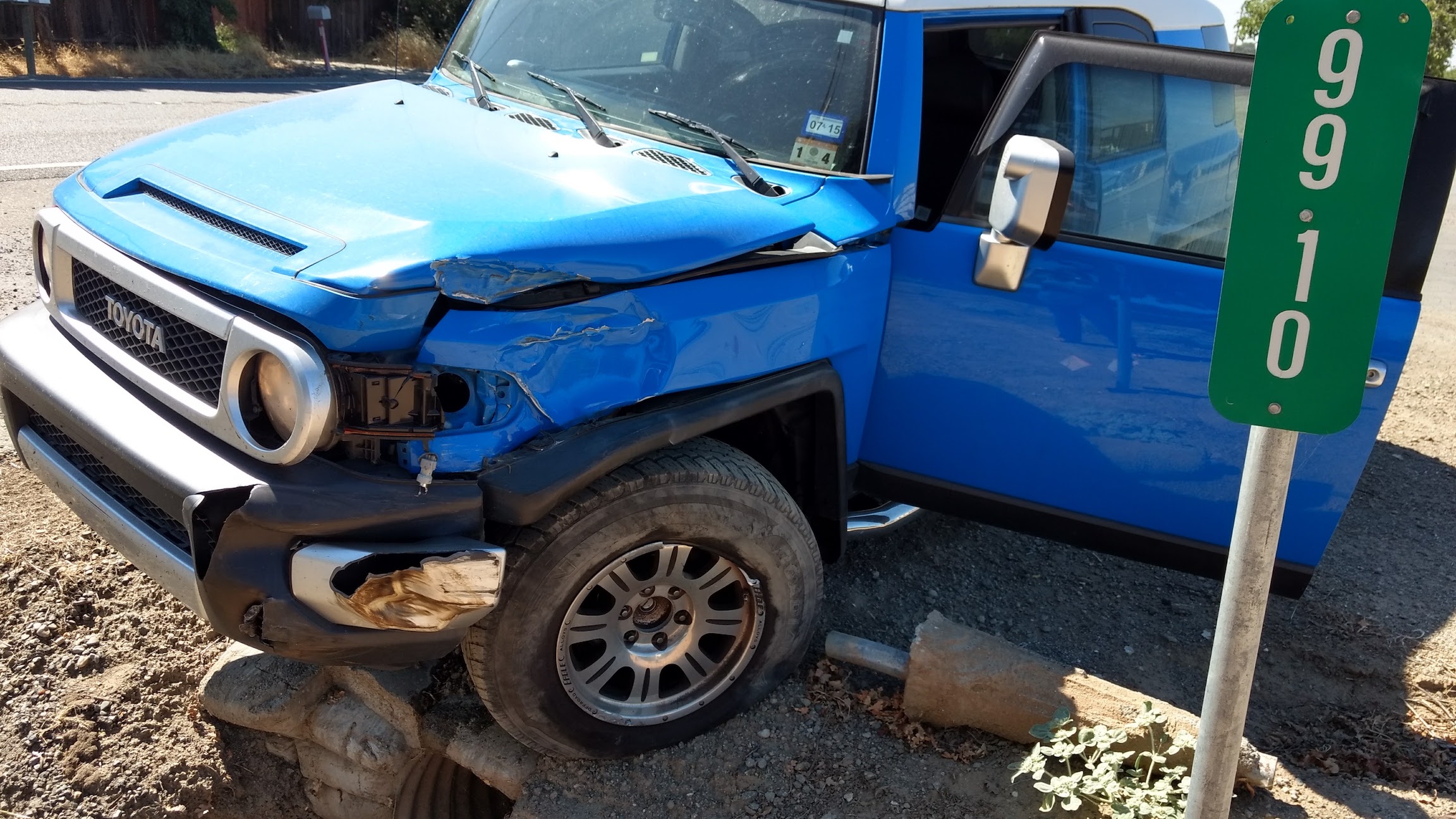
“I have bad news,” she says. She draws out the story, hoping to soften the blow. This only increases the suspense. Turns out my truck is probably totaled. Her voice breaks. The accident is fresh.
“What about you?” I ask. “Are you hurt?”
“Well … I don’t know how but I seem to have hurt my pinky.”
A split-second later and she would be a no-answer.
I don’t care about the truck she cries for. She’s disappointed because she wanted to preserve just one piece of the life I had before. But it really doesn’t matter. God preserved what really matters. I and hundreds of adopted inmates around the country know what really matters.
 Footnote: I vividly remember talking to my brother on the phone while sorting through his belongings, asking him what to sell and what to keep. Craigslist shoppers were traipsing through his house, looking for bargains. Most everything he had was sold or given away in our desperate rush to clear out his house in a few days – once we finally accepted that he was not going to be released anytime soon. We couldn’t afford to keep paying rent on his place in Texas. Then about a year later, the same with my belongings, when I decided to move from California to my mother’s house in Oregon, to be with family until the trial. It was easy to get rid of most of my stuff – except for a few loved items. I can still hear my brother’s voice, “You know what? You don’t need it.” Of course he was right. Sold!
His truck was totaled. We had just paid it off the month before, four years into the nightmare. My mom and I felt like warriors. For a week or so.
The good news is that my brother was just approved for parole. Also, my pinky is healing. Now we just have to figure out what he’s going to drive.
