This email goes out once a week on Sundays to recap what we published during the week (Monday – Saturday). Whether we posted one, or a dozen, It’s your quick way to stay in the loop without getting overwhelmed.
We’re now posting each edition here on the blog as well, so no one misses out.
Prefer to get it by email? Subscribe on the right. We don’t send notifications for every post, just one weekly digest.
A Note From the Roffice
Yes, I said roffice. If you’ve ever imagined a buzzing office full of Adopt an Inmate staffers hard at work, brace yourself. The truth is less “open-concept workspace” and more “one overheated bee in a makeshift office.” That’s right, roffice = bedroom + office. This week, it’s been less “creative sanctuary” and more “disaster zone.”
Last week, I told you we’d discovered water damage and needed a new roof. Well, buckle up they said, things escalated. There are now spaceship-like plastic enclosures sealed with zipper doors, marked “DO NOT ENTER” (we’re obeying). Workers in hazmat suits have been removing drywall and flooring and cabinets while very loud “air scrubbers” pump out constant heat just in time for the arrival of real summer. And did I mention we still don’t have a kitchen sink, laundry room, or working ice maker?
Q: Does homeowner’s insurance cover any of this? Short answer: Yes. Long answer: No.
Yes! Unless the water came from the sky, the pipes, the ground, the roof, or any part of your actual home. In that case, no. Duh.
Your insurance company will thoughtfully explain why none of those count. Oh they’ll sympathize with your situation, and then remind you that it’s your fault for not anticipating water’s behavior, and also that your deductible is $5,000 and your claim is now closed.
Displacement coverage? Haha, good one.
Food reimbursement? Absolutely! Just keep your receipts. For food you normally eat, food you wouldn’t normally eat, in an amount you can’t guess, from a meal you didn’t want.
Stay tuned for next week’s Fact-Check Friday, where we may tackle something equally uplifting like whether mail bans in prisons are about security or sadism.
Despite all that, here’s what we managed to share:
Civics 101: Independence Day Edition – On a day when fireworks fly in the name of freedom, we shared our Immigration Status Comparison Table to clarify who is actually here legally, who’s (normally) at risk for deportation, and what all those U.S. immigration categories really mean.
We want to hear from you! Whether it’s a response to one of the week’s posts, your own immigration or advocacy story, or a tale of homeowner’s insurance chaos. Drop a comment and let us know we’re not alone out here. Also: What do you call your home office?
Note: Scroll alllll the way down (yes, past the “You May Also Like” goodies) to find the comment box. It’s there, we promise.
With love and gratitude, The Adopt an Inmate Team Truth. Connection. Resistance.
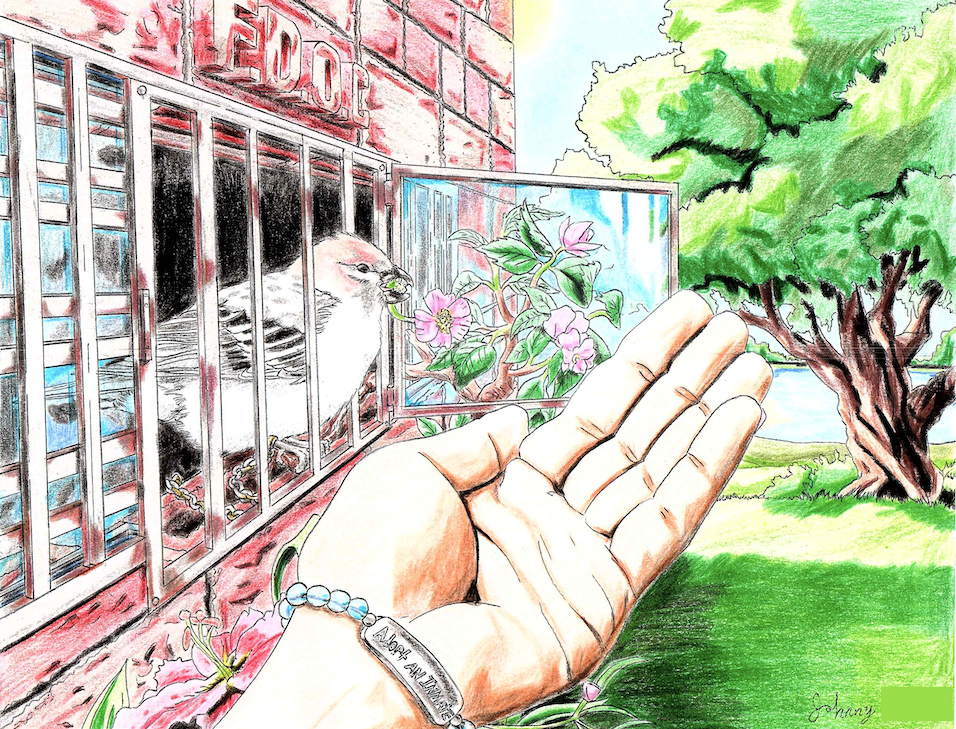
This piece came to us from Johnny in Florida. Like many artists behind bars, Johnny uses his creativity to process life, express what words can’t, and stay connected to the world outside. Every detail speaks to the heart about what it feels like to be disconnected from the outside world.
Art like this reminds us: Beauty thrives even under the harshest conditions.
We accept submissions by mail or email from incarcerated artists or their outside supporters.
Email: submit@adoptaninmate.org
Snail mail:
Adopt an Inmate
Art Campaign
PO Box 1543
Veneta, OR 97487
TL;DR: America wouldn’t exist without immigrants, but they’re being demonized by people whose own families came here the same way. Let’s set the record straight.
Because of the growing push to sanitize America and make everyone here look, speak, and believe one way, entire communities are being criminalized and blamed for systemic issues that are not their fault.
While we light fireworks in honor of freedom and the fight for independence, the facts about immigration are twisted beyond recognition.
Take this clip where Sam Seder calls out Patrick Bet-David and crew for falsely claiming over 2 million Social Security numbers were handed out to undocumented immigrants.
Spoiler: they weren’t.
Those SSNs were issued under Enumeration Before Entry (EBE), a legal, Trump-era program that assigns Social Security numbers to lawfully-admitted immigrants before arrival, so they can start working, paying taxes, and complying with U.S. systems from day one.
Seder: “The amount of misinformation, from every single person, all of you, was astonishing to me.”
To add to the level of misinformation here, PBD’s own family benefited from the same kind of program. But sure, go off.
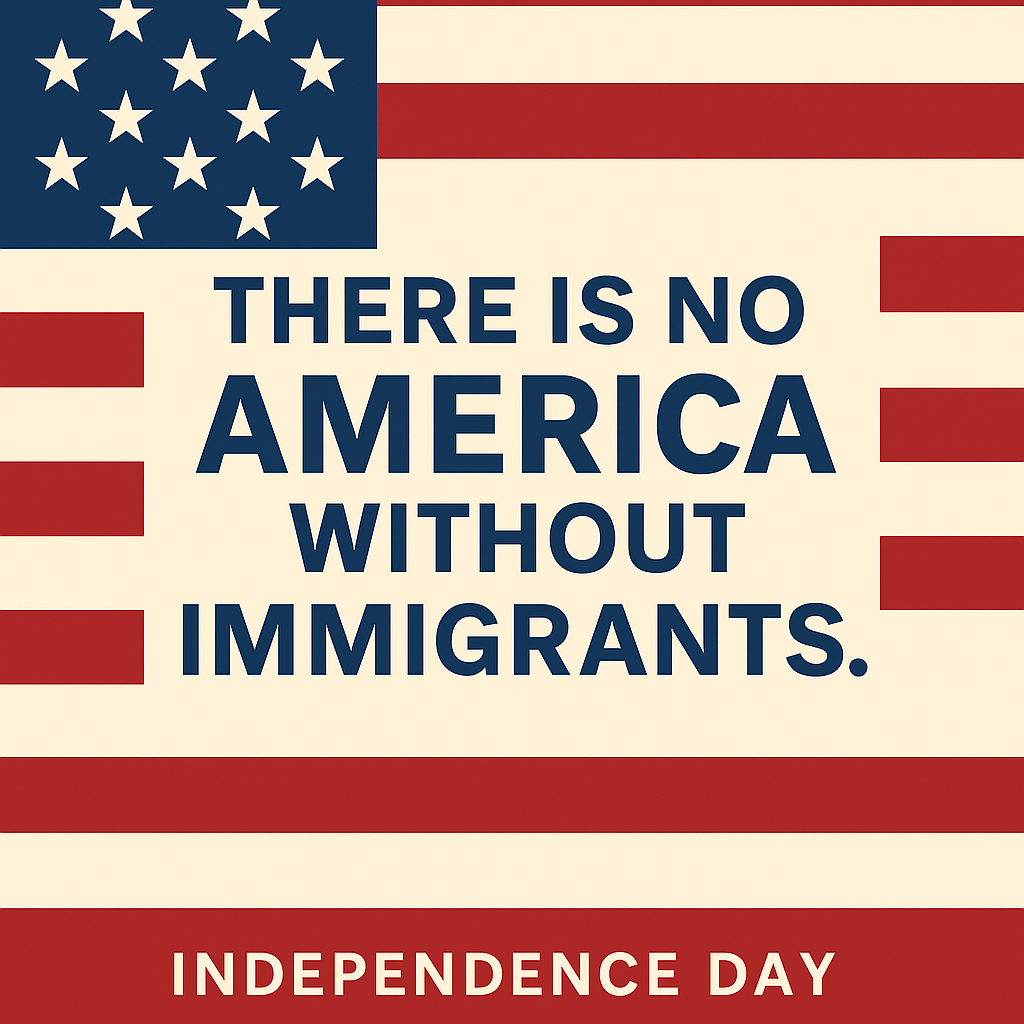
TRUTH: There is no America without immigrants.
Immigrants are essential to the U.S. economy, making up a large share of the workforce in agriculture, construction, caregiving, and service industries. Many pay taxes, including undocumented workers, contributing billions annually through payroll and sales taxes. And contrary to the noise, immigrants commit fewer crimes than native-born citizens.
Let’s be clear about who’s being targeted.
The majority of immigrants having their doors kicked in or being forced into unmarked vans by armed, masked cowards aren’t “illegals” hiding in shadows. They’re people who came here legally, followed the rules, and work the hardest jobs in the country, growing, picking, building, and cleaning. They’re not stealing anything.
Unless your ancestors were Indigenous to this land or were brought here in chains, you are here because someone in your family immigrated.
If we are to celebrate one truth, we must hold the others with equal weight.
We created this simple table to clarify the difference between legal immigration statuses.
Immigration Status Comparison
U.S. Citizen
Already a U.S. citizen by birth or naturalization. Protected from deportation.
Green Card Holder
A lawful permanent resident. Can apply for citizenship after 5 years, or 3 if married to a U.S. citizen. Deportable only for serious crimes or fraud.
Visa Holder
“Visa holder” covers many categories – some allow work (like H-1B), others don’t (like tourist visas). Most are temporary, and overstaying or violating terms can lead to deportation.
Refugee (legal and protected under U.S. and international law)
Applies from outside the U.S. and is legally admitted, usually through a UN or international resettlement program. Must apply for a green card after 1 year, and may apply for citizenship after 5 years total in the U.S. Deportation is rare but possible.
Asylee
Applies from within the U.S. or at the border. Must apply for a green card after 1 year of asylum; can apply for citizenship 5 years after that. Protected status, but not immune from deportation.
TPS Holder
Temporary Protected Status is granted during crisis in one’s home country. Must reapply regularly and have a valid work permit (EAD). Can’t apply for citizenship through TPS alone.
DACA Recipient
DACA offers temporary protection and work authorization with an EAD. It is not a legal immigration status and can be changed or ended through executive action. Not a pathway to citizenship.
Undocumented
Entered the country without inspection or overstayed a visa. No legal status, work authorization, or path to citizenship. High risk of deportation.
Have a myth you’d like us to fact-check next? Let us know.
✍️Take the Quiz – How much do you know about U.S. prisons?
🗣️Add Your Voice – Submit your responses to our Good, Bad, Change poll.
This is part two in our series featuring Kurtis & Joe. If you missed the first one, you can catch up here.
Before they ever spoke, Kurtis could tell that Joe didn’t belong. He was quiet, lost, and clearly unprepared for prison. What happened next defied every stereotype of incarceration, and changed both of their lives.
In this second message, Kurtis writes about what it meant to look out for someone else, and the spiritual rule that carried them through Joe’s first six years inside.
Coming Soon:
In our next post, Kurtis goes deeper into Joe’s story, learns about his wife Edna, and respecting small wonders.
OurLinktree is live! One easy place to find everything we’re sharing, watching, posting, and building.
✍️Take the Quiz – How much do you know about U.S. prisons?
🗣️Add Your Voice – Submit your responses to our Good, Bad, Change poll
This week, we’re sharing something extra special with our Letters From Prison series.
Every week we get touching letters from inside. Some land quietly, like a sparrow on a windowsill (you’ll read about that in Part 3), and end up turning into one of our most meaningful connections.
This is one of those stories.
In October 2022, I received a message from Kurtis in an Illinois prison. He wasn’t writing for himself, but for his celly, Joe.
Kurtis, knowing his transfer to a different institution was imminent, hoped someone on the outside could step in as a friend until it was Joe’s turn to move.
Their story begins with this first message from Kurtis.
Coming Tomorrow in Part 2:
In a place where most look out only for themselves, Kurtis quietly takes on the care of his new celly Joe.
OurLinktree is live! One easy place to find everything we’re sharing, watching, posting, and building.
✍️Take the Quiz – How much do you know about U.S. prisons?
🗣️Add Your Voice – Submit your responses to our Good, Bad, Change poll
This letter came to us in back in 2017. Felicia had already served more than 20 years, and hoped to find connection before her release. We’re thrilled to share that she’s now free, though we haven’t been able to locate her. If anyone knows where Felicia is today, we’d love to reconnect and maybe share this post with her. Felicia, if you’re reading this: we see you. And we’re rooting for you.
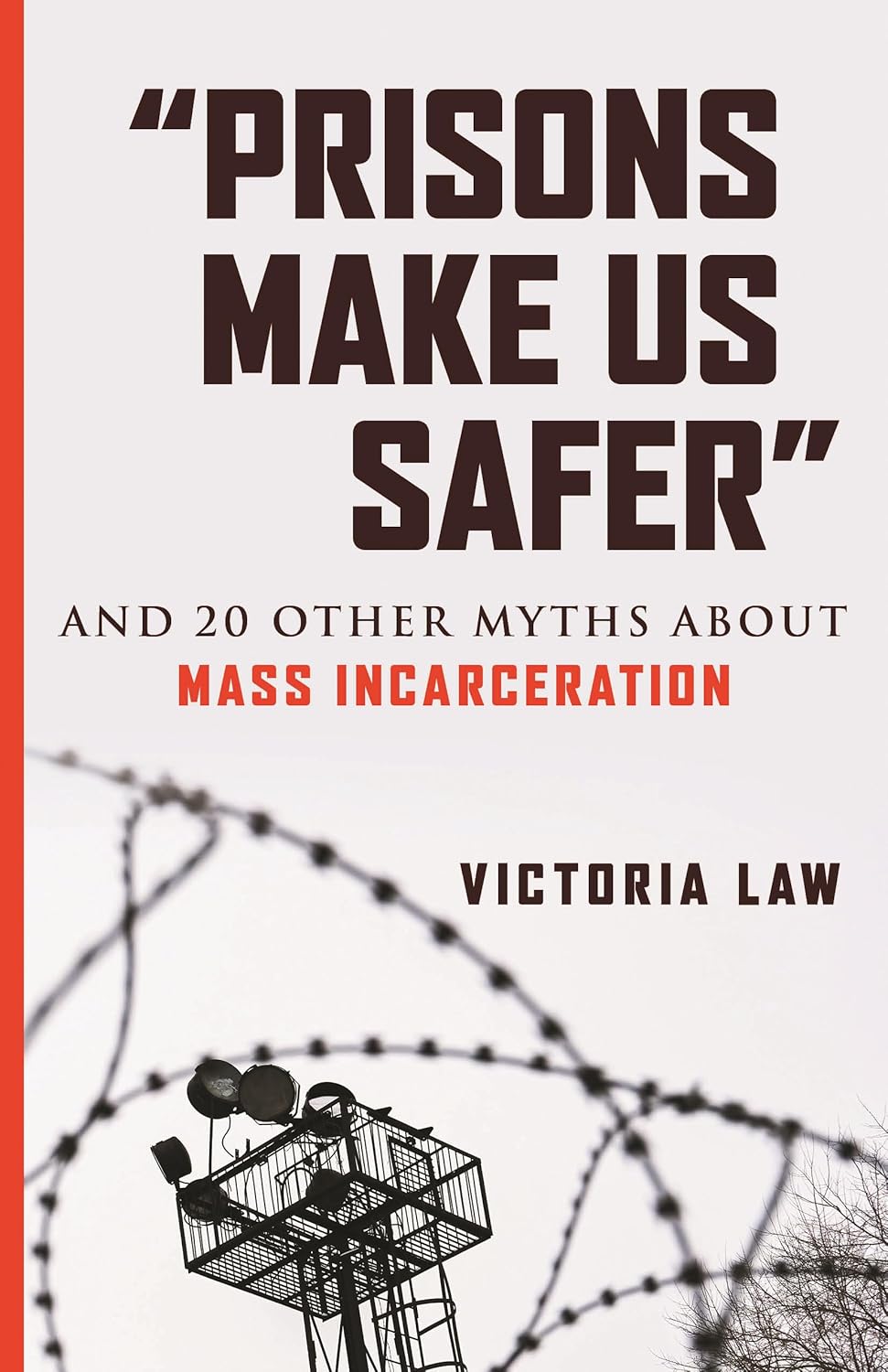
Victoria Law’s book Prisons Make Us Safer: And 20 Other Myths about Mass Incarcerationchallenges this and other commonly held assumptionsIt’s a concise, accessible read perfect for educators and activists. Read Nicole Frisch-Scott’s excellent review here.
Non-fiction. By Victoria Law. 2021. 240 pages An accessible guide for activists, educators, and all who are interested in understanding how the prison system oppresses communities and harms individuals.
Time Periods:20th Century, 1961, 21st Century, All US History
Themes:Criminal Justice & Incarceration, Immigration, Laws & Citizen Rights
Over the past 40 years, the number of people behind bars in the United States has increased by 500%.
Journalist Victoria Law explains how racism and social control were the catalysts for mass incarceration and have continued to be its driving force: from the post-Civil War laws that states passed to imprison former slaves, to the laws passed under the “War Against Drugs” campaign that disproportionately imprison Black people.
Law challenges the common belief that incarceration enhances public safety, arguing instead that the prison system often harms individuals and communities.
✅ The Reality:
High incarceration ≠ low crime: Multiple studies show that even countries with extremely high incarceration rates don’t see proportionately lower violent crime.
Incarceration doesn’t deter everyone: Crimes persist despite harsh punishments. Meanwhile, research finds more deterrent and rehabilitative potential in community-based approaches.
It perpetuates harm: Prison also exacts massive financial, social, and intergenerational costs for individuals and communities. Many end up in jail again within three years.
Alternatives work – and cost less From education to mental health treatment to community supervision improvements, proven alternatives save money and reduce recidivism.
A short prison sentence may stop one crime, but a community investment stops many more.
Why It Matters
When we believe prisons = safety, we invest in more cages, less community, and more patterns of harm. But if we shift the narrative and insist on prevention, healing, and repair, we find smarter, more humane paths forward.
Juneteenth marks the day in 1865 when the last enslaved Black Americans were officially freed, more than two years after the Emancipation Proclamation. It’s a day of jubilation and grief, a celebration of delayed liberation that still echoes today in the lives of those who remain caged.
More than 160 years later, millions of people, disproportionately Black and Brown, are still waiting to be free.
And not just free from bars and razor wire, but from surveillance, exclusion, and the systems that seek to erase them.
A Brief Timeline of Freedom Deferred
1863 – Emancipation Proclamation Lincoln declares all enslaved people in Confederate states “forever free.” But enforcement relies on Union troops, and liberation is staggered and partial.
1865 – Juneteenth June 19. Union soldiers arrive in Galveston, Texas, two and a half years later, to enforce the Proclamation. Freedom finally reaches the last enslaved Americans.
1877 – End of Reconstruction Federal troops are withdrawn. Southern states rapidly enact Jim Crow laws, gutting Black political and economic gains.
1896 – Plessy v. Ferguson The Supreme Court upholds segregation under the doctrine of “separate but equal,” legalizing apartheid for nearly 60 more years.
1964 – Civil Rights Act Outlaws segregation and discrimination, a major victory of the Civil Rights Movement, though resistance remains fierce.
1994 – Federal Crime Bill Mass incarceration explodes. Mandatory minimums, three-strikes laws, and prison construction surge, disproportionately targeting Black communities.
Today Over 1 million Black Americans are under carceral control – in prison, on probation, on parole. Slavery’s exception clause remains in the 13th Amendment. The promise of freedom? Still unfinished.
Who Still Waits to Be Free?
This week we revived our blog series: Letters From Prison. The first entry was from Bradley, writing us from a federal prison in Colorado. In his letter, he talks about one of the many humiliations people endure behind bars.
Bradley’s voice, and the voices of so many others, are the reason we do this work.
Every week, we’ll share more letters from people in prison. More truth-telling. More messages of delayed freedom.
✊🏾 On Juneteenth and Every Day
“Nobody’s free until everybody’s free.” — Fannie Lou Hamer
This Juneteenth, we honor not just this history, but the people still trapped by its legacy.
We listen to the ones still waiting. We lift their voices. And we keep pushing.


 Yes, I said roffice. If you’ve ever imagined a buzzing office full of Adopt an Inmate staffers hard at work, brace yourself. The truth is less “open-concept workspace” and more “one overheated bee in a makeshift office.” That’s right, roffice = bedroom + office. This week, it’s been less “creative sanctuary” and more “disaster zone.”