This post is part of our Civics 101 series, plain-language breakdowns of how power really works in the U.S. legal system.
Before we dive into today’s post about the case of Mahmoud Khalil, a Palestinian rights advocate detained under a vague and rarely used immigration statute, let’s pause with this quote.
“What would you do? Cut a great road through the law to get after the Devil?” “Yes, I’d cut down every law in England to do that!” “Oh? And when the last law was down, and the Devil turned round on you – where would you hide, Roper, the laws all being flat? This country’s planted thick with laws… and if you cut them down… do you really think you could stand upright in the winds that would blow then? Yes, I’d give the Devil benefit of law, for my own safety’s sake.”
— Sir Thomas More, A Man for All Seasons by Robert Bolt
Thomas More isn’t praising the Devil. He’s warning us. Even the worst among us deserves the protection of law, because once we start ignoring laws for people we dislike, the ground beneath all of us gets dangerously shaky. What protects one of us must protect all of us, or it protects no one at all.
This week’s Civics 101 is about exactly that: how obscure laws, vague language, and unchecked power can be used to silence people, and how the courts are sometimes the only line of defense.
What do you get when the government uses an immigration law from the Cold War era to punish someone for speaking out?
A legal mess. And a civics lesson.
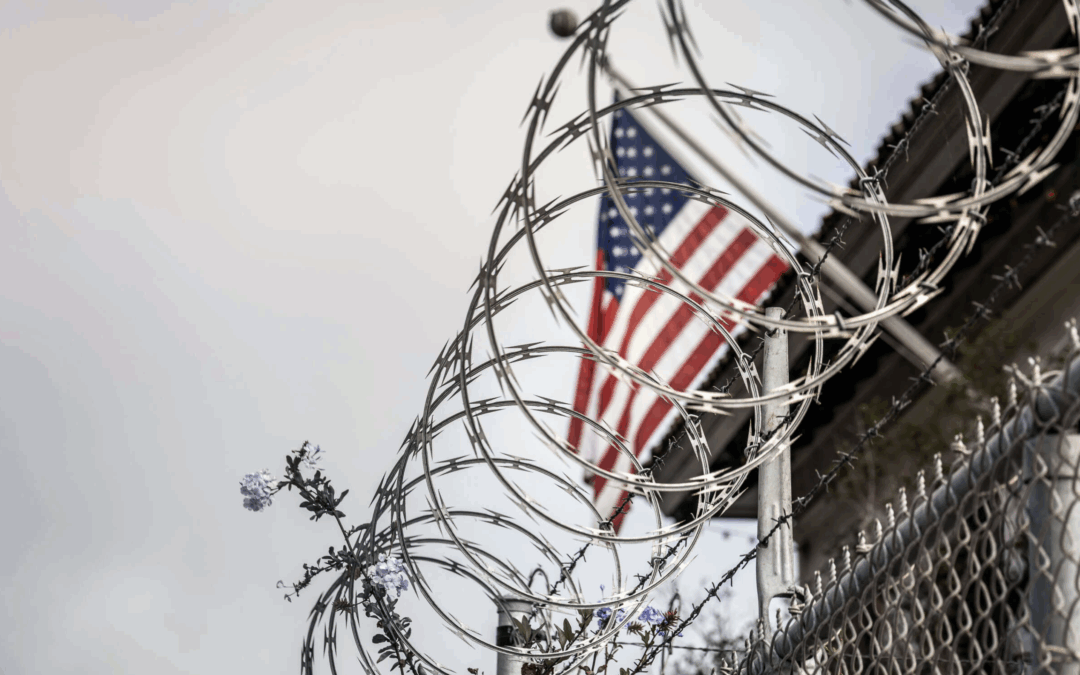
Last week, a federal court ruled that the Trump administration’s use of a little-known immigration provision (Section 1227) to detain Mahmoud Khalil was likely unconstitutional. Khalil, a Palestinian rights advocate and father, was ripped from his family in New Jersey and transferred 1,400 miles away to a detention facility in Louisiana.
Why? For foreign policy reasons, they said.
What is Section 1227?
It’s part of the Immigration and Nationality Act. In rare cases, it lets the Secretary of State remove a non-citizen if they’re deemed a foreign policy “threat.”
But here’s the problem: the law is so vague that it opens the door to abuse. In this case, the government used it not because Mahmoud committed a crime, but because he spoke outin support of Palestinian rights.
The ruling made it clear: this kind of power grab is not okay.
⚖️ What Did the Court Say?
Judge Michael Farbiarz called the government’s argument “unprecedented” and said Khalil’s detention under this law is likely unconstitutional. He warned that using vague laws like this could eventually be applied far beyond immigration cases, including against U.S. citizens in criminal contexts.
The implications are chilling.
Why This Matters
Immigration law isn’t just about who gets to stay. It’s about how power is used, and misused.
When the government uses obscure laws to target people for their speech or identity, it threatens all of us. If it’s possible for one man to be imprisoned for speaking out, it becomes possible for anyone to be next.
This is exactly why civics matters: so we know when our laws are being bent into weapons.
💬 From the Judge:
“If Section 1227 can apply, here, to the Petitioner, then other, similar statutes can also one day be made to apply. Not just in the removal context, as to foreign nationals. But also in the criminal context, as to everyone.”
What You Can Do
✍️ Learn more about the case from the Center for Constitutional Rights. 🗣️ Speak out about unjust detention. It happens more than you think, both inside and outside prison walls. ❤️ Support organizations fighting detention and deportation abuses. 👀 Want to see more posts like this?Subscribe.
Welcome to Bee Sides short reflections on justice, hope, and the human spirit
This series is a corner of our blog where I gather books, stories, and unexpected moments that linger long after the first glance.
Most will tie back to incarceration, justice, and the quiet fight for dignity. But sometimes? It’ll simply be whatever refuses to let go. The echoes that stay with me. Because that’s what Bee Sides are for.
Let me know what you’re reading, watching, or wondering about. Maybe it’ll make the next issue.
This one’s about holes in the wall, agile mindsets, and not knowing what you’re doing until you do.
There’s a shelf I’ve been meaning to hang for weeks.
Okay months.
Hanging a shelf is like building a support system, it takes planning, the right anchors, and the patience to start over when it all crumbles.
The instructions were simple, and I’m reasonably handy. But somehow, despite good intentions, careful planning, and a decent drill and level… I still got it wrong.
More than once.
What started as a small project turned into a full-blown architectural battle with my wall. I patched holes. I repainted. I watched youtube videos. I made peace with the mess and tried again.
While prepping for another go at it, I went to buy a new can of wall texture spray because the one I found in the garage had lost its will to live and just spit out clumps like a grumpy llama.
My local Ace only had giant cans, enough to texture the Taj Mahal. I asked if they had smaller ones.
The clerk said no, then offered this:
“Use the whole can. It won’t last anyway. Spray it in the corners. Baseboards. Gaps. Anywhere. Keep critters out. Just use it up”
Um …. What? I nodded. I smiled. I did not ask follow-up questions.
I’m still not sure what she thought was in the can. Foam? Spackle? Rat poison?
I walked out thinking: this is how most advice works. Part experience, part imagination, and just enough misplaced confidence to keep you from trying it.
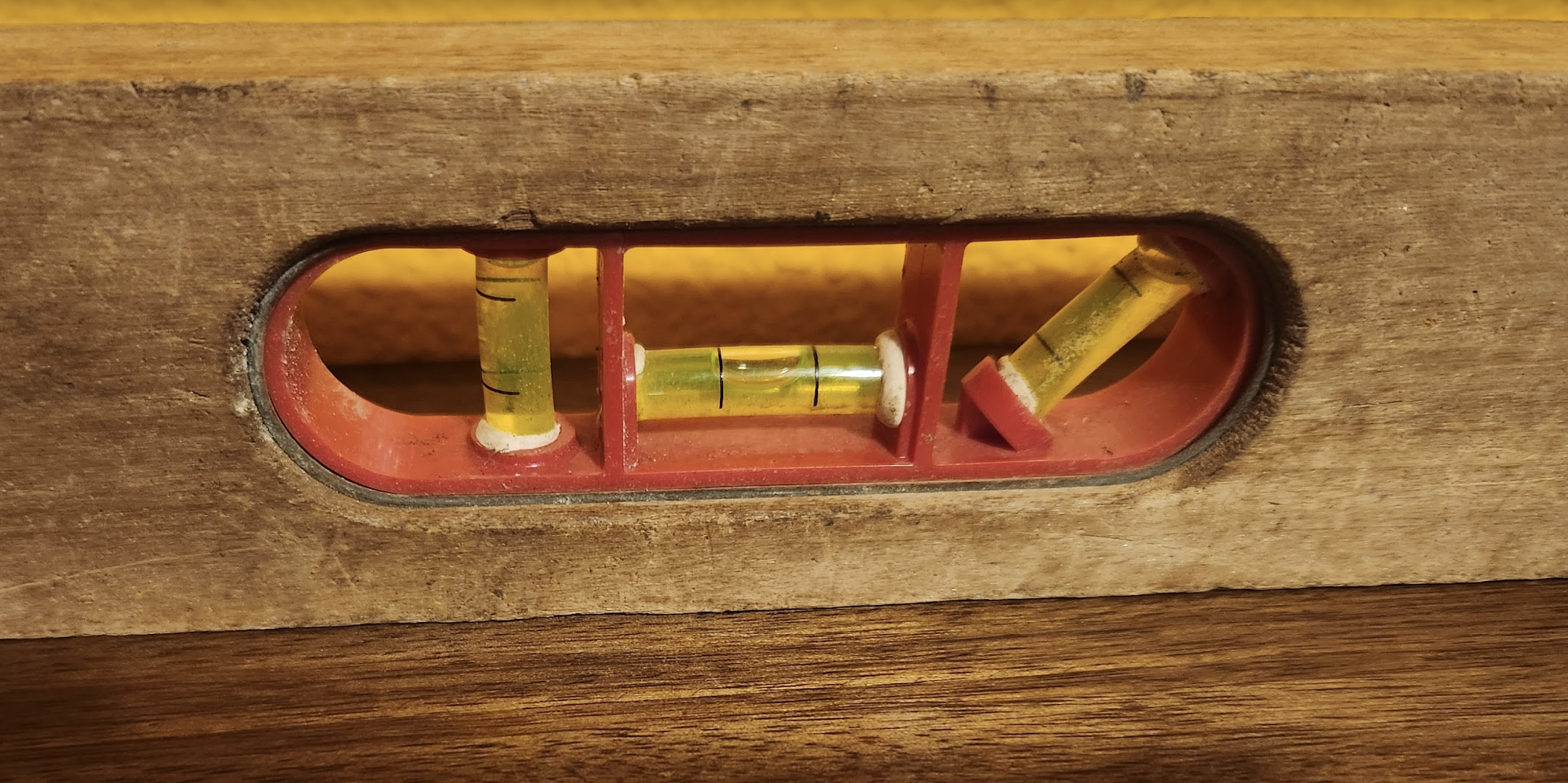
Eventually, I got it done. And even better: it’s level. Perfectly level.
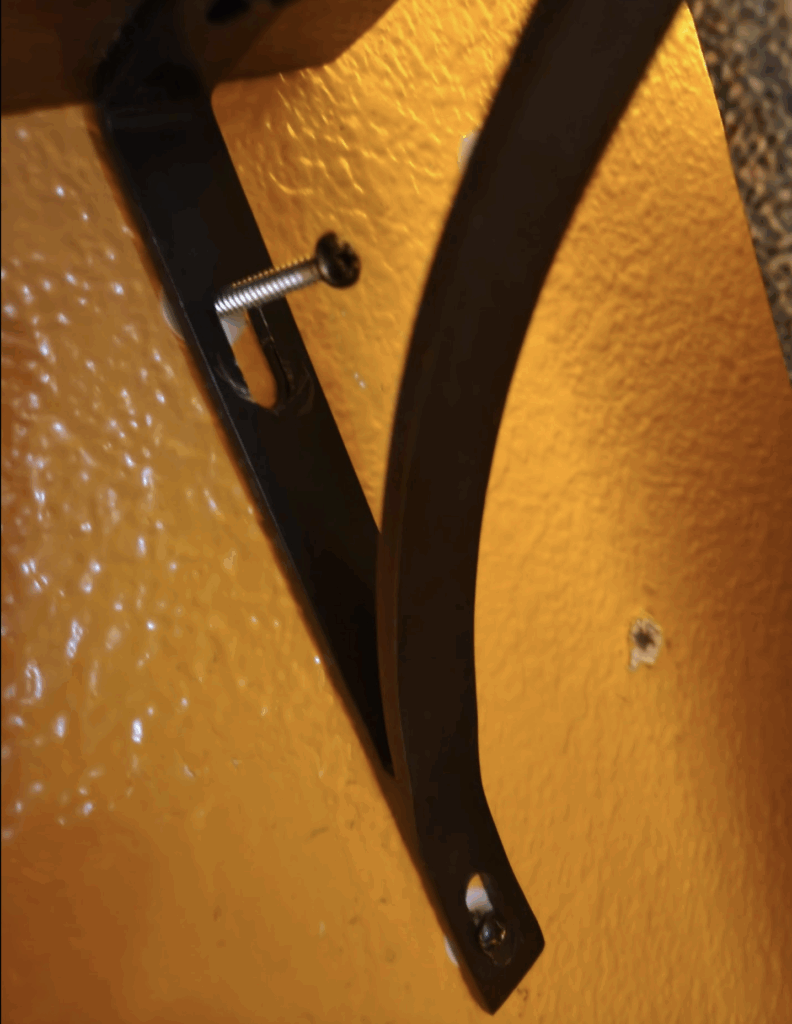
But let’s zoom in a little. There she is. That one recalcitrant screw. That’s as far as I can get her. She’s giving “I tried my best with what I had” energy.
And that uncommitted wall anchor in the background? A ghost of methods past.
And yet, the shelf? She’s solid.
And ... isn’t that just life? If that’s not a metaphor for advocacy and DIY perseverance, I don’t know what is.
It reminded me of something Rick said years ago, back when he was still inside and coaching me through the early days of Adopt an Inmate. I had to redo something I’d built that wasn’t working.
“That’s called agile methodology,” he said.
It’s a good thing, he told me.
(My) translation: “That was a shitty way to do it. Let’s try something else.”
We’re taught to equate mistakes with failure. But growth? Growth is drywall dust and painter’s tape and trying again with better anchors.
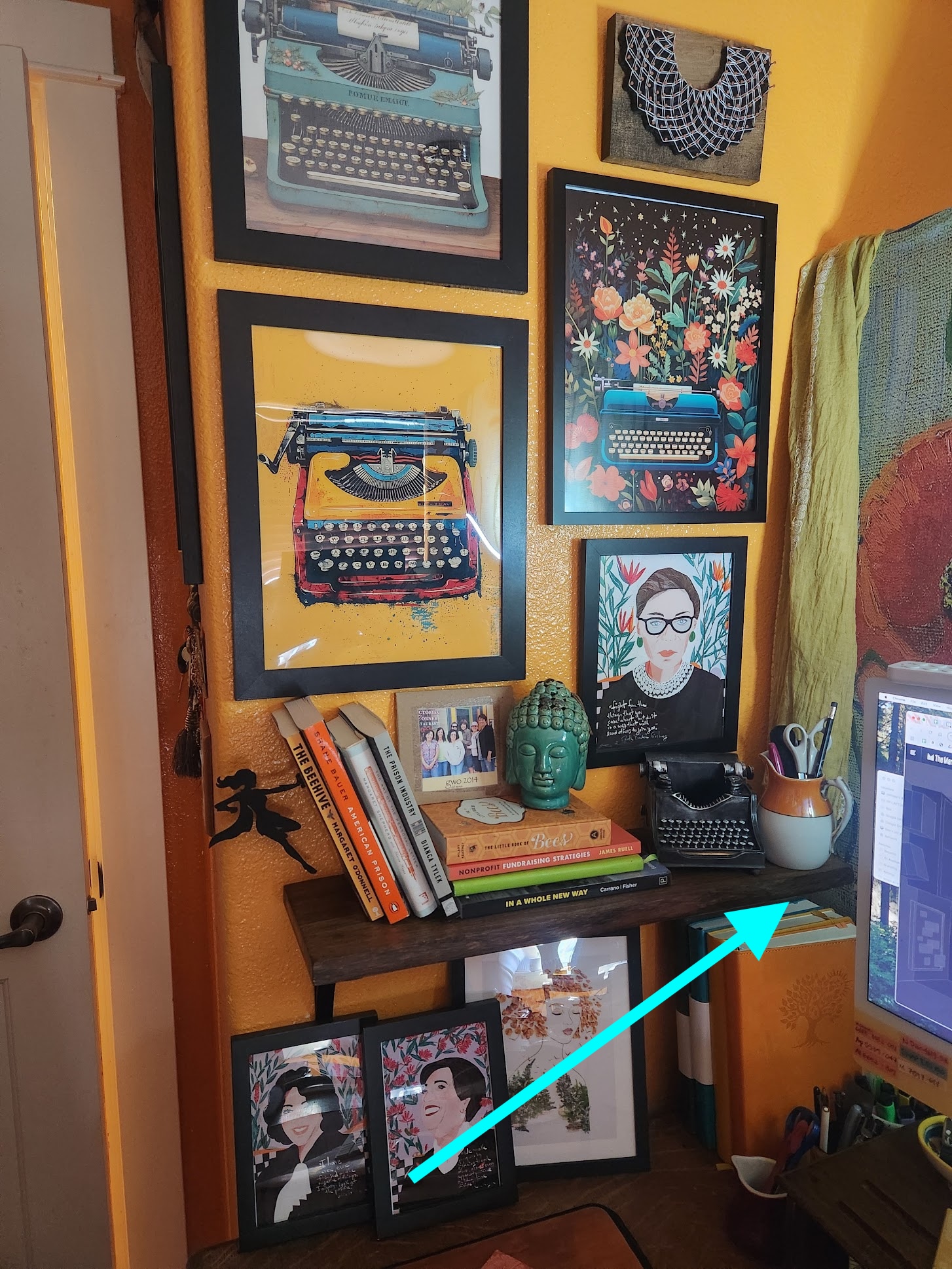
Eventually, I finished the job. Here’s the “after” photo that hides the errant screw completely.
And here’s the thing: behind every picture-perfect space, there’s always a recalcitrant screw. Something unsightly but functional, and only you know the backstory.
And that’s okay. Maybe it’s even the point.
Behind the shelf, there are holes I patched. Behind the polish, there’s a mess I worked through. And behind the level bubble… there’s a lesson.
Success isn’t about doing something perfectly. It’s about making just enough wrong decisions to land in the right place.
Coming Soon Sometime: Shelf Life, Part II Now that the wall is patched and the shelf is steady, what deserves to live there? (An essay on curation, memory, and the weight of beautiful things.)
🧰 Got a recalcitrant screw of your own? Tell us your DIY tales or agile life lessons.
And hey, if you need a little something for your baseboards, I’ve got 98% of a can of wall texture spray with your name on it.
If it doesn’t work, just try something else.
🐝Get Involved– Help behind the scenes ✍️Take the Quiz – How much do you know about U.S. prisons? ❤Give – Fuel the mission
🇺🇸 Each day this Memorial Week, we’re sharing the words of a living veteran. Someone who served their country and is now incarcerated, waiting to be seen, heard, and remembered. These are real voices from our waiting list. Real people. Still here. Still hoping.
Some veterans keep serving, even from prison.
Steven spent eight years in the U.S. Navy, stationed in Southeast Asia and the Middle East. Now, he’s serving a 30-year sentence, which, at his age, likely means life.
But he hasn’t stopped showing up.
Prison is a rough place, but what I’ve learned most is that prison is not only intended as punishment, but even more for the purpose of exploitation and abuse. It’s large-scale business built on the bodies of those in its grasp.
I have therefore dedicated my life now to being a writer and a prison reform advocate. I’ve written more than 200 reform-related essays.
I would love to be adopted by someone as a pen pal. My family does not stay in touch, and I’ve had only one visitor in the past 8 years.
This is what service looks like when no one’s watching. This is what resilience looks like in the absence of recognition.
Today’s Fact:
**Many incarcerated veterans become writers, educators, and advocates,** but rarely receive outside recognition or support. They fight for justice from within a system built to silence them.
Want to do something about it?
The veteran who shared these words is on our waiting list and could really use a friend. If you’d like to get connected, or even just send a note of encouragement, contact us and mention his name. We’ll take care of the rest.
🇺🇸 Each day this Memorial Week, we’re sharing the words of a living veteran. Someone who served their country and is now incarcerated, waiting to be seen, heard, and remembered. These are real voices from our waiting list. Real people. Still here. Still hoping.
Richard was injured by an IED while serving in Iraq. He suffered a traumatic brain injury. Now, he’s in prison, looking for connection.
I want to find good friends. I am a disabled Veteran, while serving in Iraq I as hit by an IED. I suffered traumatic brain injury. The VA has rated me as permanently disabled. I have seen all the destruction and greed that the human race can create. I have come through struggles with addiction. I need to find friends who are gonna have my back. People who lift each other up, people like I had when I was in the Army.
This is what community sounds like. This is what loss feels like. And this is what hope still looks like.
Want to do something about it?
The veteran who shared these words is on our waiting list and could really use a friend. If you’d like to get connected, or even just send a note of encouragement, contact us and mention his name. We’ll take care of the rest.
John served in the Army’s Airborne Ranger division and fought in the Iraq War. When he returned home, he struggled, and made choices that changed his life forever.
I’ve been incarcerated for 13 years and still have some time to go before I’m eligible for parole. I’m a proud Army veteran from the Airborne Ranger division. Shortly after returning from the Iraq War, I made some really bad choices that resulted in my current incarceration. I have almost no support in the outside world and could really use a mentor, supporter, and friend.
He doesn’t ask for pity. He owns what he did.
But service, trauma, and pain don’t disappear when the uniform comes off. And accountability should not mean abandonment.
Today’s Fact:
Veterans are overrepresented in the U.S. prison population, especially those who served in combat. Many experience untreated PTSD, substance use, or homelessness before arrest. Despite this, access to mental health care and support inside prison is rare, and often punitive.
Want to do something about it?
The veteran who shared these words is on our waiting list and could really use a friend. If you’d like to get connected, or even just send a note of encouragement, contact us and mention his name. We’ll take care of the rest.
🇺🇸 Each day this Memorial Week, we’re sharing the words of a living veteran. Someone who served their country and is now incarcerated, waiting to be seen, heard, and remembered. These are real voices from our waiting list. Real people. Still here. Still hoping.
Some people assume that prison is where self-improvement begins. The truth? Prison often makes growth nearly impossible.
Joel served in the U.S. Navy and is now serving a 10-year sentence, hundreds of miles from his home in Missouri. His family can’t visit. And while he’s working hard to better himself, the system makes it a constant uphill battle.
I’ve participated in many of the self-help classes here, including Cognitive Intervention, Alcoholics Anonymous, faith-based studies, and veteran groups. But this is a challenging environment to live in and try to better yourself. Gang and drugs are rampant, creating a lot of unrest and violence.
He’s trying, really trying, to grow.
But the environment doesn’t nurture growth. And for too many incarcerated veterans, isolation is a second sentence.
Incarcerated veterans are more likely than non-veterans to be housed far from home, especially if they’re in a specialized unit or program.
This often leads to long stretches with no family visits or outside support, worsening mental health outcomes.
Want to do something about it?
The veteran who shared these words is on our waiting list and could really use a friend. If you’d like to get connected, or even just send a note of encouragement, contact us and mention his name. We’ll take care of the rest.
🇺🇸 Each day this Memorial Week, we’re sharing the words of a living veteran. Someone who served their country and is now incarcerated, waiting to be seen, heard, and remembered. These are real voices from our waiting list. Real people. Still here. Still hoping.
What happens to someone who serves his country, is sent overseas, and comes home to nothing?
“I am a 6-year Army vet and served overseas. I have no contacts in the outside world. I am currently fighting for my Veterans benefits.”
That’s it. That’s the whole letter.
Sometimes the silence says more than the words do.
He served. He returned. Now he’s in prison, with no support, no connections, and still fighting to receive the benefits he earned.
This is not what justice looks like. This is what abandonment looks like.
Incarcerated veterans often lose access to their VA benefits, and must fight to have them reinstated after release. The process is slow, complex, and poorly communicated. Many give up. Some never know they’re eligible at all.
Want to do something about it?
The veteran who shared these words (Michael) is on our waiting list and could really use a friend. If you’d like to get connected, or even just send a note of encouragement, contact us and mention his name. We’ll take care of the rest.
🇺🇸 Each day this Memorial Week, we’re sharing the words of a living veteran. Someone who served their country and is now incarcerated, waiting to be seen, heard, and remembered. These are real voices from our waiting list. Real people. Still here. Still hoping.
We hear it often: “He doesn’t seem like the kind of person who would end up in prison.”
But what does that even mean?
This Army veteran, Alex, is a writer, educator, lifelong learner, and lover of books, pugs, cinnamon, and Golden State basketball. He helps fellow incarcerated people learn to read and do math. He quotes Hermione Granger and Joel Osteen, adores coffee and books, believes wit and humor are essential, and is “not really getting the hype behind Russian literature. Or Twilight.”
From prison, he writes this:
To treat a person inhumanely is one of the most awful acts there is. To do so is violence; you reduce a person to a thing.
FACT: Incarcerated veterans are twice as likely as other prisoners to experience PTSD, and they’re often punished instead of supported, treated like liabilities instead of human beings with stories, skills, and scars. Access to trauma-informed care and therapy inside prison remains rare, and often, nonexistent.
Alex is doing everything he can to grow, give back, and stay human in a place built to erase him.
I am not cruel. I am not arbitrary. And I am rarely unfair. I am never afraid to apologize and am quick to laugh, even at myself. In fact, often at myself.
I am looking for friendships that are qualitative, not quantitative.
📬 Want to do something about it?
The veteran who shared these words is on our waiting list and could really use a friend. If you’d like to get connected, or even just send a note of encouragement, contact us and mention his name. We’ll take care of the rest.
In 2016, an estimated 107,400 veterans were incarcerated in the U.S. (Maruschak et al., 2021).
Something we hear pretty regularly is: “Why would anyone adopt a criminal? Adopt a veteran instead.” Our answer to that is: Please do. There are many veterans on our waiting list.
Memorial Day honors those who died in uniform, but not those who returned home broken. When mental health care, trauma recovery, housing, and employment are treated like luxuries, veterans end up in the one place America is still willing to invest in: a prison.
This week, we’re sharing letters sent to us from veterans who are still living. Behind bars. Not to erase what they’ve done, but to confront what this country has failed to do.
Today’s letter comes from Kenneth:
Before prison, I was a teacher, disabled veteran, author, and business owner. At present, I am not allowed to be any of those. I have been locked up and treated like an animal. I joined the Army at 17 and served 11 years. I was medically retired with service-connected disabilities. Now I spend my time hoping someone will remember I’m alive. I just need a human to know I’m not dead.*
What do you even say after that?
This Memorial Day, don’t just lay a wreath. Write a letter. Adopt a veteran. Be the connection our country forgot to keep.
*The veteran who shared these words is currently on our waiting list and could really use a friend. If you’d like to get connected, or just send a note of encouragement, reach out and mention his name. We’ll take it from there.
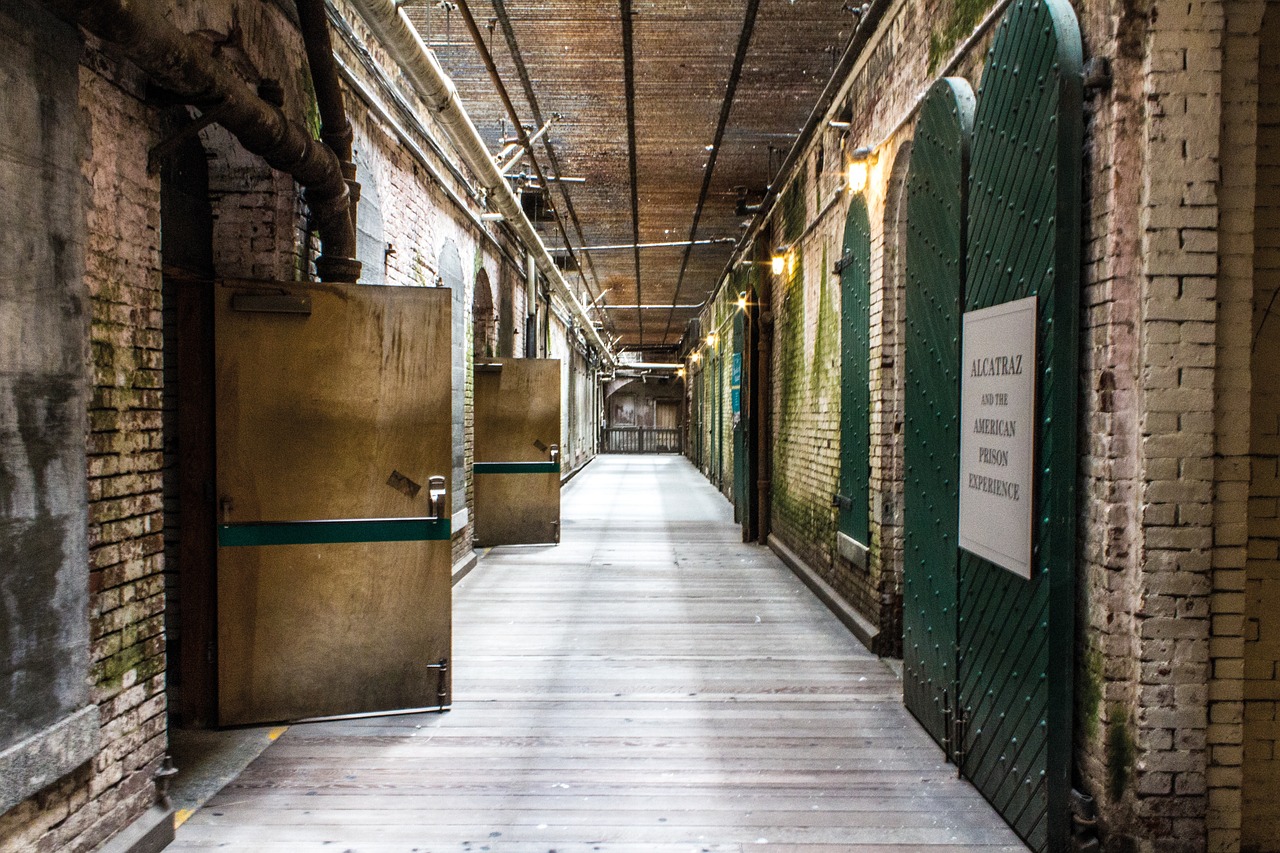
Every once in a while, a headline floats across the internet promising that Alcatraz might reopen. Most recently, it’s come from Trump, who proposed turning the shuttered island prison back into a functioning one. The idea is as theatrical as it is empty. It’s exactly the kind of distraction our carceral system thrives on.
Alcatraz has always lived more in the American imagination than in our reality. It operated for just 29 years, and closed in 1963. it’s been a tourist destination ever since. It’s famous not because it worked, but because it didn’t.
To take Alcatraz back and turn it into an operational penitentiary, using the building that is there now, would make as much sense as taking Fort Sumter, putting it back together and arming it with missile loading cannons. – Alcatraz historian John Martini
Reopening Alcatraz wouldn’t solve a single issue plaguing our criminal legal system. It wouldn’t fix the lack of mental health care. It wouldn’t provide jobs or housing or education. It wouldn’t decarcerate. It would just feed the myth that harsher punishment equals safety.
Meanwhile, roughly two million people are already incarcerated in this country, scattered across more than 1,000 prisons, jails, and detention centers – many crumbling, overcrowded, or operating in violation of human rights.
If politicians want to get serious about incarceration, they don’t need to dust off the keys to a rock in the San Francisco Bay. They need to fund public defenders. They need to end cash bail. They need to stop criminalizing poverty, and addiction, and mental illness.
They need to listen to the people inside.
And while we’re talking about reclaiming Alcatraz, here’s some interesting history about who already did.
In 1969, a group of Native American activists from Indians of All Tribes occupied Alcatraz Island. They lived there for 19 months in a peaceful protest, reclaiming the land in response to centuries of displacement, broken treaties, and erasure.
They didn’t come to punish. They came to remind this country of its promises, and its failures.
We don’t need more cages. We need more connection. More compassion. More change.
📬 Want to do something that actually helps?
Write a letter. Challenge the myth that punishment is the answer. Invest in people, not myths.