
by Jacob (Justin) Gamet | Dec 31, 2020 | From the Inside
At WSRU (my gated community), we get one day out of the year to turn up — on New Year’s Eve. Unlike the free world, though, our New Year’s Eve venues are “party of one” (or two if you live on the 4th tier and have a cellie) from inside our cells. Still, our open cell bars provide us auditory portals to celebrate together in true WSRU spirit and fashion.
To be honest, my first New Year’s Eve at WSRU caught me off guard. I was surprised when guys started turning up their portable stereos full blast, which is normally prohibited throughout the year and noise violators are punished with potential 48-hour confiscation of their peace-disturbing electronics. But it was like a collective jam session across four tiers.
The festivities began with a “volume 12” mashup of bass-laden rap music, fast tempoed and trumpet-blaring Mexican music, guitar-thrumming country ballads, and head-banging rock music. There was even some foreign music in an unknown language. Our Monster Ball lasted from 9-ish p.m. and went on till about 1:30 a.m. And to be honest, the late-night raucous was unexpectedly liberating.
The manner of celebration reminded me of the tribal nature of Lord of the Flies. The children were free to answer the call of the wild, a form of expression that’s muffled by the cultured refinements of civil society. Likewise, New Year’s Eve serves as a modality for guys to engage in unfettered, etiquette-less expression.
Guys scream-sing the lyrics to songs (losing their voice in the morning). And as midnight approaches, the noise increases in intensity. Minutes before 12 some will start slapping their cell signs against their bars, and some signs are broken in the morning.
At 12 a.m., the celebration crescendos with Happy New Year yells to one another, as though members of a de facto club of time walkers, walking (or marking, rather) off one more year before they can return to society and rejoin loved ones. It’s a remarkable moment of joy, as well as a saddening reminder of their separation from loved ones. So, in one sense they feel a connection, and in the other, deep and abiding loneliness.
Some years, WSRU administration tried to stamp out our fiery celebrations because things got out of hand. As with any group celebration, there is always the potential for the group to develop a mob mentality and celebrations going from constructive to destructive.
Before they installed cameras on the walls across from our cells, guys would get caught up in the hoopla and throw toilet paper, shredded magazines, water, and even condiments from their cells and onto the floor. There’s also a few things I won’t mention that they jettisoned. I’ll let your imagination color what they might have been. Lol.
I woke up one morning after and it literally looked like someone blew up a parade float, leaving one foot of debris everywhere. It was funny to the guys, but the sergeant was far from amused. She threatened to infract anyone who threw stuff from his cell but refused to join her cleanup crusade.
Some years we played cat and mouse games with floor staff. Administration wanted to stop the loud music one year. So they ordered staff to find out who was playing music and confiscate their stereos. But guys would hold their mirrors outside their cell bars, and when they spotted staff approaching, they’d quickly turn it off. Staff were virtually tiptoeing then running down tiers to catch guys. But other guys would alert them with short, loud-pitched police siren noises, indicating staff was coming (our very own neighborhood watch program, lol). Exhausted from sprints, the guards sensed the futility of their efforts and gave up. Ohhhh, those were good times.
This New Year’s Eve will likely be much more subdued relative to past ones. Nonetheless, I look forward to our quasi-Breakfast Club opportunity to let loose without Big Brother crashing our New Year’s Eve party.
Well, that’s how we throw a New Year’s party at WSRU. It might not be as extravagant and eventful as we’re accustomed to in the free world, but it has special meaning to us who look forward to getting one year closer to those we love.
In light of COVID-19, remember to party hard but safe.
Happy New Years! =)

by Inmate Contributor | Dec 25, 2020 | From the Inside
Monroe Corrections Complex – Twin Rivers Unit
December 25, 2020 6:30a.m
Christmas in prison is depressing. One can only imagine that it’s a depressing place in general. Due to covid we have not seen our families or friends in over seven months. We have lost many privileges due to this pandemic. Even though the only way we can be infected with this virus is by correctional officers and staff bringing it in, and coming into contact with us inmates. The department has used this virus as a weapon instead of a safety measure.
On the morning of Christmas, myself and other inmates decided to pass out cookies and hot chocolate to our fellow, less fortunate inmates, who have become more like family then anything as we quarantine together, eat together and go thru this pandemic together.
At 6:30 am The Sgt came running into the unit ordering that we stop immediately and yelled unpleasant things about the Christmas cheer. This ordeal lasted at best 5 minutes less than it takes us to pick up our meals in the kitchen, or line up for pill line or even working in correction industries both commissary and laundry. Both large money-makers for the Department of Corrections.
There were many of these holiday giveaways at Twin Rivers, but now I will be singled out and infracted for this. After being yelled at by the Sgt and reprimanded for these actions, “I don’t care about your lawsuits, you are completely out of line for this!”
At 29 years old, being nearly done with my 16 year sentence, I can say I have learned how to be human, how to love, and most importantly the joy one feels to help his fellow human being out. If in fact I receive a negative infraction… I know that I came a long way from the young 16 year-old thug that didn’t care about human life, much less if someone felt some Christmas cheer. I am guilty of bringing some love in this terrible pandemic, in the form of duplex creme cookies and lukewarm hot chocolate to the 90 inmates in A unit.
by Ronald Clark, Jr. | Dec 16, 2020 | Inmate Contributors
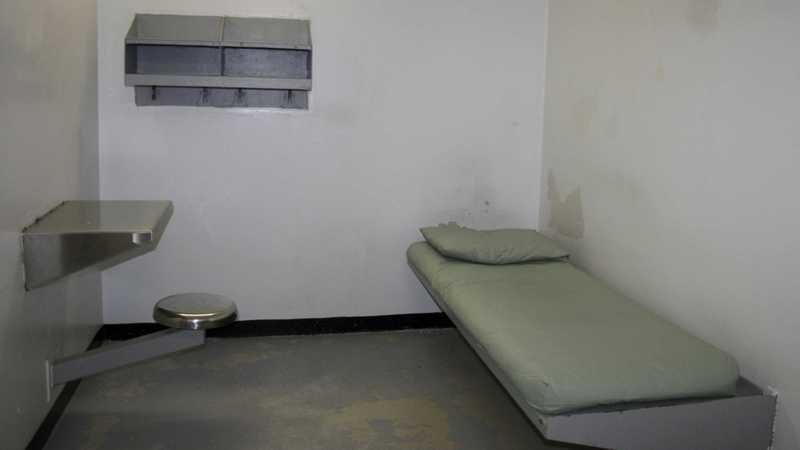
Physical mental and emotional torture. That’s what solitary confinement amounts to. And is this just my opinion from my own personal experience? No this is scientifically proven. What I’m about to share is scientific testimony out of case law, which you can find on any legal website, under WILLIAMS VS. SECRETARY PENNSYLVANIA DEPT OF CORRECTIONS
848 F.3d 549 2017U.S.App.LEXIS 2327
“The Scientific Consensus”
The robust body of scientific research on the effects of solitary confinement, combined with the Supreme Court’s analysis in Wilkinson and ours in Shoats, further informs our inquiry into Plaintiffs’ claim that they had a liberty interest in avoiding the extreme conditions of solitary confinement on death row. This research contextualizes and confirms the holdings in Wilkinson and Shoats: It is now clear that the deprivations of protracted solitary confinement so exceeds the typical deprivations of imprisonment as to be the kind of”atypical, significant deprivation […] which [can] create a liberty interest.
A comprehensive meta-analysis of the existing literature on solitary confinement within and beyond the criminal justice setting found that the empirical record compels an UNMISTAKABLE CONCLUSION: This experience is psychologically painful, can be traumatic and harmful, and puts many of those who have been subject to it at great risk of long term […] damage. Specifically, based on an examination of a representative sample of sensory deprivation studies, the researchers found that virtually everyone exposed to such conditions is affected in some way. They further explained that there is not a single study of solitary confinement wherein non-voluntary confinement that lasted for longer than 10 days failed to result in negative psychological effects. And as another researcher elaborated, All [individuals subjected to solitary confinement] will experience […] a degree of stupor, difficulties with thinking and concentration, obsessional thinking, agitation, irritability and difficulty tolerating external stimuli. Anxiety and panic are common side effects. Depression, post-traumatic stress disorder, psychosis, hallucinations, paranoia, claustrophobia, and suicidal ideations are also frequent results. Additional studies include in the aforementioned meta-analysis further”underscored the importance of social contact for the creation and maintenance of self.” In other words, in absence of interaction with others, an individual’s very identity is at risk of disintegration.
Yes these studies and case laws speak of volumes of psychological torture that we are undergoing. I suffer with all of those symptoms. And I’ve often wondered why, not realizing it’s this cage that is causing them. Where is the evolving standard of decency that this country continues to speak about in the courts, congress, and senate? You’re driving men insane! And then murdering them under this false concept of justice, when everyone knows that a rich man will never enter one of America’s death chambers. Equality is a pipedream, a fallacy that America presents for the world. We’ve seen it far too many times, that innocent men and women have slipped through the cracks of America’s judicial system, and suffered irreversible harm, in these cages of doom. Warehoused for death. There’s no sugarcoating this hellish experience.
So if you wonder why I’m anxious, agitated, compulsive, depressed etc., read the report again and again. And then imagine what I go through every single day. For not only do I struggle with this cage, but the fact that my co-defendant/childhood friend the triggerman, is on the street, returned to his life, as I sit here now second guessing myself about not accepting the plea bargain that was offered to me, which would have set me free in 2015. Yes .. shoulda, woulda, coulda. This cage, and this treatment are inhumane and unbecoming of THE UNITED STATES OF AMERICA, and perpetrated in the name of God, justice and the American way.
Just wanted to share and give you some insight into an experience that I pray you will never experience. God bless.
by Ronald Clark, Jr. | Dec 14, 2020 | Inmate Contributors
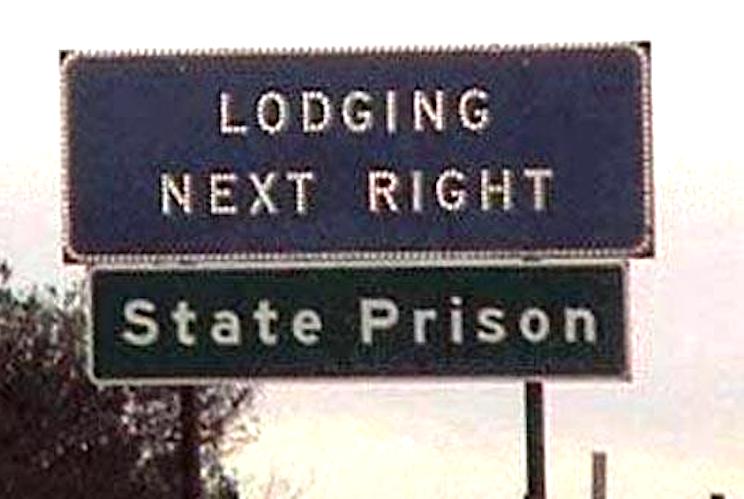
“You’ve got three hots and a cot, the state provides everything you need!” I’ve heard people say that on TV, and I’ve received letters in which people have told me that. But that’s a delusional belief. Let me show you. Number one, the state of Florida doesn’t provide deodorant, which is an absolute necessity! They don’t provide shampoo, Q-tips to clean your ears, nor dental floss. I saw the dentist last week, and he said “Your teeth aren’t getting clean, what kind of toothpaste are you using?” I said” AMERFRESH, the state toothpaste.” He replied “That’s garbage, you need to buy some Colgate.” So if we’ve got a dentist telling us that the toothpaste isn’t working, you can’t argue that the state is providing us adequate hygiene items. The bar of soap that the state provides is about one third the size of a normal bar, and this soap doesn’t have a good scent. It’ll work, but it’s not something you would choose to use, and you only get one bar a week.
Three hots … well about 70% of the time, the food’s going to arrive cold, and is either under-cooked, or over-cooked. Very seldom is it prepared in the manner it should be. If you read the menu, you would be like, Sweet! But then the tray arrives and you’re looking at something that doesn’t resemble at all what you read on the menu. For instance, “Fresh Fruit.” You get an orange, but it’s nothing like a fresh orange that you would get on the street. Our orange is shriveled up, bruised with brown spots on it. It’s rare to have a nice piece of fresh fruit. The apples are horse apples, or cooking apples. We haven’t seen a banana in forever! That’s the only fruit that we get back here. Now vegetables are all canned, and most of the time overcooked. Meats — well a chicken leg quarter is the only real meat we get. We get that once a week, and I’m always highly disappointed when it comes back here raw. This week we were fortunate, it was cooked perfect! The prior two weeks it was raw. Even raw, it’s better than the soy patties, which are really bland. If you closed your eyes and ate it, it’s got no taste. And the the off-gray color is nauseating. They’ve got something called “Southern BBQ,” which sounds good, huh? Well you see, it’s ground up mystery meat that resembles hamburger, but doesn’t taste like it. And the BBQ sauce smells rancid! If you put that in front of most animals, they wouldn’t eat it. The sloppy Joe is the same. It doesn’t look like something you would see in your mom’s kitchen. Its an orange-ish color that looks like a baby messed its diaper. These meals are not healthy at all!
To really be able to eat well, you’ve got to be able to supplement the meals with canteen. And the items are overpriced. You get a $50 – $100 bag, and you’re standing there wondering where the money went! We pay 65¢ for a Ramen noodle soup that cost 19¢ or less on the street. Oh there’s some serious price-gouging going on. And if you don’t have family and friends to financially support you, then you go without. There’s no paying jobs for us. They ban us from selling our paintings, poetry etc., for financial gain. So they’re ripping off our family and friends who help us.
Your cot… I’ve slept outdoors on the ground, and been more comfortable. Seriously! The mattress is no more than an inch and a half thick, if that! Oh if you’ve got a new one, it’s nice for about six months. After laying on it every day, probably 20 hours a day, for 180 days, it gets flat and hard. The steel platform this thin mattress lays on is slanted in a manner which results in back, hip, and shoulder problems. There’s nothing comfortable about this mattress.
Yes.. three hots and a cot, you’re surviving. They’re giving you enough to keep you alive, but that’s about it. And most people will say that’s enough. Just wanted to give you a little bit of insight into our world, and the delusion that the state provides everything we need.
God bless you.
by Michael Henderson | Dec 12, 2020 | Inmate Contributors
This is not a trick question, and there are no prizes for placing at the top of the list. But as I read articles from around the country in regard to the ever-increasing numbers of newly infected persons, and hear next-to-nothing about prisoners, it stands to reason that somebody is making those decisions. I have no delusions when it comes to the disbursement of the vaccine for this terrible disease — that according to mainstream media is taking the lives of 94 Americans every hour. Prisoners will in all likelihood be at the very end of that list. But here in the south, it appears there is some sort of Russian roulette being played out by the staff at the prisons.
The first wave was subtle and most didn’t know that what they were suffering was more likely than not actually covid 19. Of course the virus must have been working it’s way through the population since at least…2019. We may never know the full extent of the toll that the virus has taken on the prison population but we can see by the actions of prison staff and administration there is no concern for the safety of prisoners.
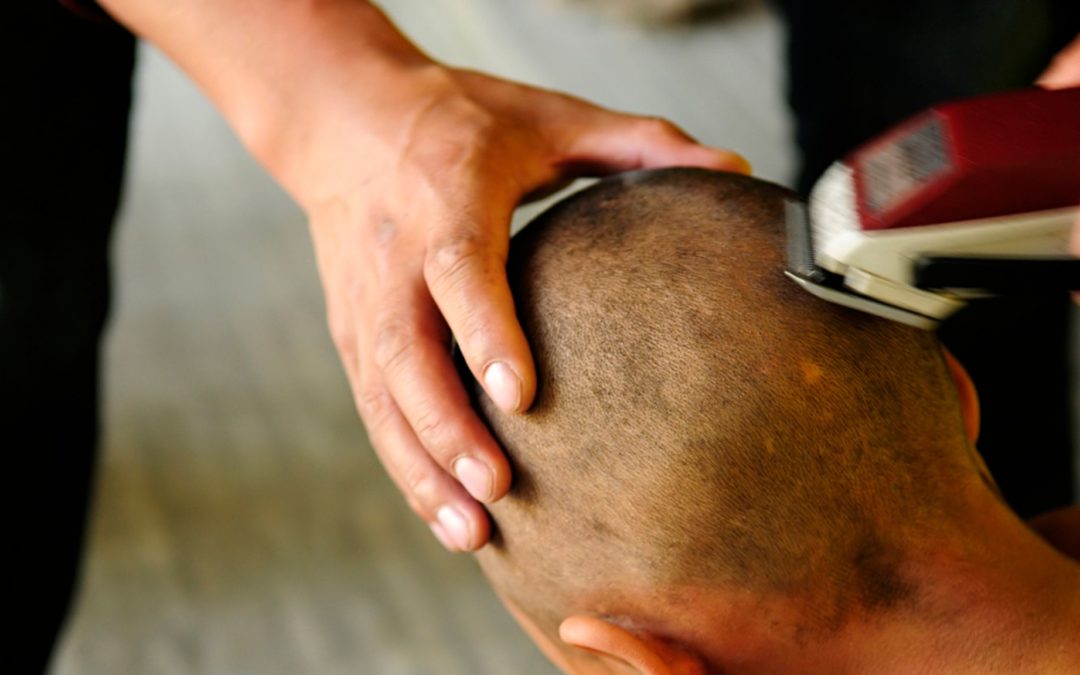
First of all they were shuffling inmates who tested positive in and out of dormitories with inmates who hadn’t yet gotten test results. This seemed to ensure that all of the inmates were exposed as quickly as possible. The staff has been directed to constantly harangue inmates to wear the apparently useless masks that were made by the laundry department, all the while not wearing their own masks. The coup de grace came this week however, when staff decided that it would be safe for the prisoners if they set up a makeshift, impromptu barbershop in the middle of the prison, outside — literally, with zero sanitation precautions, forcing inmates to shave their heads under threat of confinement. The clippers were not being cleaned. Not just properly, but not at all in between prisoner’s head shaves. If you remember, some of the first businesses to close were beauty and barbershops. And those were legitimate businesses complying with health and safety codes. In this makeshift torture line, hundreds of prisoners were being forced by threat to shave their heads to the scalp one after the other leaving open nicks, cuts, and wounds on their heads with no cleaning procedures in between prisoners. Florida Department of Corrections policy and procedure manual rescinded the section on ”barber and cosmetology sanitation” in 2003 and never replaced it. The rules and the policy and procedure manual does, however, provide the process for forced compliance to required hygiene. Amazingly enough, outside assembly line forced head shaves are not to be found in either of those controlling documents. When one individual mentioned that it was not procedure, he was told “I’ll f___ing show you procedure ho.’‘
Upon filing an official grievance with administration, the grievant was told that his complaint was too broad and vague. How specific must one say, ”I don’t want to be sick from the corona virus…again.” If you have loved ones, family, adoptees or friends in prison, and are not yet involved, get involved and stay involved. DEEPLY INVOLVED. You may save their life. Since after all, we don’t know who gets to make the decision of who gets the virus.
by Jacob Schmitt | Dec 9, 2020 | Inmate Contributors
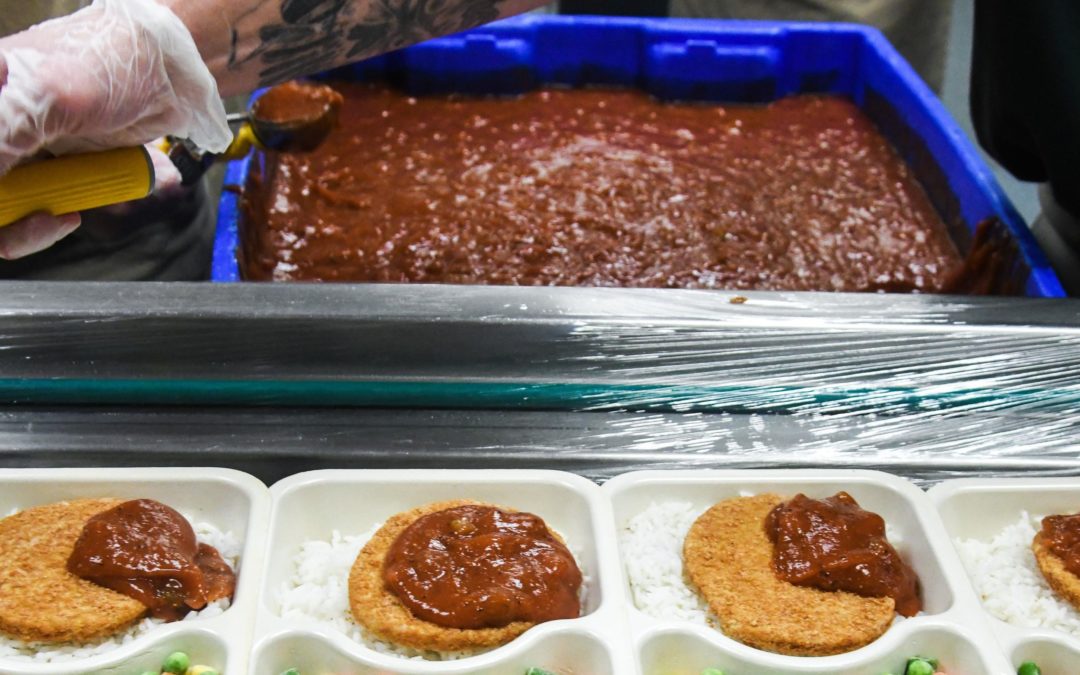
For those of you that do not know what Correctional Industries (“CI”) is, I’ll give you a brief explanation. If you’re a member of the community or legislature, CI is touted as a saver of money and savior for the thousands of men and women within the Washington State Department of Corrections. CI is supposed to provide services at a reduced price, with improved quality, and the benefit of training incarcerated people with marketable job skills.
The reality is that CI is none of those things. Every operation CI takes over has a dramatic dip in quality (whether it is food, laundry, commissary, or textiles and manufacturing), a dramatic rise in costs (for taxpayers), and offers virtually nothing in the way of marketable job skills that would provide a sustainable wage after release.
For the purpose of this conversation I want to focus on CI and the operation here at Twin Rivers Unit where they operate the kitchen that provides food to the prisoner population. At this point, everyone in America knows about COVID (and my having written that word in this email will now cause this message to be flagged and screened before being sent out — which may take as long as two weeks), and the risks involved with having close contact with someone who has the virus.
For anyone associated with prison, we all know that staff are the ones who will bring the virus into this environment and infect us. Also known by anyone associated with prison is that (1) we receive horrifyingly deficient medical care at the best of times, and (2) when believed to have COVID, we are sent to be housed in the hole — where staff are abusive and treat us inhumanely.
In many ways DOC has been amazing about COVID. I have not been pat searched for months, nor has my cell been searched. Even so, staff do not social distance — even when yelling at us: “SIX FEET!!” They sit in the offices and remove their masks, eating, drinking, talking — coughing and sneezing. They sit maskless while sorting our mail — which they then wear their masks while handing out…even though the virus can remain on paper for over 24 hours.
But the most egregious show of disregard for our lives has been demonstrated by Correctional Industries. Amidst this pandemic, with everything that we know about the spread of COVID — and the risk that outside personnel pose for the prisoners within — CI has had officers pat searching every prisoner who leaves the chow hall after working their shift. Without a change of gloves, one prisoner after the next.
Only to discover that one of those officers has tested positive for COVID. Now, we have 121 prisoners on quarantine — many aged and with with underlying health conditions that increase their chances of death if they contract COVID.
With this act, Correctional Industries has shown themselves (as both an agency and the individuals who operate it) to be the monster we have long known them to be. In order to prevent the possible theft of an onion, or maybe some cheese, CI has been having prisoners pat searched for months — and finally our greatest fear is realized: That person is COVID positive.
The mail Gestapo will almost definitely stop this message from going out — there will be an attempt to silence my voice and censor this information. Nonetheless, when you do read these words, please consider them when and if you hear DOC telling you how well they’re protecting us. An onion has more value than our lives.
by Melissa Bee | Oct 6, 2020 | News
Prisoners are eligible for stimulus checks. See bottom of post for link to Facebook livestream event How to Get Stimulus Money for Incarcerated Citizens on Friday, October 9th – an in-depth presentation on how to apply for funds correctly.
Many of you have heard news about state and federal prisoners being eligible for stimulus checks. We’ve heard and seen lots of folks who believe this is only a rumor, warning that it would be fraudulent to apply.
We want to assure you that this is NOT a rumor. This is the result of a motion naming Steve Mnuchin, the Department of the Treasury, et. al., to stop withholding stimulus funds to incarcerated people. On September 24, a federal district court judge issued an order granting the motion. Read the order here.
We urge all our adopters to help their adoptees apply for their stimulus check – act FAST as the deadline is fast approaching.
People who did not file a 2018 or 2019 tax return are urged to file a claim with the IRS before October 15, 2020, in order to receive a payment. If the prisoner filed a 2018 or 2019 tax return or received Social Security Benefits or Railroad Retirement Board Benefits, they do not need to file a claim. However, if they did not file a 2018 or 2019 tax return and their income was below $12,200 (or $24,400 if filing jointly) in 2019, then a claim must be filed through the IRS’s website.
Prisoners without access to the internet can have someone file a claim for them, or they can complete a paper application. The instructions for a paper application are available here.
More information on the recent ruling regarding prisoners and CARES Act stimulus checks can be found here.
Note: This case also benefits people who were incarcerated both before and after March 27, 2020. If they were incarcerated both prior to March 27 and at least some time afterward, then the IRS may have denied them an Economic Impact Payment based on their incarcerated status. The Court’s preliminary injunction establishes that the IRS should not have done that. If they were only incarcerated before March 27, then they were unaffected by the IRS’s policy of denying benefits to incarcerated people, and should a have received a stimulus check. If they have not, they can file the same steps below to file a claim with the IRS, if eligible.
BREAKING NEWS: OCTOBER 5, 2020
IRS EXTENDS DEADLINE FOR FILING CLAIMS ONLINE TO NOVEMBER 21, 2020; IRS DOES NOT EXTEND DEADLINE FOR PAPER CLAIMS, WHICH ARE STILL DUE OCTOBER 15TH, 2020.
See here for the FAQ.
From National Right2Vote sawarimi.org:
SawariMedia is doing everything that we can to spread the word about the update and how to take advantage of it. In addition to posting this article update to our subscribers online we’re also hosting a webinar in partnership with Spread the Vote this Friday at 1:00p EST. Spread the Vote has already disseminated the information on the updated CARE Act to dozens in-house contacts at jail facilities that we are working with through the Vote by Mail in Jail program (new contacts can sign up to be a part of VbMiJ via that link).
Now that the information is out there, we need to make sure that people are equipped to take full advantage, so after applying for funds on behalf of my readers I’m putting together a presentation to support others through that process. For folks who need help or have questions, please join me on Friday, October 9 at 1:00p EST via facebook live for How to Get Stimulus Money for Incarcerated Citizens for a in-depth presentation on how to apply for funds correctly. People who would like to assist incarcerated citizens who do not have someone on the outside to apply online on their behalf are also encouraged to attend the facebook livestream. Please share with others, the webinar is open to the public and free to view.
by Rick Fisk | Aug 28, 2020 | From the Inside
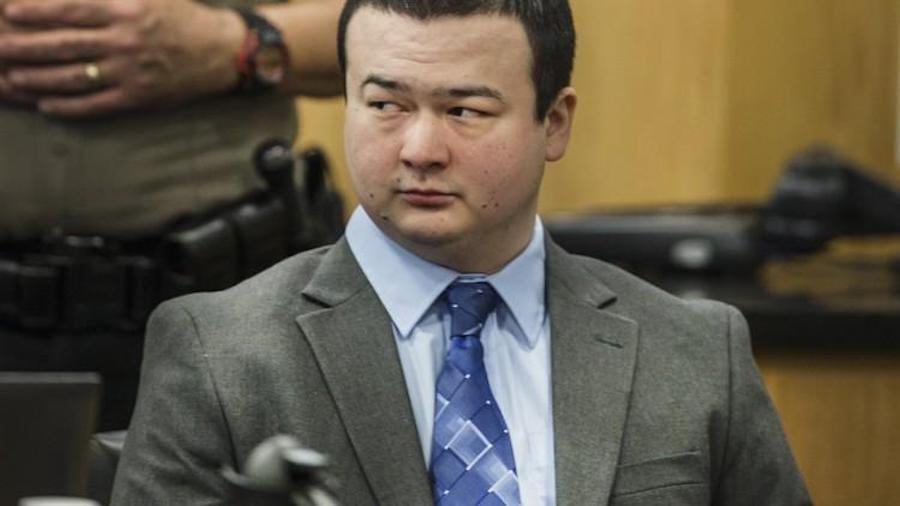
This letter from death row came to us through a third party. It’s an interesting letter and after reading it one gets a clearer picture than the one the media represented while Brandon Daniel’s case was ongoing. It shouldn’t need to be said that the police officer who was killed, Jaime Padron, was a human being just like Brandon. But we’re saying it anyway because our mission has as its core the belief that every person should be treated with respect and kindness, no matter what mistakes they have made in their past.
From all accounts it would appear Padron acted well within his authority. He did not deserve to die. His daughters did not deserve to lose their father. But it also seems reasonable to conclude that Brandon Daniel did not act from forethought and planning. And that should have been something the jury was allowed to consider when given the “authority” to sentence him to death.
To whom it may concern,
My name is Brandon Daniel, and I am writing this letter to you from prison. With police brutality once again in the news, and legal reform a hot topic of discussion, I’m writing to tell you about my legal case, in the hope that I might be able to spread awareness about a common but little known condition that is responsible for sending others to prison, and perhaps to leverage your platform to gain support as well. My case involves the class of anti-anxiety medication called benzodiazepines, and it is one of the clearest examples of something called Paradoxical Reaction. I am hoping that you can help me. Let me fill you in on my story.
First, my background is relevant because it demonstrates that the event that led to my being here was not part of a pattern of behavior. I have no violence in my past, no felonies. I was a software engineer, I’m college educated, and I’m from a normal, middle-class home. Everything that happened that night was completely atypical and out of character.
The event took place at Walmart, so it was all captured on surveillance videos. You can see me stumble around the store for twenty minutes, dropping items and running into displays. I was clearly disoriented. A police officer was called, and he confronted me, tackled me, and in the chaos of the moment I shot and killed him. The video shows how hectic the situation was, it clearly was not a thought out and intentional act. It took place in the span of 10 seconds.
Subsequent blood tests revealed that I had 11 times the therapeutic dose of Xanax in my system, and these tests were taken seven hours after the event. With a half life of eleven hours, it is reasonable to assume that the amount of Xanax in my blood that night was extraordinarily high. Plus, as I later discovered, Asians metabolize Benzos faster than other populations and it stays in their systems longer. I am of Asian descent.
In addition to all of this, I was interviewed by police immediately after the event, while I was still highly impaired from the medication. Again, this interview was captured on video, and one can clearly see that I am suffering from the classic symptoms of Benzodiazepines. I had amnesia, stating several times that I couldn’t even remember what day or time it was. I was confabulating, giving different accounts of what happened, none of which turned out to be accurate. And I was experiencing chemical submission, complying with the detectives leading questions against my best interest. All of these are common side-effects of the Benzodiazepine class of pharmaceuticals, which includes the date rape drug “roofies.”
This aspect of my case sets me apart from other similar cases, I believe. My confused statements provide a window into my state of mind at the time, while in many other incidents we can only wonder what is going on in their mind.
After all of this, while awaiting trial, the jailhouse doctors put me on a cocktail of antidepressants: Zoloft, Celexa, Remeron, etc. During this time, I had several suicide attempts and I spent most of the time in observation cells, nearly catatonic. It is my belief that this common, secondary use of pharmaceuticals to medicate inmates awaiting trial, renders them complacent and fairly useless when it comes to contributing to their defense. This results in inmates who are resigned to their fate, able to be easily railroaded by the legal system, regardless of the merits of their case. Since most people who are first entering jail are, understandably, depressed, they are all too willing to accept this ‘treatment’.
In my case, my trial team was handpicked by the judge, they agreed to work for a flat fee, and they put on a subpar defense at the last minute. The public opinion surrounding my case was continuously manipulated by statements released from the pharmaceutical company. In many news articles, the fact that I was even on Xanax at all is never mentioned. I’ve learned that this is a common tactic used by the pharma industry, who often deploy ‘crash teams’ to these types of events to try and shift the blame away from their drugs. I was convicted and sent to Texas Death Row, where I am today.
Years into my sentence, I was finally able to get off of the psychiatric medications. Then I began to research the history of pharmaceuticals and I became aware of their role in many cases of violence, such as mine. In fact, this is a well-documented symptom of Benzos that’s sometimes-called Paradoxical Reaction or Rage Reaction. It is also related to the phenomenon called Homicidal Somnambulism, or sleep-walking murder. Many other cases can be found in the medical literature, and these types of drugs have come up in the toxicology reports of several ‘mass shooters’, including the Las Vegas shooter and the Southerland Springs Church shooter. Over the past two decades, prescriptions for Benzos have skyrocketed and so has the number of overdoses, which has risen eightfold since 1999. This time period also coincides with the epidemic of mass shootings in our country. It is certain that the prison population over-represented by Benzo users who are unaware that this drug contributed to their situation. This is a major reason for my speaking out, to inform others about this possible influence on their crime.
Since my trial, my lawyers and I have accumulated a massive amount of research proving that this is not a one-off event, but is a well known phenomenon in the medical community that has been actively covered up by the pharmaceutical industry for decades. I have scientific articles, expert evaluations, and even an internal FDA study that highlights the extreme number of violent episodes associated with Benzodiazepines compared to other drugs. This FDA study was not released to the public and was only acquired through FOIA requests put out by lawyers.
Now, my goal is to use my story to help expose this issue. Books have been written about pharmaceutical-induced violence, but I really feel that my case is the clearest example of such an event. By reaching out to you with this letter, I am hoping to use your platform to help spread my story, to garner support from the activist community, and to make contacts with any lawyers, expert witnesses, or fundraising apparatuses that might be able to help. My friends and family have compiled information about my case on a website: supportbrandondaniel.org. I am asking that you please post about my site on your social media accounts and link it up to your website. Any other exposure or resources would be very much appreciated.
I really hope that you can help. Please contact me at the address below. I look forward to hearing from you, thank you for your consideration.
Sincerely,
Brandon Daniel #999589
Polunsky Unit
3872 FM 350 South Road
Livingston, TX 77351
by Ronald Clark, Jr. | May 24, 2020 | Inmate Contributors
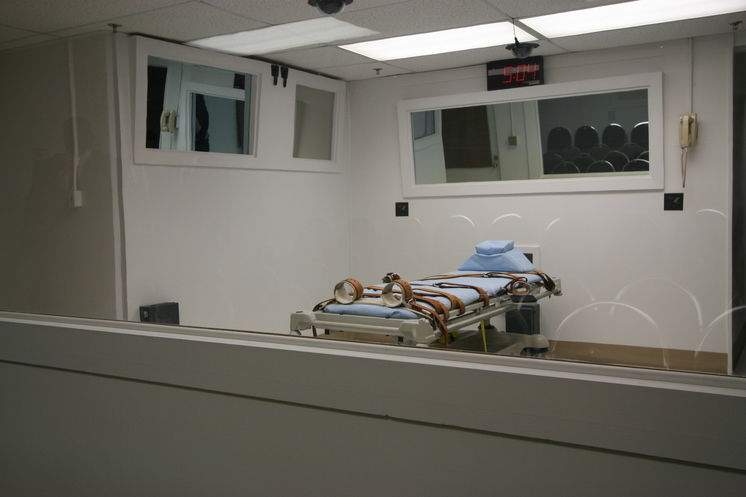
Another person’s death, murder by the state, brought someone peace? Wow. I’ve heard it before, so it shouldn’t surprise me, but every time I hear that it does.
It makes me step back and wonder how anyone can get satisfaction from the suffering and death of any living creature, much less your fellow man. But Friday morning, it was once again on the news. A woman saying that she found peace in watching Bobby be put down by the state. How does another person dying in front of you, fulfill your life and bring peace? And the woman wanted him to look her in the eyes as he’s dying?! Her words, not mine. I don’t think I could, or would ever want to do that. Look a helpless individual in their eyes and watch the fear, misery, and confusion as their life is being taken from them. Even in anger and total rage, if that person looked me in the eye, helpless, my goal would be to stop, and stop anyone from harming them. Not watch or participate in their misery and death.
So when I hear that, it boggles my mind, how ‘any civilized person’ can find peace, through the death of another. I understand anger and hurt, and when Connie was murdered on March 24, 1997, I was devastated! I know and understand the desire for vengeance. And it took a few years for it to pass. Connie’s murder still hurts me to this day. But the desire for vengeance faded long ago.
Seeing and being on both sides of the vengeful heart still doesn’t help me see how anyone can find peace through the cold and calculated murder of another individual. And for a helpless individual to look me in the eyes as their life is being extinguished. No I can’t in any way, shape, or form, comprehend why or how someone can get pleasure, relief or find peace through such an evil act. And those who do, need lots of prayer and psychological counseling. True peace can never be found in such an inhumane and brutal act.
God bless you
In peace, love and friendship, Ronnie
by Jacob Schmitt | Apr 9, 2020 | Inmate Contributors
From Inside the Wire
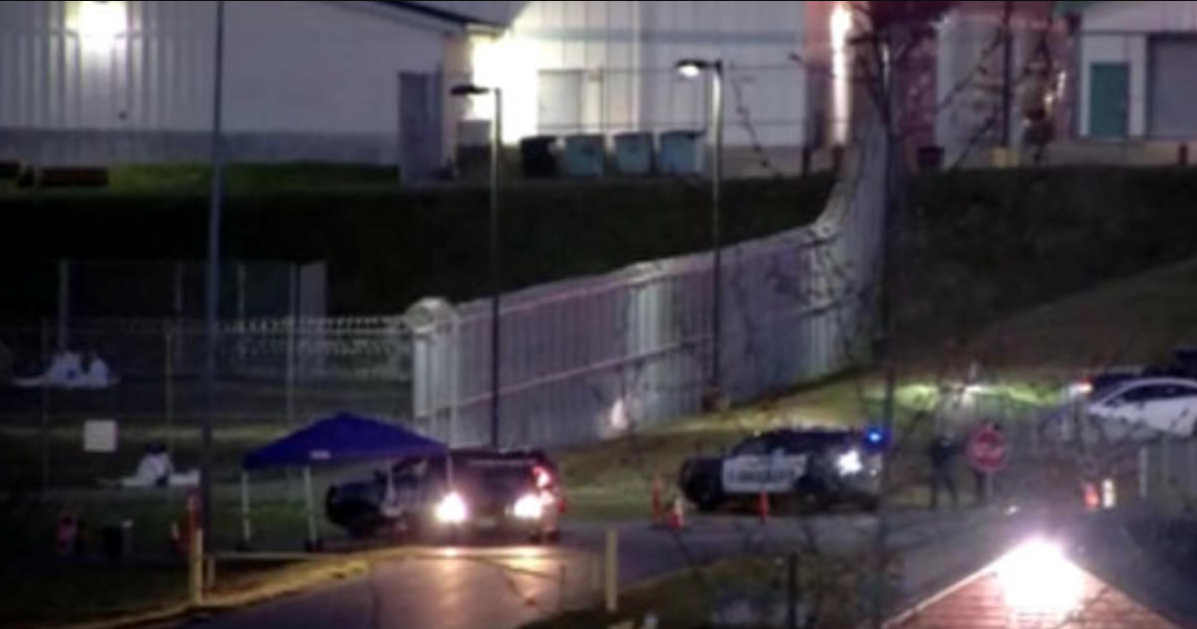
Local and national news has carried coverage informing us that roughly 100 incarcerated individuals at the medium security unit (MSU) of the Monroe Correctional Complex “rioted” last night.
We should all vehemently reject the application of the word “riot.” It is not a “riot” when correctional staff are trying to murder us — and the face of every unmasked correctional staff is the face of someone attempting to murder all prisoners. It is not a “riot” when there is a clear and direct threat to our lives — it’s called survival. For the men at MSU it’s too late. The deadly COVID-19 virus is among them — and the horror of death moves inexorably towards everyone of them.
MCC is infamous in Washington for poor and nonexistent medical care — with 7 prisoner deaths the last 3 years — and everyone of the incarcerated individuals at MSU knows this. In fact, every prisoner at MCC knows that “medical” care is a farce — touted to the public as a real thing, but for us it’s part of modern mythology.
Q13 news just carried an announcement from Gov. Inslee. DOC will be partnered with other state agencies on how to limit the spread of COVID-19 within Washington prisons. What about the single incontrovertible fact that the focus should have been on stopping COVID-19 from getting into our prisons?
Had Gov. Inslee (and DOC Secretary Sinclair) taken the threat to our safety seriously before the event last night, then staff would have been required to wear masks at all times while within a Washington prison. I woke this morning to the face of officers and medical staff without masks on. These are the faces of death.
I hope that it’s not lost on everyone that last night DOC used weapons designed to target the respiratory system. “Tear gas” (which was more likely OC pepper spray) causes violent coughing, spitting, and nasal mucus production. So. Rather than communicate to help reduce the fears these men were/are overwhelmed by, DOC used weapons in an attempt to crush their most natural instinct: the desire for life.
I’m not usually a gambler, but I’d bet it all on this: when DOC staff went among those coughing, choking, spitting, and snot dripping prisoners last night, those fuckers wore masks.